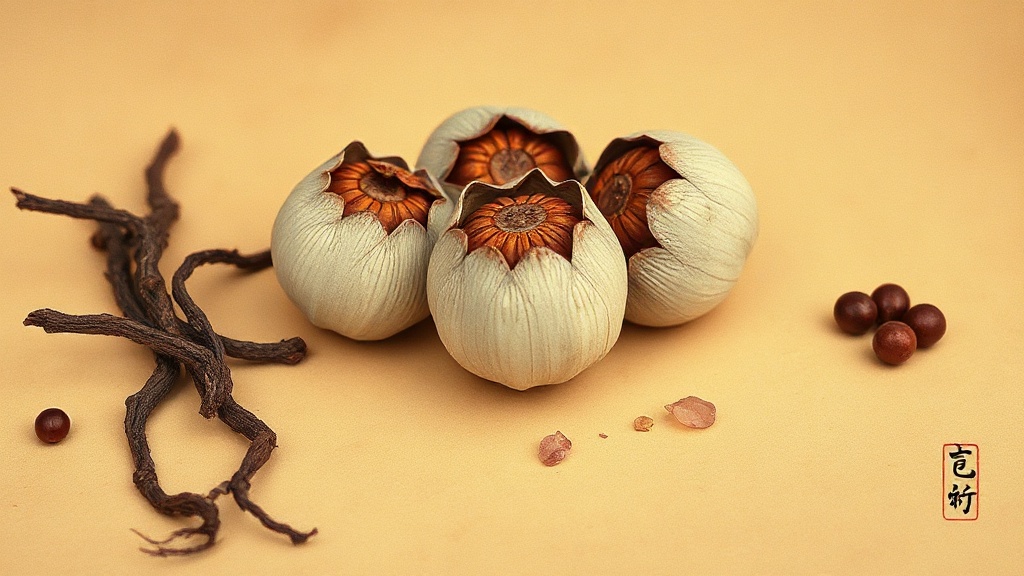
The bloodwork comes back “normal.” The cycle is irregular. Something is off. Classical Chinese herbal medicine begins exactly where the lab panel ends — in the constitutional terrain that the numbers cannot see.
You’ve done the bloodwork. The numbers came back “within normal range.” But something feels off — your cycle is irregular, you’re exhausted at the wrong times of the month, or conception just isn’t happening the way you expected. You’re not imagining it.
This is where classical Chinese medicine — and the functional medicine insight it carries — offers a way forward that standard lab panels and timed intercourse protocols simply don’t reach. Not because conventional care is wrong, but because fertility is a whole-system phenomenon, and whole-system problems require a whole-system lens. The classical Chinese medical reproductive axis reads the same terrain that functional labs try to quantify — without requiring a panel to do it.
This post is the first in Rootworth’s Fertility & Reproductive Health journal series. Rather than diving straight into a condition, we want to begin with the why — the foundational framework that shapes every formula design in our fertility practice. Consider this your map before the territory.
Where conventional care has its edges
Conventional reproductive medicine has accomplished extraordinary things. IVF success rates have climbed for decades. Genetic pre-implantation screening catches chromosomal errors that once caused years of unexplained miscarriage. Medications like letrozole and FSH injectables can coax ovulation where none was happening. We are not here to compete with that — we’re here to address what it doesn’t reach.
The edge is in the zone between “diagnosable condition” and “optimal reproductive function.” A day-3 FSH of 11.5 IU/L won’t trigger a diagnosis of diminished ovarian reserve in most clinics — but it’s trending the wrong direction. A luteal phase of 10 days is technically within range — but it’s short enough to compromise implantation. Progesterone at 9 ng/mL on day 21 is technically measurable — but a corpus luteum at its best produces 15–20+ ng/mL.
These subclinical pictures are where classical Chinese herbal medicine and functional medicine genuinely work. Both systems are designed to detect and address functional decline before it becomes structural pathology.
The classical reproductive axis: Jing → Tian Gui → Chong/Ren → Bao Mai
Chinese medicine has mapped the female reproductive system through a cascading axis of interrelated functions that is, frankly, elegant. Understanding this axis helps explain why classical herbal fertility treatment looks the way it does — and why it focuses on seemingly unrelated things like digestion, sleep, and constitutional depletion.
At the base of everything is Kidney Essence (Jing, 精). Jing is the constitutional reserve you were born with — the deep fuel that powers growth, development, and reproduction. It cannot be manufactured in large quantities; it can only be conserved, supported, and slowly replenished through adequate rest, nourishment, and a life lived without constant depletion. Every decision you make about sleep, stress, diet, and exertion either builds or drains it.
When Kidney Jing matures, it gives rise to Tian Gui (天癸, heavenly water) — the neuroendocrine signaling essence that governs the HPO axis, ovarian function, and menstrual cycling. The closest classical concept to the FSH/LH/estrogen/progesterone cascade. Without sufficient Jing, Tian Gui cannot be abundant. Without abundant Tian Gui, the rest of the axis suffers.
From Tian Gui, the axis flows into the two great Extraordinary Vessels that govern the uterus: Chong Mai (衝脈, Sea of Blood) and Ren Mai (任脈, Conception Vessel). These converge in the Bao Mai (胞脈), the uterine channels that directly nourish the uterus.
Dysfunction at any level of this axis cascades downward. The four most clinically common breakage points:
- Kidney Jing deficiency (Shen Jing Xu, 腎精虛) — low ovarian reserve, poor egg quality, age-related fertility decline, low AMH
- Liver Qi stagnation (Gan Qi Yu Jie, 肝氣鬱結) — stress-driven cycle disruption, irregular timing, premenstrual tension
- Blood stasis (Xue Yu, 血瘀) — endometriosis, fibroids, fixed pelvic pain, clotty dark menses
- Damp-phlegm obstruction (Tan Shi, 痰濕) — PCOS, anovulation, weight-related cycle suppression
Herbal treatment is always aimed at identifying which level of the axis is compromised, addressing the root pattern, and restoring the cascade. This is classical formula design. It is not a supplement stack. It is a constitutional diagnosis expressed as a custom preparation.
The four-phase cycle model: herbs timed to the cycle
One of classical Chinese medicine’s most clinically useful contributions to fertility care is the understanding that a woman’s body is not the same across her entire cycle — and herbal treatment should not be, either. The menstrual cycle moves through four distinct phases, each governed by different energetics, and formula design should be phase-matched to be effective.
- Menstrual phase (days 1–5): Yang transitions to Yin; the priority is smooth, complete blood discharge. The herbal approach shifts to Blood-moving and downward-flowing actions. Tonifying during this phase impedes natural clearing — a common mistake when patients self-prescribe tonic herbs throughout the month.
- Follicular phase (days 5–13): Yin builds as estrogen rises and the follicle matures. This is the window for Yin-nourishing and Blood-building — the herbal formula shifts to support the constitutional depth from which the follicle draws. The depth of that nourishment is why this phase matters so much for egg quality.
- Ovulatory phase (around day 14): The Yin peak transitions to Yang — the pivot moment, the classical counterpart to the LH surge. The formula adjusts toward Qi-moving and Blood-activating actions that support the transition. Timing here is everything; the wrong action in the wrong phase works against the body’s own momentum.
- Luteal phase (days 15–28): Yang dominates as progesterone rises and the uterus prepares for implantation. The herbal approach warms, consolidates, and supports the corpus luteum’s sustaining function. A short or weak luteal phase is almost always a Yang deficiency picture — and it is directly addressable with the right formula at the right time.
This phase-matched approach means the same person receives meaningfully different formula modifications across their cycle. It is also why the formula changes month to month as the pattern shifts — what the body needs in month one of treatment is not what it needs in month four. This is not a static prescription. It is a living clinical relationship with the pattern.
Fertility cases reflect this more acutely than almost any other presentation. The first three months are where the terrain does most of its shifting, and the formula needs to track that movement closely. Re-assessments are built into the treatment more frequently during this window — not as a formality, but because what the cycle looks like in month two often reveals layers that weren’t fully visible in the intake. A luteal phase that was short in month one may be lengthening in month two, which changes the formula priority. An ovulatory pattern that was absent may be returning, which changes the timing of the cycle-phase modifications. Dialing in the treatment across the first three months is an active clinical process, not a waiting period.
How classical pattern diagnosis reads the functional terrain
Functional medicine maps the upstream terrain drivers — the environmental, dietary, hormonal, and metabolic factors that created the conditions in which the pattern developed. Classical Chinese medicine addresses the constitutional root: the inherited pattern, the accumulated depletion, the obstruction built over years. Together they address different layers of the same system.
What many patients encounter elsewhere: a functional medicine provider orders a detailed hormone panel and uses it to design a supplement protocol. The panel can be useful data. But the panel is not the diagnosis — it is a snapshot of downstream consequences, not a reading of the constitutional terrain that produced them.
The classical intake reads the same terrain directly: a thorough constitutional review, the complete menstrual history, pulse, tongue, and the pattern of symptoms across the day, the cycle, and the year. Kidney Yin versus Yang deficiency identifies where the HPO axis is breaking down. Liver Qi stagnation reads the cortisol-pregnenolone steal. Damp-phlegm obstruction captures the insulin-androgen loop in PCOS. Blood stasis reads the estrogen-inflammation signature of endometriosis. You do not need a panel to receive a complete pattern diagnosis. If you have completed functional labs, that data integrates readily with the classical picture. But it is never a prerequisite.
This is the clinical efficiency of the classical framework: the pattern diagnosis is complete from the intake alone. The formula follows from the pattern. The result is the full functional medicine benefit — constitutional precision, terrain-level insight, pattern-matched herbs — without the specialist markup or the panel gatekeeping.
Herbs and supplements: addressing the five spheres of the fertility terrain
Classical Chinese herbal medicine addresses the constitutional root. Pattern-matched functional-medicine supplements address the upstream terrain drivers. The fertility intake at Rootworth covers both — not as separate tracks, but as a single integrated clinical picture read through the same Eight Principles, Five Phase, and Six Syndrome framework.
The classical organ-system map aligns directly with what functional medicine calls a five-sphere terrain model — and because both frameworks are reading the same body, they speak to each other clearly once you have a pattern diagnosis to work from:
- Water sphere — Kidney / Adrenal / HPA axis: Kidney Jing depletion shows up clinically as HPA dysregulation, cortisol asymmetry, and the adrenal exhaustion pattern that sits beneath so many fertility presentations. The herbal approach addresses this constitutional root directly. The functional medicine complement supports the adrenal terrain in parallel — specific to the pattern, not generic.
- Wood sphere — Liver / Methylation / Estrogen metabolism: Liver Qi stagnation and Blood stasis produce estrogen dominance and impaired hepatic clearance of estrogen metabolites — the biochemical substrate of endometriosis and fibroids. Herbal support addresses the stagnation and stasis; the functional medicine complement works on the estrogen metabolism side, chosen specifically for whether the presentation is a clearance problem, a production problem, or both.
- Fire sphere — Thyroid / Mitochondrial: Mitochondrial energy production drives follicular maturation — the first cell divisions after fertilization are almost entirely mitochondrial-energy-dependent. Subclinical thyroid dysfunction impairs ovarian blood flow and luteal phase adequacy. The herbal approach restores the warming and activating functions that classical medicine names as Yang deficiency; the mitochondrial supplement tier addresses cellular energy directly, dosed for the specific pattern.
- Earth sphere — Spleen / Insulin / Metabolic: The Spleen-Damp-Phlegm pattern and insulin resistance are the same physiological problem seen from two angles — one classical, one biochemical. Both produce anovulation, follicular arrest, and the hormonal dysregulation that reproductive endocrinology documents in PCOS. Herbal and functional medicine support for this sphere work together on the metabolic root, not just its hormonal consequences.
- Metal sphere — Gut / Immune / Inflammatory: Gut dysbiosis drives systemic inflammation and immune dysregulation that affects endometrial receptivity and embryo immunotolerance. The classical counterpart is Phlegm-Heat and Damp-Heat in the lower jiao. This is the sphere most often overlooked in standard fertility workups — and one of the most consequential for implantation and recurrent loss. Herbal and gut-targeted functional support address it together.
The specific herbal formulas and supplements that address each sphere are determined by your pattern assessment — not by your diagnosis label, and not by a standard fertility protocol. The pattern tells us which sphere is the primary root, which are secondary contributors, and in what sequence to address them. One intake. One pattern. One plan — covering herbs, supplements, and lifestyle, calibrated to the same constitutional picture.
Why digestion comes first — and why it matters for every supplement you’re already taking
Li Dong-yuan — the twelfth-century physician who wrote the foundational text on Spleen and Stomach medicine — made an argument that most modern fertility protocols ignore entirely:
脾胃者,後天之本。
Pí wèi zhě, hòutiān zhī běn.
The Spleen and Stomach are the root of post-natal life.
The Spleen’s transformative function — 脾主運化, Spleen governs transformation and transportation — means precisely this: the Spleen extracts nutritive essence from food and transforms it into Blood, Qi, and the raw materials from which the reproductive system is built and maintained. When this function is impaired, everything downstream is underfunded.
Here is the practical implication most fertility patients never encounter: if the Spleen’s transformative function is compromised, the supplements you are taking are not being fully delivered to the tissues that need them. Every fertility supplement on the market — and you are likely taking several — requires a functioning digestive and absorptive system to be processed, converted into bioavailable forms, and delivered through the circulation to the ovarian cortex and uterine endometrium where they are intended to act.
Chronic bloating, loose stools, low appetite, fatigue after eating — these are Spleen Qi deficiency signs in the classical framework, and markers of compromised gut absorption in the functional medicine one. Layering supplements onto a compromised Spleen is like watering a garden through a broken irrigation system. Much of it never reaches the root. The formula design addresses this sequencing problem by supporting the delivery infrastructure alongside the deeper constitutional work. Which herbs do that, and in what proportion relative to the primary constitutional formula, depends on the specific Spleen picture in your intake. The Spleen always comes first.
The terrain before the protocol
A single IVF cycle at a US fertility clinic runs $15,000 to $25,000. That is a single attempt. Failed cycles — and many cycles fail — mean another $15,000 to $25,000. Medication costs layered on top. The emotional and physical toll of retrieval, transfer, and loss, repeated.
What is almost never addressed in that process is the constitutional terrain. What in this person’s constitution, this life history of depletion and stress, this current pattern of Blood and Jing and Qi, created the substrate in which reproduction is struggling. IVF overrides the terrain. It does not change it. The same ovarian reserve that produced poor-quality embryos in cycle one will produce the same quality in cycle two unless the constitutional substrate shifts. The same uterine environment that did not hold the last implantation has not changed unless the pattern driving it has been addressed.
This is not an argument against IVF. It is an argument for what the terrain work does that IVF cannot — because IVF is a mechanical intervention in a system whose constitutional depth it does not read. Custom classical herbal medicine may support that terrain. Not as a competitor to reproductive endocrinology, but as the constitutional preparation and ongoing support that gives the system more to work with — whether the goal is natural conception or IVF preparation.
Egg quality reflects the ninety days of follicular development preceding ovulation. Sperm parameters reflect the full seventy-four-day spermatogenesis cycle. Endometrial receptivity patterns take time to shift when the Spleen and Chong Mai are being rebuilt. The classical clinical observation — consistent across the fertility presentations we work with — is that most constitutional patterns need at least three to four months of sustained formula work before the terrain shows meaningful change. Patients who commit to that window consistently report outcomes that those who approach it as a one-month experiment do not.
The intake is online. The formula ships. You do not need to be in any particular city. You deserve a practitioner who reads the pattern, not just the protocol.
What this journal series will cover
Over the coming weeks, we’ll move from this foundational framework into the specific conditions we support most often. Each post applies the classical pattern lens to show how this system reads the constitutional terrain — and how the herbal formula and functional-medicine complement address each specific failure point:
- PCOS and anovulatory fertility challenges — the Damp-phlegm Earth pattern and its functional insulin story
- Endometriosis and fertility — Blood stasis, Wood-sphere estrogen dominance, and the inflammation-implantation problem
- Diminished ovarian reserve — Kidney Jing deficiency, low AMH, and the ninety-day follicular window
- Recurrent pregnancy loss — Kidney Qi’s holding function and the multi-pattern picture
- IVF herbal preparation — phase-by-phase constitutional support before retrieval and transfer
- Male factor infertility — Kidney Jing and Yang, constitutional Jing support, and the seventy-four-day window
All of these conversations link back to the framework outlined here: the Kidney Jing → Tian Gui → Chong/Ren → Bao Mai axis, the four-phase cycle model, and the pattern diagnosis that reads the constitutional terrain directly. The Fertility hub page is the best starting point alongside this series — it covers the full clinical-mechanism picture and the conditions index.
- Begin intake — read the process and start your formula
- Fertility hub — the full classical and functional medicine framework
- Chambers — the methodology underneath every formula
- Case histories — de-identified clinical illustrations
- Before You Plant — the preconception terrain
- The Cycle Speaks — PMS and PMDD through the classical lens
A note on these statements
Rootworth herbal preparations are dietary supplements. These statements have not been evaluated by the Food and Drug Administration. These products are not intended to diagnose, treat, cure, or prevent any disease. Classical Chinese medicine pattern assessment is distinct from the diagnosis and treatment of disease as defined under United States federal law. Individual results vary. Always continue care with your physician, OB/GYN, or reproductive endocrinologist alongside any herbal support program.