
Age-Related Macular Degeneration
Custom herbal formulas for the classical patterns underlying AMD — because the macula does not degenerate in isolation. It depletes, stagnates, and fails to hold blood, in a sequence the classical framework named two thousand years before the ophthalmoscope existed.
Age-related macular degeneration is the leading cause of central-vision loss in adults over fifty. Western ophthalmology has mapped it in extraordinary detail — the drusen that accumulate beneath the retinal pigment epithelium, the complement cascade that drives inflammation into the subretinal space, the choroidal neovascularization that in wet AMD brings fragile new vessels bleeding into the macula. The biochemistry is precise and well documented.
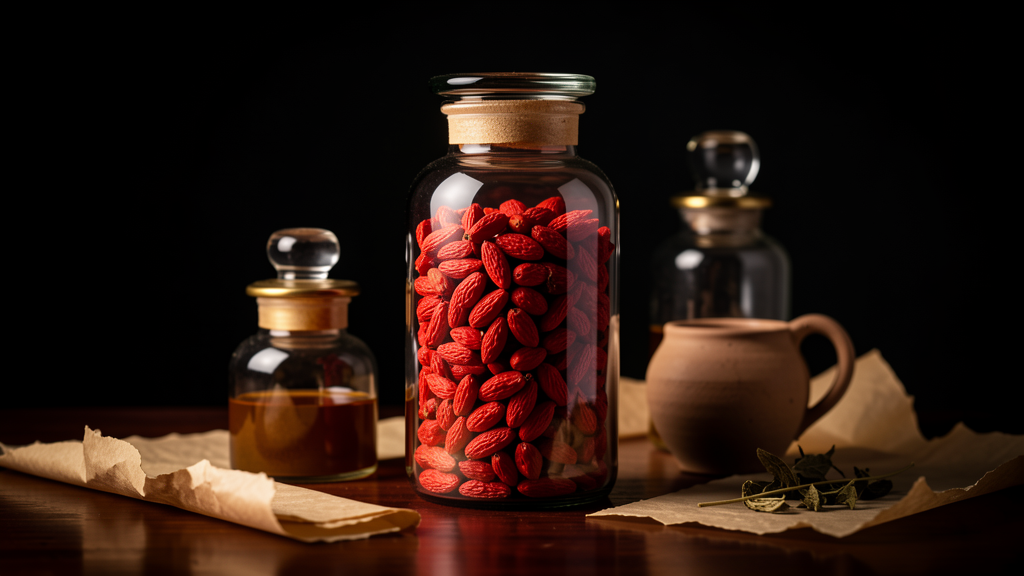
What Western ophthalmology does not offer — for the dry form that represents eighty-five to ninety percent of all cases — is a pharmaceutical intervention that changes the course of the disease. AREDS supplementation slows the rate of progression in a subset of patients. Anti-VEGF injections halt the hemorrhage of wet AMD by suppressing the neovascular signal. Neither addresses the constitutional substrate in which the disease developed. Neither asks why this patient's choroidal circulation began to fail at this particular time, or why the retinal pigment epithelium began to accumulate debris it could not clear.
Classical Chinese medicine asks exactly those questions. And it has been answering them — clinically, formulaically — for centuries.
肝開竅於目,腎藏精。
The Liver opens into the eyes. The Kidney stores Jing — the constitutional essence that nourishes what the eye draws from.
The macula is not a camera lens that degenerates mechanically. It is the outer expression of a body's interior state — the visible record of what the Liver Blood is supplying, what the Kidney Jing is sustaining, and where the circulation through the eye's finest collateral vessels has begun to fail. When those foundations are adequately maintained, the macular tissue is nourished. When they decline — through age, constitutional depletion, or the cumulative burden of chronic disease entering the collaterals — the macula reflects it.
The Western mechanism — drusen, RPE, and the blood-inflammation engine.
Dry AMD begins with the retinal pigment epithelium — the single layer of cells that lies beneath the photoreceptors and performs the essential maintenance functions on which vision depends: recycling visual pigment, clearing photoreceptor outer segment debris, maintaining the Bruch's membrane interface with the choriocapillaris, and supplying oxygen and nutrients from the choroidal circulation to the photoreceptors above.
When RPE function declines, metabolic debris accumulates at the Bruch's membrane interface and forms drusen — the yellow deposits visible on fundus examination that are the clinical hallmark of AMD. Drusen are not passive accumulations. They are active sites of complement-mediated inflammation: the complement system, running unchecked through variants in complement factor H and related genes, deposits C3 fragments and membrane attack complexes into the drusen matrix, driving a chronic low-grade inflammatory state that accelerates RPE cell loss. As RPE cells are lost, the photoreceptors above them — rods first, then cones — are deprived of their maintenance substrate and begin to die. This is the geography of central vision loss: when cone photoreceptors in the fovea are lost, the central visual field goes dark.
In geographic atrophy — the advanced form of dry AMD — large patches of RPE and photoreceptors are lost entirely, producing the characteristic atrophic patches visible on imaging.
Wet AMD introduces a second mechanism: vascular endothelial growth factor, upregulated in response to ischemia and inflammatory stress in the subretinal space, stimulates choroidal neovascularization. New vessels sprout from the choriocapillaris, breach Bruch's membrane, and grow into the subretinal space — but these are not normal vessels. They are fragile, fenestrated, and prone to leaking. They bleed. Subretinal hemorrhage and exudation distort and destroy the photoreceptors above them, producing rapid, severe central vision loss that progresses far faster than the atrophic form.
This is, at its core, two stories running in sequence. The first is a story of metabolic debris the body cannot clear — choroidal perfusion declining, RPE overwhelmed, Bruch's membrane thickening until the exchange of nutrients and waste between the choriocapillaris and the photoreceptors fails. The second — wet AMD — is a story of blood not held: a vascular system so stressed by ischemia and inflammation that it sprouts abnormal vessels into tissue that cannot contain them, and those vessels bleed.
These are precisely the stories the classical framework was built to read.
The classical statements that predicted this disease — the bridge between frameworks.
The classical literature did not have fluorescein angiography or optical coherence tomography. What it had was two thousand years of precise clinical observation organized into aphorisms — compressed clinical rules that function as falsifiable predictions about what happens when specific physiological relationships fail. Each statement names a governing mechanism. Each mechanism, when it fails, produces a recognizable downstream consequence. Some of those consequences are now visible on macular imaging.
The pathophysiology, in clinical depth — for practitioners →
This section is provided as clinical reference for practitioners. The statements below are classical Chinese medical aphorisms and their corresponding pattern mechanisms — not disease claims. All formula recommendations represent classical pattern-based herbal support and are not intended to diagnose, treat, cure, or prevent any disease.
| Classical statement | Mechanism when the statement fails | Western counterpart in AMD | Pattern → Formula direction |
|---|---|---|---|
| 肝開竅於目 Gān kāi qiào yú mù Liver opens into the eyes |
Liver Blood (*Gān Xuè*, 肝血) fails to nourish the retinal and choroidal circulation; the macular tissue receives insufficient nutritive supply. Liver Blood deficiency is the first and most universal deficit in AMD. | Declining choroidal blood flow to the choriocapillaris; reduced RPE oxygenation; inadequate clearance of photoreceptor outer segment debris; early drusen formation as waste begins to accumulate where circulation is insufficient. | Liver Blood deficiency → generate and nourish Blood. Base formula: Qi Ju Di Huang Wan (杞菊地黄丸); Shu Di Huang, Dang Gui, Gou Qi Zi as core herbs. |
| 腎藏精 Shèn cáng jīng Kidney stores Jing |
Kidney Jing (*Shèn Jīng*, 腎精) declines with age — this is the normal process of aging, accelerated by constitutional depletion, chronic illness, or inadequate restoration. Jing is the deepest nourishment substrate the Liver Blood draws from. When Jing is insufficient, Liver Blood cannot be adequately generated, and the photoreceptor and RPE substrate begins to thin. | Age-related photoreceptor density decline; thinning of the outer nuclear layer on OCT; genetic susceptibility variants (complement factor H, ARMS2/HTRA1) as constitutional Jing-level predispositions. Stargardt's disease (ABCA4 mutation) is an explicit Kidney Jing deficiency at the constitutional genetic level. | Kidney Jing deficiency → nourish Kidney and Liver at depth. Shu Di Huang (熟地黄), E Jiao (阿胶), Gou Qi Zi (枸杞子), Nu Zhen Zi (女贞子). Note for Stargardt's: Ming Mu Di Huang Wan + Resveratrol; NO Vitamin A supplementation due to A2E accumulation toxicity. |
| 久病入絡 Jiǔ bìng rù luò Chronic disease enters the collaterals |
Long-standing deficiency or circulatory insufficiency drives pathological change into the finest vessels — the luo-collaterals, the micro-circulation that in Western anatomy corresponds to the choriocapillaris, the retinal capillaries, and the RPE vascular interface. Stagnation accumulates where circulation cannot reach. Debris deposits where the self-clearing mechanism has failed. This is the collateral-level consequence of the upstream Blood and Jing deficiency. | Drusen accumulation at Bruch's membrane — the direct anatomical correlate of chronic metabolic debris that the RPE can no longer phagocytose and clear. Pigment clumping. RPE atrophy patches in early geographic atrophy. These are the deposits of 久病入絡 made visible on fundoscopy. | Blood stasis in the ocular collaterals → move Blood, dissolve stasis. Tao Ren + Hong Hua (桃仁+红花) pair; Dan Shen (丹参) for choroidal microcirculation; Chuan Xiong (川芎) as cephalic blood-mover. Base formula: Tao Hong Si Wu Tang (桃红四物汤) modified. |
| 脾主運化 Pí zhǔ yùn huà Spleen governs transformation and transportation |
The Spleen's metabolic-transformative function underlies the body's capacity to convert post-natal nutrition into usable Qi and Blood, and to clear metabolic debris that accumulates in the process of cellular turnover. When Spleen Qi (*Pí Qì*, 脾气) is chronically deficient, the clearing function fails. Metabolic waste that should be transformed and transported accumulates instead — the classical equivalent of an overwhelmed phagocytic system. | RPE dysfunction as phagocytosis failure — the RPE's core responsibility is clearing photoreceptor outer segment debris, and when this function is overwhelmed or failing, the debris accumulates as lipofuscin and drusen. The complement dysregulation driving drusen inflammation can be read as a failure of the body's self-clearing chemistry — the Spleen's transformation function at the systemic biochemical level. | Spleen Qi deficiency → strengthen the middle burner before adding cloying tonics. Dang Shen (党参), Bai Zhu (白术), Fu Ling (茯苓). Critical sequencing rule: digestion must be adequate to absorb and deliver Kidney-Liver tonics. See Pi Wei Lun sequencing below. |
| 脾統血 Pí tǒng xuè Spleen holds blood within the vessels |
When Spleen Qi fails its blood-governing function, blood is no longer contained within the vessel walls. This is the classical mechanism of hemorrhage from constitutional deficiency — not from external trauma but from an interior holding-function that has become too weak to maintain vascular integrity. | Wet AMD subretinal hemorrhage — the CNV vessels that breach Bruch's membrane and bleed into the subretinal space represent the failure of the holding function at the most delicate vascular interface in the body. The complement-driven inflammatory environment that weakens Bruch's membrane and drives VEGF upregulation is the Western mechanism; the Spleen-failing-to-hold-Blood is the classical governing statement of the same event. | Spleen failing to hold Blood → first strengthen Spleen's blood-holding function, then address stasis. San Qi (三七 / Panax notoginseng) is the essential herb: moves Blood and stops bleeding simultaneously — the only single herb that addresses both the stasis that drove the hemorrhage and the active bleeding that resulted. Formula construction must prioritize Spleen Qi strengthening before heavy Blood-movers are added. |
Clinical sequencing note. In dry AMD, the treatment order is: (1) assess Spleen Qi adequacy — if digestion is compromised, build the middle burner first; (2) generate and nourish Liver Blood and Kidney Jing as the foundational substrate; (3) move Blood and resolve stasis in the ocular collaterals to address drusen-level pathology. In wet AMD with active or recent hemorrhage, the order shifts: (1) strengthen Spleen Qi and stop bleeding first — San Qi and herbs that strengthen the holding function; (2) only after bleeding is stable, add cautious Blood-moving herbs to address the underlying stasis. Adding aggressive Blood-movers to an active hemorrhage is a clinical error.
On herbs as chemistry. Herbal formulas are chemical interventions acting on blood biochemistry and vascular physiology. Dan Shen (*Dān Shēn*, 丹参 / Salvia miltiorrhiza) contains tanshinones and salvianolic acids with documented antiplatelet, vasodilatory, and anti-inflammatory mechanisms — these are real molecular actions on the choroidal microcirculation. San Qi contains ginsenosides and notoginsenosides with documented hemostatic and anti-inflammatory effects. Shu Di Huang's iridoid glycosides support hematopoiesis. The classical framework organized these chemical actions under the four blood operations two thousand years before the assays existed. The assays now confirm what clinical observation had already mapped.
[CITATION PENDING — deep-research workflow: peer-reviewed studies on Dan Shen / Salvia miltiorrhiza in retinal and choroidal circulation; Qi Ju Di Huang Wan and AMD outcomes; San Qi / Panax notoginseng hemostatic + anti-VEGF mechanisms; complement factor H genetics and AMD susceptibility]
These are not poetic metaphors mapped retrospectively onto a disease the classical practitioners could not have known. They are clinical predictions. When the Kidney fails to store Jing and the Liver fails to receive it, the nutritive substrate of the photoreceptors thins — and the Western imaging confirms it as outer nuclear layer thinning. When chronic disease enters the collaterals, metabolic debris accumulates where circulation cannot clear it — and drusen are that accumulation, visible on fundoscopy. When the Spleen fails to hold blood, subretinal hemorrhage follows. The classical practitioner and the Western ophthalmologist are standing in front of the same failing system. One has an ophthalmoscope. The other has a framework that asks why it began to fail.
Herbs are chemistry — four actions on blood, applied to the macula.
Every AMD formula is built from some combination of four fundamental actions on blood. The actions are not metaphors. They are chemical categories that correspond to measurable physiological effects — on vascular tone, on inflammatory signaling, on hematopoiesis, on platelet aggregation, on the viscosity and distribution of circulating blood. The formula is chemistry acting on blood. This must be stated plainly.
GENERATE blood — rebuild the nourishment substrate from which the macula draws. The retinal pigment epithelium and the photoreceptors above it are among the most metabolically active tissues in the human body. They require a continuous, adequate supply of oxygen and nutritive substrate from the choroidal circulation. When Liver Blood and Kidney Jing are insufficient, that supply thins. The formulas that generate Blood rebuild the substrate.
- Shu Di Huang (*Shú Dì Huáng*, 熟地黄 / Prepared Rehmannia) — the primary blood-generating herb in the classical materia medica. Iridoid glycosides support hematopoiesis and nourish the deep substrate from which the eye draws. The foundational ingredient of the Di Huang Wan family of formulas.
- Dang Gui (*Dāng Guī*, 当归 / Angelica sinensis) — generates and warms Blood simultaneously; ferulic acid and Z-ligustilide support peripheral microvascular flow and erythropoiesis.
- E Jiao (*É Jiāo*, 阿胶 / Donkey-hide Gelatin) — generates Blood and holds it within the vessels; classically prescribed when Blood is both deficient and failing to be contained.
- Gou Qi Zi (*Gǒu Qǐ Zǐ*, 枸杞子 / Lycium berries / wolfberry) — nourishes Liver and Kidney, brightens the eyes; betaine and zeaxanthin content directly relevant to macular pigment density. The most commonly used single herb in AMD formula design.
COOL the blood — clear the inflammatory heat driving RPE damage, reduce vascular reactivity, protect the subretinal space from complement-mediated inflammatory injury. This action is primary in wet AMD, where the inflammatory environment driving VEGF upregulation and CNV must be addressed before stasis-dissolving herbs are added.
- Sheng Di Huang (*Shēng Dì Huáng*, 生地黄 / Raw Rehmannia) — the primary blood-cooling and fluid-generating herb; catalpol and other iridoids with documented anti-inflammatory and neuroprotective effects on retinal tissue.
- Mu Dan Pi (*Mǔ Dān Pí*, 牡丹皮 / Moutan Bark) — cools Blood and resolves stasis simultaneously; paeonol with documented anti-inflammatory and antiplatelet activity; directly relevant to the complement-mediated drusen inflammation.
- Ju Hua (*Jú Huā*, 菊花 / Chrysanthemum flower) — cools and disperses wind-heat in the Liver channel; classically specific for the eyes; lutein and zeaxanthin content in addition to its anti-inflammatory alkaloids.
MOVE blood — dissolve stasis in the macular collaterals, improve choroidal microcirculation, begin to clear the drusen-level accumulations that chronic stagnation has deposited. This is the action that addresses 久病入絡 directly — moving what has become stuck in the finest vessels.
- Dan Shen (*Dān Shēn*, 丹参 / Salvia miltiorrhiza) — the single most important blood-moving herb for AMD. Moves Blood without depleting it. Tanshinones improve choroidal and retinal microcirculation; salvianolic acid B has documented anti-VEGF activity in vitro, inhibiting the same signaling pathway targeted by pharmaceutical anti-VEGF injections. [CITATION PENDING — deep-research workflow: Dan Shen / tanshinone choroidal perfusion studies; salvianolic acid B anti-VEGF mechanism]
- Tao Ren + Hong Hua (*Táo Rén* 桃仁 + *Hóng Huā* 红花 / Peach Kernel + Carthamus) — the classical "peach-safflower" pair for dissolving Blood stasis in the vessels; amygdalin and hydroxysafflor yellow A provide antiplatelet and hemorheological effects; the primary pair for addressing drusen-level stasis in the macular collaterals.
- San Qi (*Sān Qī*, 三七 / Panax notoginseng) — the essential herb for wet AMD with active or recent hemorrhage. Moves Blood and stops bleeding simultaneously — the only classical herb that addresses both the stasis driving the hemorrhage and the active bleeding that resulted. Notoginsenosides with documented hemostatic, anti-inflammatory, and angiogenesis-modulating effects. This is not a paradox in the classical framework: the root cause of hemorrhage from Blood stasis is that stagnant blood does not flow within vessels and eventually extravasates. San Qi resolves both conditions at once.
- Chuan Xiong (*Chuān Xiōng*, 川芎) — the lead cephalic blood-mover; specifically active in the vessels of the head, including the optic and choroidal vasculature; tetramethylpyrazine (ligustrazine) with documented vasodilatory and antiplatelet effects.
WARM the blood — in AMD presentations with a cold substrate — the patient who is constitutionally cold, whose peripheral circulation is sluggish, whose Blood deficiency has a cold quality — warming herbs activate the circulation that cooling alone cannot restore. Dang Gui warms as it generates. Gui Zhi (*Guì Zhī*, 桂枝 / Cinnamon Twig) is added when the cold-stagnation pattern requires direct warming of the Yang to drive the Blood-moving herbs into the peripheral collaterals.
Core AMD formulas — architectures, not fixed prescriptions.
The following formulas are the classical architectures from which AMD prescriptions are built. Each is a starting structure that is modified herb by herb based on the intake reading. The formula that leaves this practice is not a generic formula category — it is the architecture, adjusted for the specific pattern configuration and constitutional picture of the specific person.
- Qi Ju Di Huang Wan (*Qǐ Jú Dì Huáng Wán*, 杞菊地黄丸) — Liu Wei Di Huang Wan base (the foundational Kidney Yin formula) plus Gou Qi Zi and Ju Hua, directing its action specifically to the Liver-Kidney axis and the eyes. The primary formula for dry AMD on a Liver-Kidney Yin/Jing deficiency pattern. Supports the photoreceptor and RPE nourishment substrate at depth. May be modified with blood-moving herbs as stasis becomes the primary secondary pattern.
- Ming Mu Di Huang Wan (*Míng Mù Dì Huáng Wán*, 明目地黄丸 / Brighten Vision Rehmannia Pill) — an expanded variant of the Di Huang Wan family designed specifically for chronic Liver-Kidney deficiency producing progressive visual dimness. The formula is designed to support the constitutional depth from which sustained macular nourishment must come. Most appropriate for late dry AMD with clear constitutional depletion.
- Tao Hong Si Wu Tang (*Táo Hóng Sì Wù Tāng*, 桃红四物汤) — the Si Wu Tang base (Shu Di Huang, Dang Gui, Bai Shao, Chuan Xiong) for Blood nourishment, plus Tao Ren and Hong Hua for Blood-stasis resolution. The formula most directly targeted at the 久病入絡 layer — drusen and pigment deposits as the clinical expression of Blood stasis in the macular collaterals. Used when Blood stasis is the primary presentation, sitting on a Blood deficiency substrate.
- Wet AMD formula construction — there is no single classical formula for wet AMD. The formula must be constructed from the pattern: (1) Spleen Qi herbs to strengthen the blood-holding function — Dang Shen (党参), Bai Zhu (白术), Huang Qi (黄芪, Astragalus); (2) San Qi as the essential anchor — moves and stops bleeding simultaneously; (3) blood-cooling herbs appropriate to the inflammatory state — Sheng Di Huang, Mu Dan Pi; (4) cautious addition of gentle Blood-movers (Dan Shen) only once the hemorrhagic phase is stable. Heavy Blood-movers (Tao Ren, Hong Hua) are contraindicated in active subretinal hemorrhage.
- Stargardt's disease — Ming Mu Di Huang Wan with constitutional Kidney Jing support at depth; Resveratrol as a compatible functional medicine complement for ABCA4-pathway support. Critical contraindication: NO high-dose Vitamin A supplementation. The ABCA4 mutation produces A2E (a toxic bisretinoid) from vitamin A metabolites — supplemental Vitamin A loading accelerates A2E accumulation and worsens photoreceptor toxicity.
一人一方。 One person, one formula. The formula follows the pattern. The pattern follows the person.
The combination lock — why two people with the same AMD diagnosis need different formulas.

Two patients sit across from an ophthalmologist on the same afternoon. Both are told they have intermediate dry macular degeneration. Both are given the same AREDS2 supplement recommendation. Both leave with the same information sheet.
Behind those two diagnoses are two entirely different classical pictures — two combination locks, each with its own tumbler sequence, and each requiring a different key. Giving both patients the same formula would be the classical equivalent of giving both patients the same key and assuming it opens both locks.
The first patient is a sixty-seven-year-old woman, slight, pale, and quiet. She has been cold for as long as she can remember. Her sleep is light; she wakes at three or four in the morning and cannot return to sleep. She has a history of prolonged caretaking of others — parents, children, a partner through a long illness — and she describes a fatigue that runs deeper than tiredness, a sense that she has been running on reserves that were never adequately replenished. Her pulse is thin and slightly weak. Her tongue is pale and slightly dry. This is a Liver Blood and Kidney Jing deficiency picture. Her combination lock turns: generate Blood, nourish Jing, support the Kidney root from which the Liver draws, and gently move the stasis that chronic insufficiency has deposited in the macular collaterals. Her formula is built around the Di Huang Wan family, weighted heavily toward generating and nourishing, with a modest blood-moving layer added as a secondary strategy.
The second patient is a sixty-two-year-old man, full-bodied and energetic, with a history of treated hypertension and what his primary care physician describes as chronic stress. He runs hot — not literally feverish, but internally warm, prone to frustration and tension in his shoulders and jaw. His sleep disruption is from the inability to turn his mind off, not from the cold-deficiency waking of the first patient. His pulse is wiry and slightly full. His tongue is red at the tip and edges with a thin yellow coat. This is a Liver Qi stagnation pattern converting to heat — and the macular degeneration is sitting on top of it. His combination lock turns differently: first move what is constrained, descend what is rising, clear the heat that stagnation has generated — and only then, when the constraint is resolving, add constitutional nourishment underneath. Adding cloying Kidney-nourishing herbs like Shu Di Huang and E Jiao to a patient whose Liver Qi is still constrained and whose interior heat is not yet cleared is like pouring rich nutrient fluid into a blocked drainage system. It collects in the obstruction and makes it worse.
A third patient introduces a complication neither of the first two carries. She is seventy-one, slightly overweight, with a lifetime of sedentary work, a tendency to bloat after meals, and a history of what she describes as "puffy" — her ankles swell in humid weather, she retains water easily, and her digestion has never been robust. Her AMD was found at a routine eye exam; she has intermediate drusen in both eyes. Her pulse is slippery. Her tongue has a thick white coat and is slightly swollen at the edges. This is a Spleen Qi deficiency with Damp accumulation pattern — and the drusen in her macula are, in classical terms, the local ocular expression of a systemic dampness-accumulation that her Spleen has been generating for decades. Her combination lock turns through a different sequence entirely: the Damp must be dried and the Spleen must be strengthened before Kidney-nourishing herbs can be absorbed at all — and Blood-moving herbs that work well in the first patient's cold-deficiency picture require dose adjustment here, because her Damp pattern will blunt their effect unless the Spleen architecture is repaired first.
These three patients have the same Western diagnosis. They do not have the same classical pattern. They do not need the same formula. They will not respond to the same formula in the same way. And they will not respond on the same timeline — the Jing-deficiency picture of the first patient responds slowly and deeply over many months; the Liver-Qi stagnation of the second patient often shows constitutional shifts within the first one to two cycles; the Damp-Spleen picture of the third patient requires the most careful sequencing, as it changes in layers rather than uniformly.
The AREDS2 supplement addresses neither lock. It provides a nutritional average for an averaged population — useful for some patients in some patterns, irrelevant for others. The combination-lock metaphor is not a criticism of AREDS2. It is a statement about the limits of population-averaged supplementation as a substitute for individualized pattern assessment.
The three variables that determine every AMD combination lock:
- Constitutional inheritance — the Jing the patient arrived with; the family history encoded not just in genetics but in the constitutional picture: early deafness or kidney disease in parents, the energy levels of the patient's youth, whether they were constitutionally cold or warm, robust or delicate. Complement factor H and ARMS2/HTRA1 genetic variants are the Western expression of what classical medicine reads as constitutional Jing-level predisposition.
- Lifestyle and depletion history — what has been drawn down over decades: chronic stress depletes Liver Qi and Kidney Yin; irregular eating and poor digestion damage Spleen Qi; overwork without adequate rest depletes both Qi and Yin; long-term medications with systemic effects on Liver and Kidney metabolism; smoking (which the research confirms as a primary AMD risk factor — in classical terms, generating heat and drying fluid from the Lung channel that supplies the upper orifices including the eye).
- The current pattern stack — which patterns are active and in what combination: primary Liver-Kidney Yin deficiency; secondary Blood stasis in the macular collaterals; tertiary Spleen Qi insufficiency compromising absorption and delivery. The sequence in which these patterns are addressed — which is treated first, which is held for the second cycle — is as important as the formulas chosen.
Why digestion comes first — and what this means for every supplement you are taking.
Li Dong-yuan, the twelfth-century physician who wrote the Pi Wei Lun — the foundational classical text on Spleen and Stomach medicine — made a clinical argument that most modern supplement protocols and nutritional ophthalmology programs completely bypass:
脾胃者,後天之本也。
The Spleen and Stomach are the root of post-natal life.
The Spleen and Stomach are the organs that transform food and herbs into the Qi and Blood from which all other tissues — including the retinal pigment epithelium, the photoreceptors, and the choroidal circulation — are nourished. They are the metabolic-transformative engine of the body. The Pi Wei Lun's central clinical argument is that when this engine is compromised, nothing downstream can be adequately supplied, no matter how much nutrition or medication is introduced upstream.
In AMD specifically, this argument connects to the pathophysiology in a direct way. Drusen are metabolic debris the RPE and its supporting circulation cannot clear. The Spleen's governing function — 脾主運化, transformation and transportation — is exactly the systemic metabolic-clearing function that, when operating adequately, prevents the accumulation of such debris. When Spleen Qi is chronically insufficient, the body's capacity to transform and clear metabolic waste at every level is compromised. The local expression of this in the macula is the accumulation that drusen represent.
Here is the practical clinical implication: if a patient's digestive function is compromised — chronic bloating after meals, loose stools, a sense that food sits heavily, fatigue after eating, low appetite, food sensitivities — these are Spleen Qi deficiency signs. They are also markers of impaired digestive absorption and delivery. The lutein and zeaxanthin capsule, the omega-3s, the astaxanthin, the AREDS2 formula — all of these require an intact digestive-absorptive-delivery system to be broken down, converted into bioavailable forms, packaged into lipoproteins, transported through the portal circulation to the liver, repackaged for systemic delivery, and finally reached the choroidal circulation that serves the macula. If the delivery infrastructure is compromised, the supplements reach the tissue at a fraction of the labeled dose.
This is not a hypothetical inefficiency. It is the clinical consequence of Spleen Qi deficiency that the Pi Wei Lun documented and the modern gastroenterology literature confirms under the framework of compromised intestinal absorption and impaired enterohepatic circulation.
Classical AMD formula design therefore always evaluates the digestive picture first. If Spleen Qi is deficient:
- The first formula cycle often includes significant Spleen-supporting herbs — Dang Shen (*Dǎng Shēn*, 党参), Bai Zhu (*Bái Zhú*, 白术), Fu Ling (*Fú Líng*, 茯苓), sometimes Yi Yi Ren (*Yì Yǐ Rén*, 薏苡仁, Job's tears) to clear the damp-accumulation pattern — to build the middle burner's capacity to transform and deliver.
- Only once the Spleen's transformative function is adequately supported are the dense, cloying Kidney and Liver tonics — Shu Di Huang, E Jiao, the Di Huang Wan family — introduced at full dose. A patient with compromised Spleen Qi given a full-weight cloying tonic formula will sometimes experience digestive congestion, bloating, or loose stools from the formula itself — the classic sign that the Spleen was not ready to receive it.
- The formula proportion shifts across the treatment arc: Spleen support is often heaviest at the start, tapering as the middle burner strengthens; the Kidney-Liver nourishing and Blood-moving layers become proportionally larger as the delivery infrastructure is restored.
This is not a side concern. In patients over sixty-five — the AMD demographic — digestive capacity is almost universally somewhat compromised relative to its earlier function. The Pi Wei Lun was written for exactly this population. Sequencing digestion first is not a workaround or a caution flag. It is the clinical architecture that makes everything else work.
Breaking free from the geography of specialty care.
AMD specialty care in the United States is expensive, concentrated in major metropolitan areas, and largely pharmaceutical in its toolkit. Anti-VEGF injections for wet AMD cost thousands of dollars per treatment and require monthly or bimonthly office visits to an ophthalmologist or retinal specialist. Genetic testing for complement variants, low-vision rehabilitation specialists, clinical trials — the full apparatus of advanced AMD care is not accessible to most of the people who need it most.
Integrative retinal specialty programs — the few practices in the country that offer classical or functional medicine alongside standard ophthalmological care — charge several hundred to several thousand dollars per consultation. For patients with dry AMD who have been told there is nothing more to be done beyond AREDS2 supplementation and monitoring, finding a practitioner with both the classical depth and the specific clinical experience in macular disease to design a formula at this level of precision is, in most parts of the country, not possible at any price.
This is the exact problem Rootworth was built to solve.
The intake is online. The formula is custom-designed. The formula is shipped. The same practitioner who spent more than fifteen years in post-graduate specialized herbal study with a particular focus on neurological and neurodegenerative eye conditions reads your intake, identifies the pattern, constructs the formula, and maps the treatment arc. The geography of your location does not determine whether you have access to this level of clinical precision. It never should have.
If you have been told that macular degeneration has no herbal or nutritional treatment worth pursuing — that the only options are monitoring and, if you develop wet AMD, injections — you have been told what the pharmaceutical toolkit can offer. You have not been told what the classical framework offers. Those are different conversations. You deserve to have the second one.
The clinical depth this condition requires.
Age-related macular degeneration is not a casual presentation. It is a multi-system chronic degenerative process in which the constitutional substrate of vision is failing — slowly in the dry form, catastrophically fast in the wet form when an active subretinal hemorrhage meets an under-prepared clinical response. Addressing it with the classical framework requires a practitioner who understands both the Western pathophysiology in detail and the classical pattern reading at depth — because translating between the two frameworks, formula by formula, is where the clinical precision lives.
Michael Woodworth has spent more than fifteen years in post-graduate specialized herbal study, with a particular focus on neurological and neurodegenerative eye conditions. AMD is one of the conditions he has worked with most extensively across that clinical arc — both the dry form, where the long-horizon work of building constitutional substrate is the therapeutic strategy, and the wet form, where the San Qi-anchored formula construction for an active or recently resolved subretinal hemorrhage requires a different clinical architecture entirely.
The clinical observations encoded in every AMD formula designed through this practice emerged from that sustained work: watching patterns respond over years of treatment, watching formulas require modification as layers clear and deeper constitutional pictures emerge, learning the combination-lock configurations that different AMD subtypes present in different constitutional bodies. The diagnosis names the organ. The pattern reads the person. The formula is built for the person, not the diagnosis.
How the intake works for AMD.
The online intake asks for the full clinical picture: your AMD diagnosis and current stage (early/intermediate/advanced dry; wet; geographic atrophy), your ophthalmologist's most recent records if available — OCT imaging reports, fundus photograph findings, visual acuity measurements, drusen grade — and your current medications including any eye supplements you are taking, with dosages.
For AMD specifically, the intake should include:
- When you first noticed visual changes and what those changes were — distortion, dimming, loss of contrast, difficulty reading, changes in color perception in the central field
- Whether the change has been gradual or episodic, and whether it has been symmetric or asymmetric between the two eyes
- What your ophthalmologist has said about the rate of progression, and whether you have had follow-up imaging that documented change over time
- Whether you have a family history of macular degeneration, and in which relatives
- Whether you smoke or have smoked — this affects formula design directly, as smoking creates an internal dryness and heat pattern that must be addressed in the formula architecture
- Your digestive picture in full — this is not a background question; it is a primary clinical determinant of what the formula can accomplish and in what sequence
- The full constitutional history: sleep quality and pattern, energy levels across the day, whether you run warm or cold, your emotional and stress patterns, the trajectory of your health across the decades
- Any systemic conditions — cardiovascular disease, hypertension, diabetes, thyroid conditions, autoimmune history — because AMD never presents in constitutional isolation; the systemic pattern always underlies it
Michael reads every intake personally. He maps the AMD presentation against the classical framework, identifies the primary and secondary patterns, and designs the formula. He includes with your first formula a written map of what the formula is designed to accomplish — which classical patterns it is addressing, in what sequence, what changes in the constitutional picture would indicate the pattern is responding, and what the expected trajectory of treatment looks like across the months ahead.
The formula is adjusted at re-exam as the pattern shifts. AMD is a long-horizon condition. The herbal treatment relationship for AMD is typically measured in years, not weeks — because the constitutional substrate the formula is building is the same depth at which the disease is operating.
Clinical references and research context.
The following references and research directions inform the formula design approach described on this page. Citation status is indicated where research review is pending.
- Age-Related Eye Disease Study (AREDS) and AREDS2 — National Eye Institute landmark trials establishing AREDS supplement formulation efficacy in intermediate and advanced AMD. Published in Archives of Ophthalmology (2001) and JAMA (2013).
- Complement system genetics and AMD — Haines et al. (2005); Klein et al. (2005); Edwards et al. (2005) — complement factor H Y402H variant and AMD susceptibility; foundational work establishing the complement-mediated inflammatory mechanism of drusen formation.
- Anti-VEGF therapy for wet AMD — MARINA and ANCHOR trials (ranibizumab); VIEW trials (aflibercept) — establishing efficacy of intravitreal anti-VEGF injection for neovascular AMD.
- [CITATION PENDING — deep-research workflow: Salvia miltiorrhiza (Dan Shen) / tanshinone IIA and salvianolic acid B in retinal and choroidal circulation — vasodilatory, anti-VEGF, and neuroprotective mechanisms in preclinical and clinical studies]
- [CITATION PENDING — deep-research workflow: Qi Ju Di Huang Wan (*Qǐ Jú Dì Huáng Wán*, 杞菊地黄丸) and AMD / age-related visual decline — clinical outcomes and mechanism studies in the Chinese-language and English-language literature]
- [CITATION PENDING — deep-research workflow: Panax notoginseng (San Qi / Three-Seven) notoginsenosides — hemostatic mechanism, anti-angiogenic effects, and relevance to wet AMD / CNV models]
- [CITATION PENDING — deep-research workflow: Gou Qi Zi / Lycium barbarum polysaccharides (LBP) — retinal neuroprotection, photoreceptor protection, macular pigment density, and RPE cytoprotection studies]
- [CITATION PENDING — deep-research workflow: Stargardt's disease / ABCA4 mutation — A2E accumulation mechanism and Vitamin A contraindication; resveratrol in ABCA4-related retinal degeneration]
- [CITATION PENDING — deep-research workflow: gut-retinal axis — microbiome dysbiosis and complement dysregulation in AMD; epidemiological associations between gut microbiome composition and AMD progression]
Understand the framework before you begin.
The Chambers are a free patient education library — the methodology behind every Rootworth formula. Reading them before or alongside your intake helps you understand what the classical assessment is seeing, why individualized formulas outperform generic protocols, and how each layer of treatment connects to the next.
A note on these statements.
Rootworth herbal preparations are dietary supplements. These statements have not been evaluated by the Food and Drug Administration. These products are not intended to diagnose, treat, cure, or prevent any disease. Classical Chinese medicine pattern assessment — the identification of constitutional patterns such as Liver Blood deficiency (*Gān Xuè Xū*, 肝血虛), Kidney Jing depletion (*Shèn Jīng Bù Zú*, 腎精不足), Blood stasis in the collaterals (*Luò Mài Yū Zǔ*, 絡脈瘀阻), or Spleen Qi insufficiency (*Pí Qì Xū*, 脾气虛) — is distinct from the diagnosis and treatment of disease as defined under United States federal law. Individual results vary. The clinical descriptions on this page reflect the classical pattern-based framework within which herbal formula construction is performed; they do not constitute claims that any herbal formula will alter the course, progression, or clinical outcome of age-related macular degeneration or any related condition. All published scientific citations on this page refer to independent peer-reviewed research; they do not imply that any Rootworth formula will produce the effects described in the cited studies. Continue all ophthalmological care, monitoring, and any pharmaceutical treatments prescribed by your retinal specialist or ophthalmologist alongside any herbal support program. Never discontinue prescribed pharmaceutical therapy without your physician's guidance.
- Begin intake — read the process and start your formula
- Eye conditions overview — the full classical framework for vision
- Case histories — de-identified clinical illustrations
- About — the practitioner's credentials and clinical scope
- Chambers — the methodology underneath the formula
- Classical training — why this practice holds the conditions it does
- Vision testimonials — real constituent words and OCT scans, shared with permission