Chamber IX
The Zang-Fu Organs.
Not anatomy. Governance. The body runs on twelve officials — and the ruler matters.
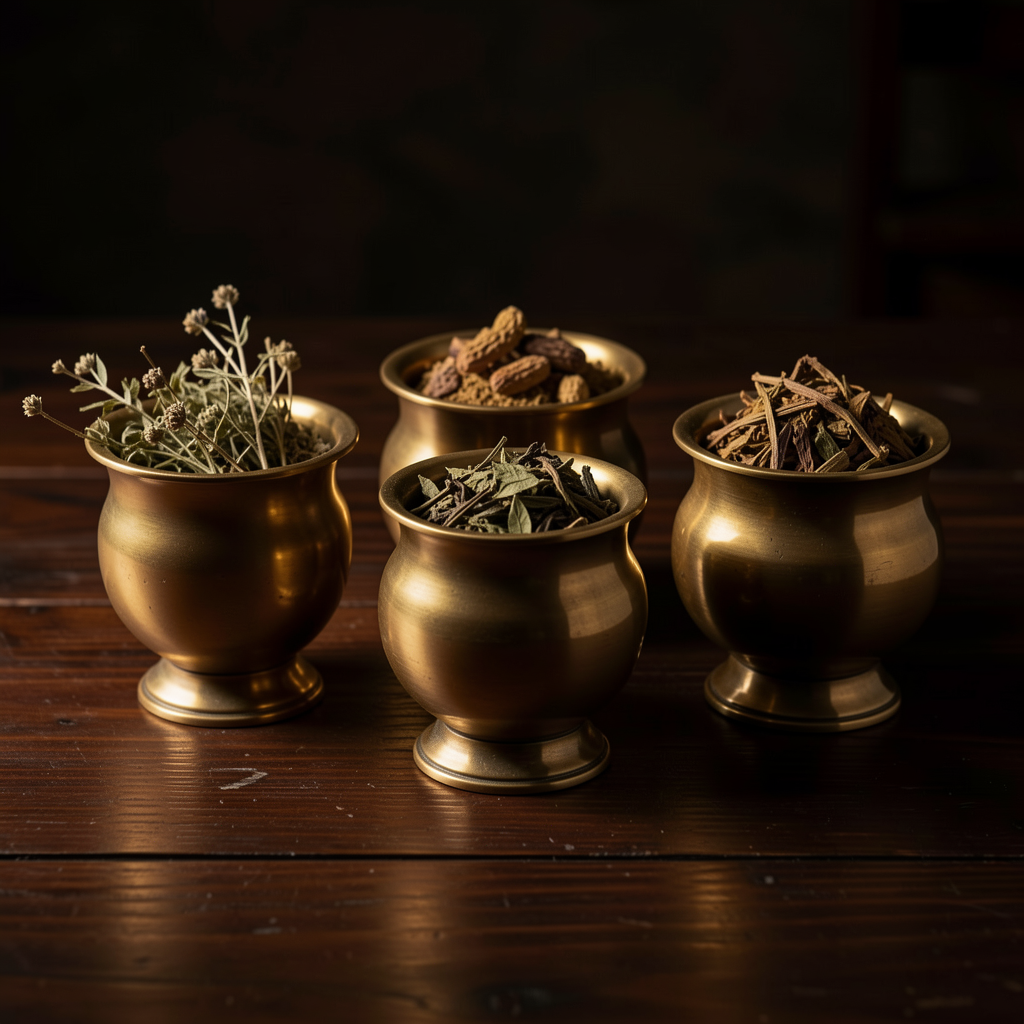
These are not organs. They are officials.
The first distinction that changes everything.
When a classical practitioner says "the Liver," they do not mean the liver the surgeon can see and weigh. The classical Liver — with a capital L — is a functional network: the organ itself, the meridians that belong to it, the tissues it governs (sinews), the emotion it expresses (anger and frustration), the fluid it produces (tears), the phase it inhabits (Wood), the season it peaks in (Spring), the time of day it holds watch (1–3 AM), and the clinical patterns that arise when it fails.
The Western liver is a metabolic organ. The classical Liver is a governing function. The same word names two different questions. The Western question is: what does this tissue do biochemically? The classical question is: what system is this organ responsible for governing — and what breaks down across the whole body when that governance fails?
Different question. Different answer. Different medicine.
The twelve officials. 靈蘭秘典論
Su Wen Chapter 8 — the Discourse on the Hidden Canons in the Numinous Orchid Chamber — defines the twelve organs through a single extended metaphor: the state. The body is a kingdom. Each organ is an official with a specific portfolio. The question the classical practitioner is always asking is: which official has failed in their function? And why?
- Heart — the ruler. Spirit brilliance originates in it.
- Lung — chancellor and mentor. Order and moderation originate in it.
- Liver — the general. Planning and deliberation originate in it.
- Gallbladder — the rectifier. Decisions and judgments originate in it.
- Spleen / Stomach — officials of grain storage. The five flavors originate from them.
- Kidneys — operators with force. Technical skills and expertise originate from them.
- San Jiao — opener of channels. The paths of water originate in it.
"If the ruler is enlightened, his subjects are in peace. If the ruler is not enlightened, the twelve officials are in danger. This causes the paths to be obstructed and impassable." — Su Wen, Chapter 8
What "Liver" means clinically.
The classical Liver governs the free flow of Qi throughout the body. When the Liver is functioning well, movement is smooth: emotions flow and resolve, tendons are supple, the menstrual cycle is regular, sleep is uninterrupted, digestion is easy. When the Liver's governing function is compromised — through chronic stress, emotional suppression, or excessive mental load — Qi stagnates. Everything backs up behind the blockage.
Liver Qi stagnation is the most common pattern in modern clinical practice. The Western clinic calls the same presentation anxiety, irritable bowel syndrome, premenstrual syndrome, tension headaches, and insomnia — five diagnoses, five possible medications, one classical pattern. The treatment principle is singular: move the Liver, restore free flow, and most of the downstream problems resolve without being directly addressed.
This is what the classical Liver question asks that the Western liver question does not: what is this system responsible for governing — and what breaks down across the whole body when it stops governing well?
The Spleen that built empires.
The classical Spleen is the official responsible for transformation and transportation — the extraction of pure Essence from food and drink. In the classical model, the Spleen's Qi sends the pure Essence upward to the Lung to become Qi and Blood, and distributes it to nourish the muscles and sustain thought. A strong Spleen is a strong mind, strong digestion, and strong muscles simultaneously. They are the same function.
Spleen Qi deficiency — produced by cold and raw food, overthinking, excessive sitting, and processed food the Spleen was not designed to process — is the second most common pattern in modern practice. Fatigue, loose stools, poor appetite, brain fog, heavy limbs, easy bruising. One pattern, multiple Western names. The formula does not address each symptom separately. It supports the Spleen's transformation function, and the symptoms resolve as the downstream consequence.
The Kidney that holds the root.
The Kidney stores the Essence — the constitutional inheritance, the deep reserve that cannot be quickly replaced. It governs growth, reproduction, development, bone marrow, and the deepest vitality. It is the body's savings account. The Ming Men fire — the Gate of Life — lives within the Kidney. And the Kidney is the root of Yin and Yang for the entire body: every other organ borrows from the Kidney's reserve when its own resources run low.
Kidney deficiency is the pattern of aging — not because aging is a disease, but because the Essence is finite, and its depletion is what time means in the classical model. The task of herbal medicine is to slow and moderate that depletion, nourish what remains, and clear whatever obstructs the Kidney from receiving the nourishment the other organs are trying to send it.
Modern medicine manages disease. Classical medicine governs the officials. The difference is a matter of depth — and of whether you are reading the system or the symptoms.
Same word. Different question. Different answer. That is not mysticism. That is clinical precision.
Your Spleen is not your spleen. This is good news.
Modern medicine treats organs. Classical medicine reads organ networks.
Twelve officials. One kingdom. The practitioner serves the ruler.