Chamber XIII
The Shang Han Lun & Jin Gui Yao Lue.
Two thousand years of clinical protocol. The working texts of classical practice — not historical curiosities. Written in grief. Still on the clinical table every morning.
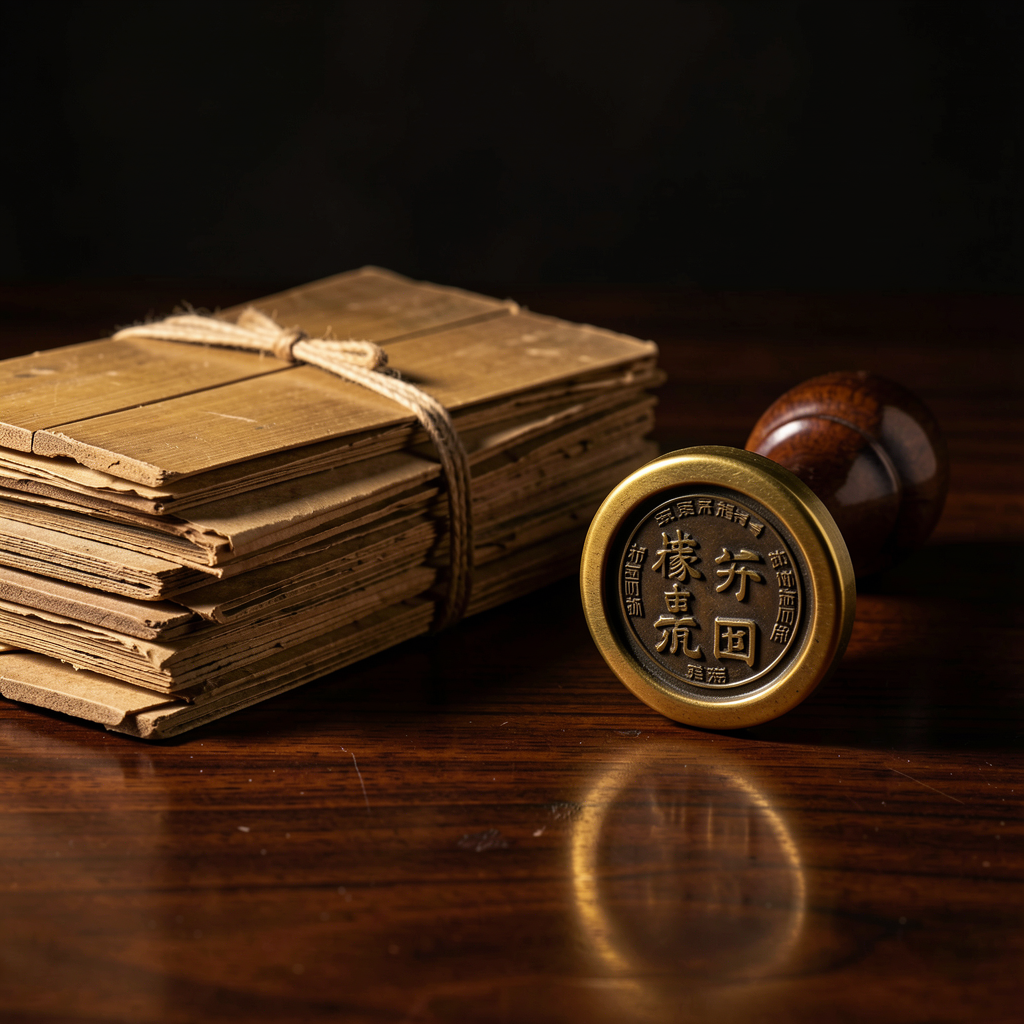
Zhang Zhongjing wrote them. The clinic still reads them every day.
The book that survived everything.
Around 220 CE, a physician named Zhang Zhongjing — grieving the loss of two-thirds of his extended family to epidemic disease — compiled and systematized the clinical knowledge of his lineage into a text called the Shang Han Za Bing Lun: the Treatise on Cold Damage and Miscellaneous Disorders. He was not writing theory. He was writing clinical protocol from the wreckage of his own family.
The original unified text did not survive intact. What we have are two books carved from it: the Shang Han Lun, which maps the progression of externally contracted disease through six conformations, and the Jin Gui Yao Lue — Essential Prescriptions from the Golden Cabinet — which addresses internally engendered disorders: the chronic, the constitutional, the gynecological, the miscellaneous. Together they are the complete clinical system. Read one without the other and you are reading half the argument.
Both texts survived the collapse of dynasties, the burning of libraries, and a thousand years of fragmentation. The Song dynasty emperor ordered reconstruction in 1065 CE; Lin Yi, Gao Baohen, and Sun Qi assembled surviving fragments and commentaries into the edition we read today. What emerged is the foundational clinical reference of East Asian herbal medicine. Its formulas remain in active use across China, Japan, Korea, Taiwan, and the growing schools of classical practice in the West.
He wrote it in grief. Two thousand years later, we still read it because it works.
The Shang Han Lun: six stages of disease.
The Shang Han Lun maps disease progression through six conformations — three Yang stages and three Yin stages. The Yang stages are the body resisting and fighting. The Yin stages are the body depleted and withdrawing. Movement through the stages is not inevitable — correct treatment at the earliest stage prevents progression.
Line 1 of the text has been memorized by practitioners for two millennia: "In disease of Tai Yang, the pulse is floating, the head and nape are stiff and painful, and there is aversion to cold." Two thousand years old. Still the first clinical checkpoint every morning. The pulse is floating: the body is mobilizing at the surface. Aversion to cold even with fever: the absolute hallmark of a Tai Yang stage. These are not abstract categories. They are what the body does, readable in thirty seconds at the wrist.
- Tai Yang 太陽 — The surface. Pulse floating. Head and nape stiff and painful. Aversion to cold. The body mobilizes at the exterior.
- Yang Ming 陽明 — Interior Yang. Fever without chills. The stomach domain is full and excessive. Heat has entered the interior and is burning from within.
- Shao Yang 少陽 — The pivot. Bitter taste in the mouth, dry throat, dizzy vision. Half-exterior, half-interior. The body can no longer fight outward and has not yet retreated inward. The hinge.
- Tai Yin 太陰 — Cold entering the organs. Abdominal fullness, vomiting, inability to eat, spontaneous diarrhea. The Spleen is overwhelmed. The interior is cold and damp.
- Shao Yin 少陰 — Deep deficiency. "The pulse is faint and thin, and there is a desire only to sleep." Heart and Kidney Yang critically depleted. The Shen has retreated. Urgent warming required.
- Jue Yin 厥陰 — The deepest stage. Consumptive thirst, upward Qi surging, painful heat in the heart, hunger with inability to eat. Mixed heat and cold in terminal conflict. The body's homeostasis at its limit.
The Jin Gui Yao Lue: the internally engendered disorders.
If the Shang Han Lun is about what attacks the body from outside, the Jin Gui Yao Lue is about what the body does to itself — what accumulates from within when the fundamental substances are depleted, when the organs lose their coordination, when emotion, diet, overwork, or time itself damages the internal architecture. This is the text of chronic disease. This is the text of the conditions Rootworth primarily works with.
Twenty-five chapters. Sixty diseases treated across internal medicine, gynecology, and miscellaneous disorders. The Jin Gui gives us Gui Zhi Fu Ling Wan — the formula for blood stasis in the uterus, still the most-prescribed gynecological formula in classical practice. It gives us Jin Kui Shen Qi Wan — the foundational Kidney Yang formula, the architect of warmth and transformation in the lower burner. It gives us Da Huang Zhe Chong Wan — for the deep, dry blood stasis that accumulates over years in a body that has been running on insufficient fuel. Xiao Jian Zhong Tang — for the middle burner too depleted to generate Qi and Blood, the body that is tired in the way that sleep does not fix.
The Jin Gui does not treat febrile disease progression. It treats the person who has been struggling for three years and doesn't know why. It treats the pattern that was never acute — that simply wore deeper season by season until the deficit became a diagnosis. This is why classical practitioners read both texts. The Shang Han Lun tells you how disease moves. The Jin Gui tells you what happens when disease doesn't move — when it settles in.
The Shang Han Lun is the fire brigade. The Jin Gui Yao Lue is the structural engineer. You need both to read a building correctly.
Why these texts still teach.
Neither text is a comprehensive encyclopedia. The Shang Han Lun is a decision tree for one clinical problem: where is the patient in the arc of disease progression, and what do you do about it? The Jin Gui is a case-pattern reference for the full range of internal damage. Together they encode a clinical reasoning so dense that practitioners spend careers studying the 113 original Shang Han formulas and the Jin Gui's parallel architecture — the modification lines, the contraindications, the edge cases Zhang Zhongjing preserved in his commentary.
Modern pharmacological research has spent decades validating the mechanisms. Xiao Chai Hu Tang's immunomodulatory effects. Gui Zhi Tang's autonomic regulation. Si Ni Tang's Yang-rescuing protocol studied in the context of septic shock. Jin Kui Shen Qi Wan's effects on the hypothalamic-pituitary-adrenal axis. The chemistry keeps confirming what the clinic has been applying since 220 CE. The texts wrote the protocol first. The laboratory showed why it works — two thousand years later.
Zhang Zhongjing wrote the protocol in grief, from a body count. Modern medicine is still identifying the mechanism. The clinical results did not wait for the explanation.
Zhang Zhongjing lost two-thirds of his family. Then he wrote the manual. It still works.
Two thousand years of clinical outcomes is a different kind of evidence base.
The protocol came first. The mechanism came two thousand years later. The results did not wait.
Two texts. One system. Every pattern either moves through the six stages or settles into the internal damage. Zhang Zhongjing wrote the map for both.
These texts belong to the Library of Classics — the full lineage of transmitted knowledge that reaches from bamboo slip to clinic table. Read the transmission story.