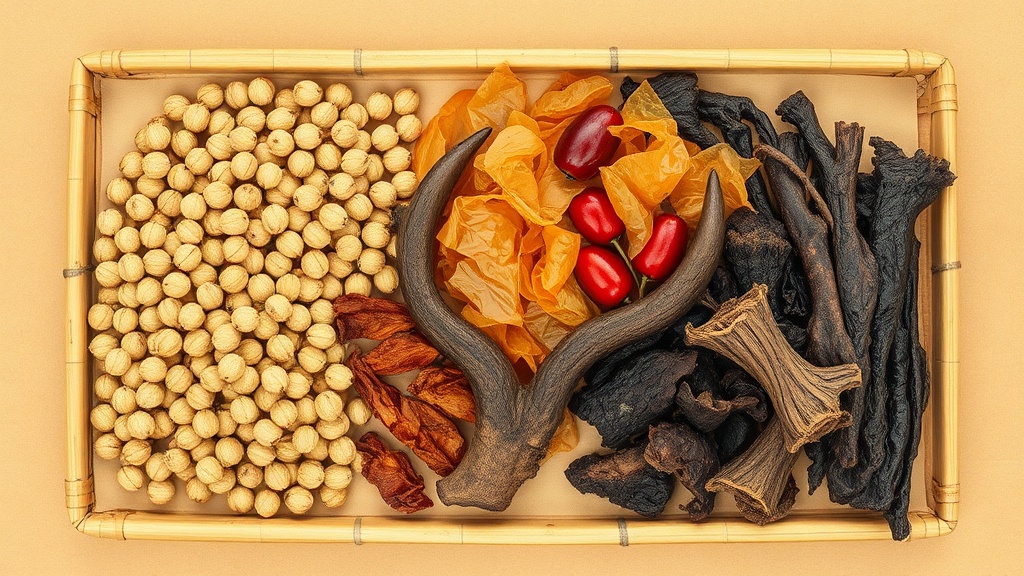

RP is the paradigm Jing-depletion picture in classical Chinese medicine. Rod photoreceptors — the most metabolically demanding and constitutionally dependent cells in the retina — fail first. The classical herbal framework asks a different question: what can be done in the terrain below that threshold?
The visual field narrows at the edges first. Night vision falters before other things do. Colors dull slightly in low light. The ERG confirms it: rod photoreceptors are declining, starting in the periphery and moving inward. The genetic test returns a mutation. The ophthalmologist explains the prognosis — progressive, hereditary, and without a pharmacological cure for most genotypes.
And then there is the question that standard ophthalmologic care does not answer: what can be done now, in the terrain that exists, to support what remains?
This is the space classical Chinese herbal medicine is designed to occupy — not as a competitor to gene therapy or ophthalmologic monitoring, but as a constitutional framework that asks different questions and addresses different layers. The classical question is: where is the Jing deficient, and what herbal approach best supports the constitutional terrain from which photoreceptor function draws?
The Classical Anchor: Kidney, Essence, and Neural Tissue
腎主骨生髓 — Shèn Zhǔ Gǔ Shēng Suǐ — “The Kidney governs bone and generates marrow”
This classical statement reaches further than bone and spinal cord. In the five-phase framework, “marrow” (suǐ, 髓) encompasses all neural tissue generated from the deep constitutional reserve — including the optic nerve, the retina, and the photoreceptor layer. The retina is not marrow; but it draws from the same Jing substrate, and when that substrate is insufficient, the neural tissue at the furthest reach of the system fails first.
The rod photoreceptor outer segment is the most metabolically active tissue in the body, per gram of tissue. It depends entirely on the retinal pigment epithelium to recycle its shed outer segments, replenish its chromophore supply, and maintain the ionic gradients required for phototransduction. Every step of that cycle requires the constitutional fuel that, in classical terms, is Jing.
Retinitis pigmentosa, in the classical frame, is the paradigm Jing-depletion picture: hereditary, progressive, beginning exactly where Jing expression is most peripheral and most metabolically demanded. The retina runs dry from the outside in — which is also exactly how RP progresses clinically.
Three Pattern Layers
Kidney Jing Deficiency — The Root (Shèn Jīng Xū, 腎精虛)
Kidney Jing deficiency (Shèn Jīng Xū, 腎精虛) is the constitutional root in RP. Jing — the deep essence one inherits and that can only be partially replenished — is what sustains the retina’s regenerative capacity. Hereditary RP represents an inherited insufficiency of Jing expression at the retinal level. The rod photoreceptors of the peripheral retina fail first because they sit at the furthest constitutional reach: the more peripheral, the more Jing-dependent, the earlier the expression of insufficiency.
The Jing-deficiency picture often shows up beyond the eyes: early greying, constitutional fatigue, reproductive health patterns, an overall sense of running on a reserve that is thinner than it should be for the patient’s age. The retina is simply where it becomes visible first.
Liver Blood Deficiency — The Accelerating Layer (Gān Xuè Xū, 肝血虚)
Liver Blood deficiency (Gān Xuè Xū, 肝血虚) develops alongside Kidney Jing depletion and accelerates the picture. The classical teaching is direct: the Liver receives Blood and the eyes can see. When Liver Blood is insufficient, the optic nerve and retinal vasculature are under-nourished. The photoreceptors already operating on insufficient Jing now receive less vascular support in addition. The two patterns compound each other — Jing depletion weakens Liver Blood production; Liver Blood insufficiency accelerates the rate at which remaining photoreceptors are under-resourced. Both must be addressed in any serious formula design for this condition.
Yang Deficiency in Advanced Stages (Shèn Yáng Xū, 腎陽虛)
In later-stage RP — particularly after decades of progressive Jing depletion — Kidney Yang deficiency (Shèn Yáng Xū, 腎陽虛) frequently emerges alongside the Yin-Jing picture: cold extremities, nocturia, early-morning fatigue, pallor, a loss of the warming and activating function that Yang provides. At this stage the constitutional picture has shifted from pure Yin-Jing depletion into mixed Yin-Yang deficiency, and the herbal approach must shift with it.
Illustrative Herbs: The Jing-Building and Blood-Nourishing Categories
The herbal framework for RP works at the deepest constitutional register — Jing-building herbs for the root, Liver Blood-nourishing herbs for the accelerating secondary layer, and Yang-warming herbs when the picture has shifted into advanced-stage mixed deficiency. These are not gentle tonics; they are the heaviest-weight constitutional herbs in the classical materia medica.
Tu Si Zi (Tú Sī Zǐ, 菟丝子) — dodder seed — is the classical herb for “seeing in the dark.” Classical texts note Tu Si Zi specifically for night blindness from Kidney deficiency, which maps directly to rod photoreceptor function: rods are the dim-light receptors, and their failure is the first presentation of RP. Tu Si Zi tonifies both Kidney Yin and Yang simultaneously — a balanced Jing-building herb that avoids the drying effect of pure Yang tonics and is therefore suitable for long-term use across different constitutional phases of the condition.
Lu Jiao Jiao (Lù Jiǎo Jiāo, 鹿角胶) — deer antler gelatin — occupies a heavier register: one of the most powerful Jing and Yang tonics in the classical materia medica. It replenishes deep essence, warms Kidney Yang, and tonifies Blood simultaneously. In the constitutional picture of RP, where Jing depletion is the root and Yang insufficiency becomes an increasingly prominent layer over years, Lu Jiao Jiao is the herb that reaches the depth of the deficiency that lighter tonics cannot. Its weight is reserved for the picture that requires it.
Gou Qi Zi (Gǒu Qǐ Zǐ, 枸杞子) — wolfberry — is the classical Liver-Kidney Yin-Blood tonic and the traditional eye herb. Classical texts note it for brightening the eyes and sustaining visual clarity from the Kidney root. In the RP formula, Gou Qi Zi addresses the Liver Blood-deficiency layer while providing Kidney Yin nourishment that supports the root work of Tu Si Zi and Lu Jiao Jiao. It is the middle register of the formula: less deep than the Jing builders, more constitutional than the brightening herbs.
Shu Di Huang (Shú Dì Huáng, 熟地黄) — cooked rehmannia — is the quintessential Kidney Jing-building herb in the classical materia medica. The major classical formulas for visual decline from Kidney root deficiency anchor on Shu Di Huang as their primary tonic substance. Rich, sweet, and deeply nourishing, it builds Kidney Jing and Blood simultaneously, and is the Yin-axis counterpart to Tu Si Zi’s balanced Yin-Yang building action. Together they address the Jing deficiency from both poles.
A complete formula is not a curated selection of individual herbs. It is a structured constitutional design in which these herbs function in ratio to each other — proportions adjusted to the specific balance of Jing-depletion, Blood deficiency, and Yang insufficiency visible at intake, and modified over months and years as the pattern shifts through the course of treatment.
The Functional Medicine Layer: Mechanism at the Cellular Level
The photoreceptor outer segment is the most metabolically active tissue in the body. The rod cell’s outer segment undergoes complete renewal approximately every ten days — shedding spent discs from its tip while the retinal pigment epithelium phagocytoses and recycles them. This cycle requires continuous, high-output cellular energy, abundant antioxidant capacity to manage the oxidative load of phototransduction, and structural membrane components. In RP, this metabolic demand is borne by cells already under constitutional stress.
Two functional spheres are most relevant to the RP terrain:
The neuro-optic mitochondrial support category addresses the cellular energy environment — the energy production required to sustain photoreceptor renewal, phototransduction cycling, and ion gradient maintenance. This is the Water/Kidney functional sphere in the classical-functional integrated model: the Kidney governs deep constitutional energy; the mitochondrion is the cellular expression of that energy in the photoreceptor.
The retinal antioxidant support category addresses the oxidative load of the photoreceptor microenvironment. Phototransduction generates reactive oxygen species as a byproduct of the light-driven cycle. In healthy retinas, an abundant multi-layer antioxidant defense system manages this load. In RP, where the retinal pigment epithelium is under increasing stress from accumulating shed photoreceptor material, antioxidant support may help protect remaining rod and cone cells from oxidative acceleration of the degeneration.
The intake assesses which sphere is most compromised — through the constitutional pattern, not through lab panels. The formula and the functional support tier address the same terrain from two angles: classical constitutional depth and upstream cellular mechanism.
What This Is — and What It Cannot Be
RP is a hereditary condition with no herbal cure. The Kidney Jing framework aims to support the constitutional terrain — to slow the rate of Jing depletion and optimize the function of residual retinal tissue. Some patients find the classical approach stabilizes their functional picture over time. Results are individual, unpredictable, and require a genuine commitment to the long game.
Gene therapy — particularly for patients with RPE65, RPGR, CNGB3, and related mutations — is advancing and offers the most promising structural path for certain genotypes. We encourage every RP patient to understand their genetic picture and monitor trial availability. The classical herbal framework and gene therapy are not competing options; they address different levels of the same problem — gene therapy at the molecular fault line, classical medicine in the constitutional terrain around it.
What the classical framework provides is support for the terrain in which the remaining rod photoreceptors — the ones that still function — are currently operating. Slower Jing depletion. Better Blood nourishment for the retinal vasculature. A warmer, more Yang-sufficient substrate when the picture has entered mixed-deficiency territory. These are not dramatic interventions. They are the slow, careful work of constitutional medicine: meeting the patient where they are, supporting the terrain that determines how fast things change, and staying honest about the difference between constitutional support and structural repair.
Begin your pattern assessment
A note on these statements
These statements have not been evaluated by the Food and Drug Administration. These products are not intended to diagnose, treat, cure, or prevent any disease. Classical Chinese herbal medicine and functional medicine supplements are offered as part of a pattern-based intake process, not as treatments for diagnosed medical conditions.