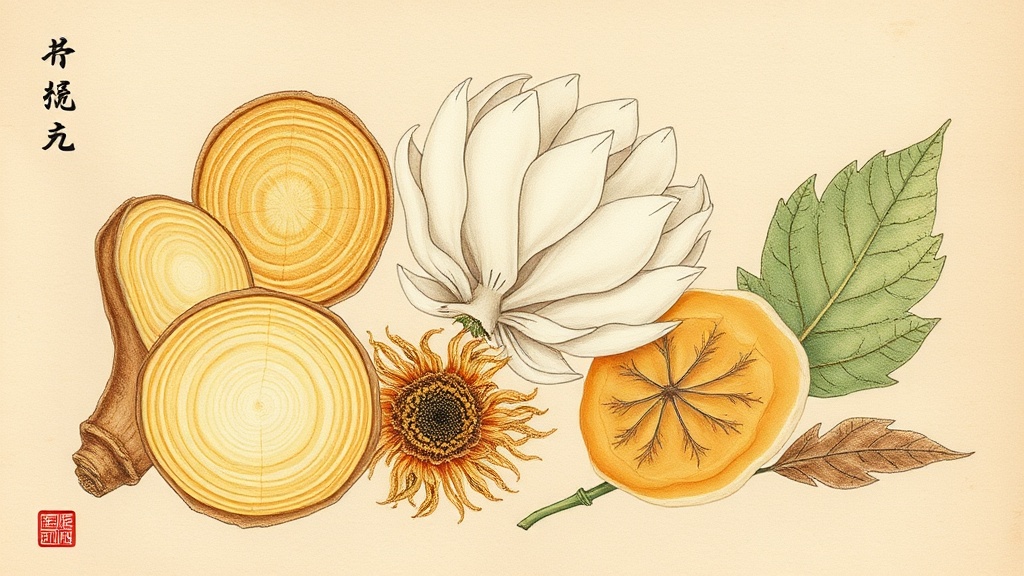

The optic nerve is the most Blood-dependent structure in the eye. When Liver Blood fails to nourish it — or Wind-Heat disrupts its channel — vision dims. Classical Chinese herbal medicine has mapped this territory for centuries, and the framework it offers is as precise as it is old.
The ophthalmologist’s report names it: optic neuritis. Or NAION — non-arteritic anterior ischemic optic neuropathy. The mechanism differs, but the experience converges: visual field loss, diminished brightness, sometimes pain with eye movement, a sudden awareness that the world looks different through one eye than the other. The neuro-ophthalmic workup begins. Medications are considered. A follow-up is scheduled.
Conventional care has a clear protocol for the acute phase. What it addresses less directly is the constitutional terrain — the Blood quality, the Kidney root, the constitutional picture that shaped the optic nerve’s vulnerability long before the episode occurred. This is exactly the territory the classical herbal framework is designed to read.
This post describes the classical pattern map for optic neuritis and NAION — not as an alternative to urgent conventional care, but as a complementary constitutional framework for the recovery phase and the long-term terrain picture.
The Classical Teaching: Liver Blood and the Eye
肝受血而能視 — Gān Shòu Xuè Ér Néng Shì — “The Liver receives Blood and the eyes can see”
This statement from the Su Wen — the foundational classical text of Chinese medicine — is the organizing principle for every visual condition that results from Blood insufficiency. The optic nerve, in classical understanding, is the channel through which the Liver’s visual function is expressed. It requires continuous, adequate Blood supply to sustain the axonal transmission that produces sight. When Liver Blood is deficient, the optic nerve dims — not because anything is structurally wrong with the nerve itself in the early stages, but because the nourishment it requires to function at full capacity is insufficient.
This is the Blood-deficiency picture, and it is the dominant classical pattern across the majority of optic neuritis and NAION presentations. Understanding it changes the clinical question: not just “what happened to the optic nerve?” but “what was the constitutional terrain that made this nerve vulnerable?”
The classical five-region mapping of the eye illuminates the organ architecture further: the iris belongs to the Liver (Wood element); the pupil belongs to the Kidney (Water element). The optic nerve — connecting retina to brain — is the Liver’s channel made visible. Conditions affecting the optic nerve are, in the classical frame, Liver-Kidney territory from the root up.
Three Pattern Layers
Classical pattern diagnosis for optic neuritis and NAION typically resolves into three overlapping layers, each pointing to a different aspect of the constitutional picture and directing a different herbal action.
Blood Deficiency — The Foundation Layer (Xuè Xū, 血虚)
Blood deficiency (Xuè Xū, 血虚) is the most common root across both conditions. The optic nerve is the most Blood-dependent structure in the visual system, and it is the first to show symptoms when Blood is chronically insufficient. The clinical picture: visual dimming rather than acute pain, a pale or washed-out quality to vision, accompanying fatigue, pallor, and a pale tongue with a thin pulse. This is the pattern of a person who has been running on insufficient Blood for years before the optic nerve became the site of visible expression.
Wind-Heat — The Acute Inflammatory Layer (Fēng Rè Mù Chì, 风热目赤)
Wind-Heat invading the eye (Fēng Rè Mù Chì, 风热目赤) is the classical picture for the acute inflammatory phase of optic neuritis. Pain with eye movement — the hallmark symptom that distinguishes optic neuritis from other causes of visual loss — reflects Wind-Heat in the Liver channel reaching the optic nerve. Rapid onset, pain, and acute visual loss: this is Wind-Heat layered on a Blood-deficiency root. The herbs that address Wind-Heat are clearing and dispersing — a distinct action category from the Blood-nourishing herbs used in the recovery and constitutional phases.
Kidney-Liver Deficiency — The NAION Constitutional Root
Non-arteritic anterior ischemic optic neuropathy has a characteristic constitutional profile: older patient, hypertension, sleep apnea, small disc diameter, vascular risk factors. In classical terms, this is Kidney-Liver deficiency — Jing depletion leading to vessel fragility, and Liver Blood insufficiency leaving the optic nerve head poorly perfused at a structural level. The pulse is deep and thready. The tongue is pale. The constitutional work is long-game: rebuilding Jing, nourishing Blood, and supporting the vascular substrate that the Kidney governs.
Illustrative Herbs: The Blood-Nourishing and Wind-Clearing Categories
The herbal framework for optic neuritis and NAION works across two primary action categories: Blood-nourishing herbs for the constitutional foundation, and Wind-Heat-clearing and eye-brightening herbs for the acute inflammatory layer. These categories function in ratio to each other, with the emphasis shifting based on the current phase of the clinical picture.
Dang Gui (Dāng Guī, 当归) is the foundational Blood herb in classical Chinese medicine — called the “Queen of Blood” in the tradition. It nourishes and moves Blood simultaneously, preventing the stagnation that pure tonification can produce over time. Classical texts note it specifically for visual malnourishment from Blood insufficiency: the optic nerve that is dim and under-nourished because the Blood has nowhere adequate to draw from. It is the core of the Blood-nourishing category for this condition.
Bai Shao (Bái Sháo, 白芍) — white peony root — nourishes Liver Blood and Liver Yin together. Classical texts describe it for “the eye that is not bright” — the visual dimness and loss of clarity that characterizes Blood-deficient vision. Where Dang Gui moves and nourishes, Bai Shao consolidates and deepens. Together they form the foundational dyad of the Liver Blood-nourishing category.
Ju Hua (Jú Huā, 菊花) — chrysanthemum flower — is the classical Wind-clearing, eye-brightening herb. Light, cooling, and dispersing, it clears Wind-Heat from the Liver channel and brightens the visual field. In acute optic neuritis, Ju Hua is part of the Wind-clearing action that addresses the inflammatory layer. Through the recovery phase, it continues as a brightening and protective herb for the visual channel. One of the oldest classical remedies in the materia medica for any eye condition.
Gou Qi Zi (Gǒu Qǐ Zǐ, 枸杞子) — wolfberry — is the Liver-Kidney Yin-Blood tonic used as the constitutional base that sustains the Blood-nourishing work through the long recovery and maintenance phases. Classical texts note it directly for brightening the eyes and sustaining visual clarity from the Kidney root. It is the long-term nourishing base that anchors the formula through the constitutional rebuilding period.
A complete formula is never a selection of individual herbs. It is a structured, pattern-matched design in which these herbs function in ratio to each other — proportions modified by the specific balance of Blood deficiency, Wind-Heat, and constitutional Kidney root visible at intake, and adjusted over time as the pattern shifts with treatment.
The Functional Medicine Layer: Mechanism at the Cellular Level
Functional medicine addresses the upstream terrain that shapes optic nerve vulnerability — the metabolic, inflammatory, and cellular-energy environment in which the nerve operates. For optic neuritis and NAION, two functional spheres are most relevant:
The neuro-optic mitochondrial support category addresses the axonal energy environment. The optic nerve axons are among the most metabolically demanding in the body — their mitochondria-dependent ATP production sustains the continuous electrochemical signaling that produces visual transmission. Mitochondrial insufficiency is a recognized contributor to optic nerve vulnerability, and this functional sphere is the direct cellular-level counterpart to the classical Blood-nourishing action category.
The anti-inflammatory support category addresses the inflammatory component — both the acute phase of optic neuritis and the chronic low-grade vascular inflammation implicated in NAION. The classical Wind-Heat pattern corresponds closely to what functional medicine identifies as inflammatory signaling in the optic nerve microenvironment; the two frameworks are reading the same biological fact from different angles.
The intake reads which sphere is most compromised — through the constitutional pattern diagnosis, not through lab panels (though functional labs, if already completed, integrate readily into the picture). The herbal formula and the functional support tier address the same terrain through two complementary lenses: classical constitutional depth and upstream cellular mechanism.
What This Framework Is — and What It Is Not
Acute optic neuritis requires immediate conventional evaluation. Visual field loss with pain on eye movement is a neurologic emergency until proven otherwise — it demands urgent ophthalmologic and neurologic workup, including MRI to assess for demyelinating disease. The classical herbal framework described here is not a substitute for that evaluation, and we do not present it as one.
What the classical framework offers is the constitutional layer: a reading of the Blood quality, the Kidney root, and the terrain that shaped the optic nerve’s vulnerability before the episode, and that will shape the recovery terrain after the acute phase has been managed. This layer is not visible on MRI. It is not measured by ERG. But it is clinically accessible through the intake, and it is addressable with the right herbal prescription matched to the right pattern.
For NAION specifically — where there is no acute pharmacological intervention with proven visual benefit — the recovery phase may be precisely the moment where constitutional support is most meaningful. The window between “the event has occurred” and “the next ophthalmology check” is where the classical pattern diagnosis and the herbal prescription have the most room to work.
Begin your pattern assessment
A note on these statements
These statements have not been evaluated by the Food and Drug Administration. These products are not intended to diagnose, treat, cure, or prevent any disease. Classical Chinese herbal medicine and functional medicine supplements are offered as part of a pattern-based intake process, not as treatments for diagnosed medical conditions.