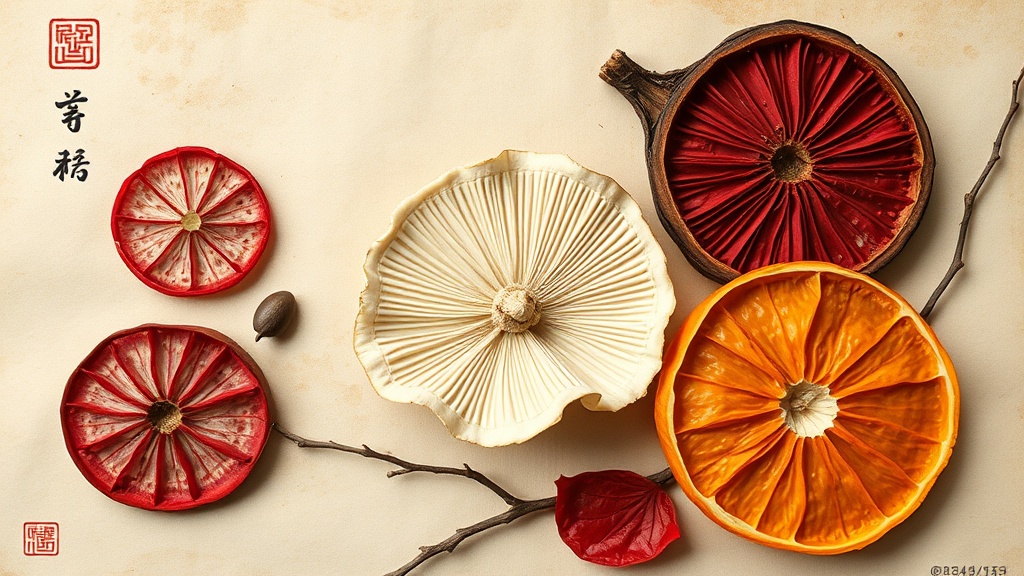

When phlegm-stasis condenses on the retinal surface — as Chinese medicine reads it — the result is exactly what a retinal scan reveals: a membrane forming where there should be none, puckering the tissue beneath it into a landscape of distorted lines.
Macular pucker goes by several names — epiretinal membrane, cellophane maculopathy, macular fibrosis — but its mechanism is consistent: a thin fibrocellular layer grows across the inner surface of the macula, contracting and wrinkling the very tissue responsible for the clearest central vision. The result is familiar to anyone who lives with it: straight lines that bend and bow, text that blurs at the center even when the periphery is clear, a central haze that is always there but never quite resolves. The technical term for that distortion is metamorphopsia. The lived experience of it is considerably harder to name.
Macular hole is its sibling condition — where pucker exerts enough traction on the foveal center to create an actual gap in the retinal tissue rather than a surface membrane. Both conditions arise from the same vitreoretinal interface, both produce central vision disruption, and both are evaluated by the same retinal specialists using the same imaging tools. Clinically, they occupy the same territory.
Ophthalmology sees epiretinal membrane as a structural event at the vitreoretinal junction — glial cells and fibrocytes migrating onto the inner limiting membrane and proliferating there, driven by posterior vitreous detachment, inflammation, or idiopathic fibrocellular activation. Chinese medicine reads the same event through a different diagnostic lens: not structure alone, but the terrain that allowed stasis to consolidate there. The terrain question is where the herbal work begins.
The Macula as Earth Element Territory
脾主運化 — Pí Zhǔ Yùn Huà — The Spleen governs transport and transformation
In the classical five-element map of the eye, the macula corresponds to Earth — the Spleen and Stomach sphere, the axis of the body’s transformative physiology. This is not an arbitrary assignment. The classical ophthalmological teaching places the fovea and the central retinal zone under the Spleen’s governance precisely because it is the densest, most nutrient-dependent concentration of tissue in the entire eye. Maintaining that density requires relentless Spleen work: transforming nutrients, moving fluids, distributing Blood to the most metabolically demanding photoreceptors in the body.
When the Spleen’s transport function weakens — through constitutional depletion, chronic digestive burden, dietary dampness, or the accumulated attrition of age — two things happen simultaneously. Dampness accumulates where transformation should have cleared it. And Blood, deprived of the Spleen’s pushing function, begins to stagnate. Dampness and Blood stasis together create the phlegm-stasis terrain: dense, turbid, adhesive. It settles where the body’s circulation is slowest and the tissue is most delicate. The inner retinal surface — suspended between the vitreous and the macula — is exactly that location.
This is how Chinese medicine reads epiretinal membrane: not as an isolated structural event, but as the visible result of a phlegm-stasis accumulation (tán yū, 痰瘀) that has condensed at the foveal surface over years. The membrane is the deposit. The pattern is the process that generated it. The herbal prescription targets the process.
Two Root Patterns in Epiretinal Membrane
Phlegm-Stasis Forming a Membrane (Tán Yū Jié Mó, 痰瘀結膜)
This is the foundational pattern — and in most patients with idiopathic epiretinal membrane, it is the primary one. Spleen dampness (Pí Shī, 脾濕) and Blood stasis (Xuè Yū, 血瘀) are not separate processes in this presentation; they are mutually reinforcing. Dampness slows Blood. Stagnant Blood thickens into a turbid medium that is more adhesive than it should be. Together they create the fibrous, membranous deposit that classical texts describe as jié mó — formed membrane, consolidated accumulation.
The herbal strategy for this pattern combines two families of action: Blood-moving herbs that invigorate circulation at the retinal surface and dissolve existing stasis, and phlegm-resolving herbs that transform the damp matrix and withdraw the substrate the stasis requires. These two actions reinforce each other — you cannot fully move the Blood without clearing the damp medium it is suspended in, and you cannot fully clear the dampness while the Blood remains stagnant. The formula approach integrates both. Herbs that carry their action upward to the eye — following the classical directing tradition — are often included to focus the formula’s reach on the target organ.
Liver Blood Deficiency (Gān Xuè Bù Zú, 肝血不足)
The structural integrity of the vitreoretinal junction depends, in classical terms, on Liver Blood nourishing the retinal surface from below and from within. The Liver opens to the eyes — Gān Kāi Qiào Yú Mù (肝開竅於目) — and its Blood is the medium through which that nourishment flows. When Liver Blood is insufficient, the vitreoretinal adhesion loses its nutritive foundation. Traction develops because the tissue at the foveal center is no longer adequately supported. Structural integrity at the vitreoretinal interface requires Blood quality as much as Blood quantity.
This pattern is more frequently the background in patients whose epiretinal membrane presentation is accompanied by other signs of Blood deficiency — visual fatigue, dry eyes, floaters that predate the membrane diagnosis, paleness, and the constitutional profile of prolonged depletion. In the phlegm-stasis pattern, Blood is present but stagnant; in the Blood deficiency pattern, the Blood substrate is insufficient. The formulas are architecturally different. In Blood deficiency, nourishing herbs are primary and moving herbs are secondary and gentle — because vigorous moving action without the Blood substrate it needs to move will deplete rather than invigorate.
Three Herbs at the Core of the Phlegm-Stasis Pattern
These herbs illustrate the categories of action involved in the epiretinal membrane terrain. They are not a prescribable list — the specific formula, its architecture, and the relative weighting of each herb depend entirely on the individual pattern assessment. But as a map of the territory, they clarify what the herbal approach is doing and why.
- Chi Shao (Chì Sháo, 赤芍) — red peony root. The classical Blood-invigoration herb for membranous deposits in the retinal channels. Chi Shao moves Blood and dispels stasis without excessive warming action — important at the retinal surface, where Heat-inducing herbs can be counterproductive. Classical texts specifically associate its action with breaking up hardened Blood accumulation in the sensory organs. It is the primary “moving” herb in phlegm-stasis formulas directed at the eye.
- Fu Ling (Fú Líng, 茯苓) — poria mushroom. The foundational herb for Spleen-damp resolution. Where Chi Shao moves the Blood, Fu Ling removes the terrain that allowed stasis to consolidate: the damp, turbid medium that the fibrocellular deposit is embedded in. Its action is gentle, consistent, and deeply Spleen-restorative — not a harsh draining herb, but a quiet restorer of the Spleen’s transport function. It belongs in almost any formula where Spleen-damp is contributing to the pattern, which in ERM is nearly always.
- Gou Qi Zi (Gǒu Qǐ Zǐ, 枸杞子) — wolfberry. The classical herb for nourishing Liver Blood and brightening the eyes. In a phlegm-stasis formula, Gou Qi Zi addresses the Blood deficiency component that is often present beneath the stasis — nourishing the vitreoretinal substrate while the moving and resolving herbs clear the obstruction above it. In a Blood deficiency-primary formula, it becomes a foundational herb rather than a secondary one. Its specific reputation for brightening the eyes makes it an almost universal inclusion in classical formulas for macular conditions.
Where Functional Medicine Supports the Terrain
Functional medicine contributes a parallel layer of terrain support — not as a replacement for the classical herbal work, but as a complement that addresses aspects of the phlegm-stasis environment at a biochemical level. The categories involved are specific; the particular agents within each category depend on the individual’s assessment.
The proteolytic enzyme support category is clinically significant here. Systemic enzyme support targets fibrin and fibroblast deposits in the extracellular matrix — a functional analogue to the phlegm-resolving and hardness-softening herbs in the classical formula. Both approaches address the same deposit from different mechanistic angles: the classical herbs dissolve the damp-turbid matrix; the enzyme support category breaks down the fibrous structural components of that matrix. In combination, they address the epiretinal deposit more completely than either approach alone.
The carotenoid antioxidant category addresses the macular pigment density that the phlegm-stasis terrain depletes over time. The foveal center depends on a specific density of macular pigment for its antioxidant protection. Phlegm-stasis conditions — by impairing local circulation and nutrient delivery — reduce that density. Carotenoid antioxidant support rebuilds the pigment layer that is the macula’s primary oxidative defense.
The neural mitochondrial support category addresses foveal photoreceptor energy metabolism — the cells directly beneath the epiretinal membrane that are under chronic mechanical and oxidative stress from it. Supporting their mitochondrial function helps maintain the photoreceptor integrity the membrane is straining.
The essential fatty acid category addresses photoreceptor membrane composition and macular microcirculation. The outer segments of foveal photoreceptors are among the most lipid-rich structures in the body. Maintaining the fatty acid composition of those membranes, and supporting the microcirculatory flow that nourishes them, is a direct terrain-level intervention relevant to the phlegm-stasis picture at the retinal surface.
What This Work Does — and Doesn’t — Address
Macular pucker is often stable for years. Many patients discover an epiretinal membrane on routine imaging and will never experience progression severe enough to warrant intervention. For this population, monitoring with a retinal specialist — tracking visual acuity and the degree of metamorphopsia — is the appropriate primary management. Herbal medicine works alongside that monitoring, addressing the phlegm-stasis terrain to slow the conditions that would allow the membrane to thicken and contract further.
If central vision is progressively worsening — metamorphopsia that is measurably worse over successive visits, acuity that has declined below the threshold where daily function is significantly impaired — ophthalmologic evaluation for vitrectomy and membrane peeling is the appropriate next step. Surgical membrane peeling, when indicated, removes the epiretinal layer and allows the macula to relax. That is a structural intervention. Herbal medicine addresses the root terrain; it does not reverse an established membrane mechanically. Patients who have undergone vitrectomy often find that the classical herbal work supports the recovery terrain afterward — the same phlegm-stasis and Blood deficiency patterns that contributed to the membrane’s formation continue to require attention after the membrane itself has been removed.
Monitoring with your retinal specialist is essential. The herbal and functional approach operates alongside that relationship, not in place of it.
Understand your terrain before choosing your formula
Macular pucker develops differently in different bodies — and the herbal approach follows from the pattern, not the scan. The intake maps your constitutional terrain, identifies the phlegm-stasis vs. Blood-deficiency balance, and selects the formula accordingly.
Explore the eye conditions framework or the macular edema and epiretinal membrane pillar page — or move directly to the intake process when you’re ready to begin.
A note on these statements
These statements have not been evaluated by the Food and Drug Administration. These products are not intended to diagnose, treat, cure, or prevent any disease.