
The lens of the eye is, in classical Chinese medicine, the most refined fluid structure in the body. When it clouds, the question is always the same: what failed in the terrain that allowed turbidity to take hold?
A cataract is not merely a local opacity. From the perspective of classical Chinese medicine, it is a visible sign — an expression of a constitutional failure that has manifested at the most refined level of the body’s fluid architecture. The lens requires the cleanest, most nourished fluid substrate in the body to remain transparent. When that substrate is insufficient, or when turbidity accumulates faster than the body can transform it, the clouding follows.
Advanced cataracts that significantly impair vision are outside the scope of herbal medicine — surgery is the appropriate response, and we say so plainly. For early-to-intermediate cataracts, where the lens changes are detectable but surgery is not yet indicated, the classical herbal approach offers something different: a constitutional reading of the terrain that produced the clouding, and a formula strategy aimed at that root. This post is that reading.
The Classical Teaching: When Clear Yang Fails to Ascend
清陽不升,濁陰不降 — Qīng Yáng Bù Shēng, Zhuó Yīn Bù Jiàng — “When clear Yang fails to ascend, turbid Yin fails to descend.”
This is one of the foundational clinical statements in classical Chinese ophthalmology. It describes the Spleen’s (Pí, 脾) governing function in the body: the separation of the clear from the turbid. The Spleen draws the refined, clear essence upward to the sense organs — including the eyes — and sends the turbid downward through the body’s channels of elimination. When Spleen Qi (Pí Qì, 脾气) is insufficient to perform this separation cleanly, turbidity fails to descend. It accumulates. It settles in the body’s most refined structures — and the lens, dependent on that clear ascending nourishment, begins to cloud.
Clinically, this teaching identifies a pattern rather than an isolated disease. Patients presenting with early cataracts through this lens often show other signs of impaired clear-turbid separation alongside the lens changes: mental fogginess, morning heaviness, digestive sluggishness, food not transforming fully into energy. The cataract is where the pattern became visible. The pattern is the target of treatment.
The Constitutional Root: Liver-Kidney Deficiency
Beneath the Spleen-turbidity picture lies the constitutional root of most age-related cataracts: Liver-Kidney deficiency (Gān Shèn Bù Zú, 肝肾不足).
The Liver (Gān, 肝) governs the eyes — this is one of the foundational organ-opening relationships in classical Chinese medicine. The Liver Blood and Yin nourish the visual apparatus at every level: the retina, the optic nerve, and most fundamentally, the lens. The Kidney (Shèn, 腎) stores the Essence (Jīng, 精) — the constitutional reservoir from which Liver Blood ultimately draws. When both Liver and Kidney are insufficient — through age, chronic depletion, overwork, or constitutional inheritance — the fine fluid substrate that keeps the lens crystalline thins.
The classical phrase is precise: “the lens is the most refined fluid in the eye.” Refined fluid is Yin (Yīn, 陰) — nourishing, cool, still, structural. Yin deficiency from the Liver-Kidney root is the reason age-related cataracts accelerate as both organ systems naturally decline. The lens, depending entirely on the quality of that Yin substrate, registers the depletion first.
The Local Layer: Damp-Phlegm Turbidity
The constitutional root tells us why the lens lacks the substrate it needs. The local layer tells us what is filling that vacuum. In the Damp-Phlegm turbidity pattern (Shī Tán Mù Zhàng, 湿痰目障), the failure is in the Spleen’s transformation function: fluids that are not transformed cleanly accumulate as Dampness (Shī, 湿), and over time they congeal into Phlegm (Tán, 痰). This turbidity, in the eye’s refined fluid structures, manifests as opacity — the clouding from within that characterizes the Damp-Phlegm cataract pattern.
The two patterns — constitutional Yin depletion at the root, Damp-Phlegm turbidity at the local level — frequently coexist in the same patient. The herbal formula addresses both, with the prescription weighted toward whichever layer is more clinically primary in the individual’s presentation. This is why the intake matters: the same diagnosis (cataract) can arise from significantly different constitutional pictures, and the formula should reflect that difference.
Classical Herbs for the Cataract Pattern
The classical ophthalmological herbal literature identified specific herbs for lens opacity and turbidity that remain in active use in contemporary practice. These are offered here as illustrative examples of the herbal categories involved — not as a self-prescribable protocol. Formula design for cataract patterns requires a complete constitutional assessment to be clinically meaningful.
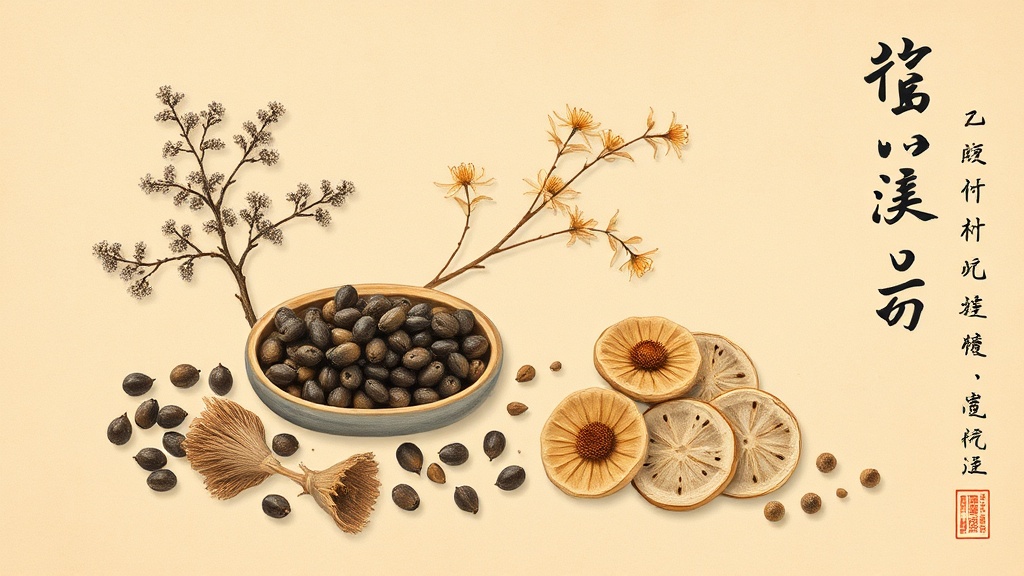
- Mi Meng Hua (Mì Méng Huā, 密蒙花) — buddleja flower; the leading classically documented herb for “screen over the eye” (mù zhàng) presentations; clears Liver Heat, brightens the eyes, and is specifically referenced in classical ophthalmology texts for opacity and turbidity conditions. Its inclusion in cataract herbal traditions spans centuries of classical literature.
- Jue Ming Zi (Jué Míng Zǐ, 决明子) — cassia seed; Liver-clearing and vision-brightening; the name itself — jué míng, “to resolve brightness” — signals its classical indication for conditions of clouded or obstructed vision. One of the most consistently documented anti-opacity herbs in the tradition.
- Ju Hua (Jú Huā, 菊花) — chrysanthemum flower; clears Liver Heat and disperses Wind, brightens and soothes the eye; a foundational classical eye herb present in virtually every formula for Liver-pattern vision conditions; applicable across multiple pattern layers
- Gou Qi Zi (Gǒu Qǐ Zǐ, 枸杞子) — wolfberry; the foundational Liver-Kidney Yin tonic for the eye; nourishes the fluid substrate from which the lens draws its clarity; among the best-documented classical herbs for eye nourishment and Yin replenishment
- Cang Zhu (Cāng Zhú, 苍术) — atractylodes rhizome; dries Dampness and strengthens Spleen; addresses the turbidity-transformation failure when the Damp-Phlegm layer is prominent; provides an essential drying action to balance the Yin-nourishing herbs in the formula and prevent tonic excess from generating new Dampness
The Functional Layer: Antioxidant Capacity and the Lens Environment
Classical Chinese medicine and functional medicine approach the same lens from different analytical directions — and arrive at complementary, not competing, interventions.
The classical framework addresses the constitutional terrain: the Liver-Kidney Yin deficiency and Spleen-Phlegm turbidity that the herbal formula targets. The functional medicine layer addresses the oxidative environment in which the lens operates — the biochemical substrate that determines whether the lens’s structural proteins remain transparent or begin to aggregate and cloud.
The lens is one of the body’s most oxidatively demanding tissues. Its transparency depends on maintaining a highly reduced, antioxidant-rich internal environment. When oxidative stress accumulates — through age, cumulative UV exposure, metabolic load, or inadequate nutritional antioxidant intake — lens crystallin proteins cross-link and aggregate. This is the molecular basis of cataract formation.
The Rootworth intake addresses the antioxidant capacity support category as it pertains to the lens environment — encompassing both the intralenticular antioxidant systems and the aqueous humor environment that bathes the lens. Rather than prescribing a fixed antioxidant supplement list, the intake maps the individual’s oxidative terrain through the pattern assessment and designs a support tier appropriate to their constitutional picture. The formula and supplement tier are designed as a coherent system, not as parallel, unrelated interventions.
The nutritional dimension mirrors this: antioxidant-dense, colorful whole foods; minimizing refined carbohydrates and sugar, which accelerate lens glycation alongside oxidative stress; adequate hydration. The Spleen-supportive dietary picture — warm, cooked foods; regular meals; minimal cold, raw, or greasy intake — aligns directly with the functional medicine recommendation for a metabolic environment that reduces Phlegm accumulation and supports the Spleen’s clear-turbid separation function.
How to Think About This Honestly
Advanced cataracts requiring surgical intervention are outside the scope of herbal medicine. When a lens has clouded to the point of significant functional impairment, extraction and intraocular lens placement is the correct clinical response — and it is one of modern medicine’s most reliable and successful interventions in vision restoration. We do not compete with that, and we would not advise any patient to defer appropriate surgery in favor of herbal medicine.
For early-to-intermediate cataracts — where the ophthalmologist is monitoring and surgery is not yet indicated — the classical herbal approach addresses the constitutional terrain that allowed the clouding to develop. The Liver-Kidney Yin deficiency that thinned the lens substrate. The Spleen-Phlegm turbidity that reflects the clear-turbid separation failure. The antioxidant environment that protects remaining lens crystallin. These are the layers a pattern-matched classical herbal formula is designed to address.
Whether those interventions influence measurable lens progression is something the current evidence cannot firmly establish. What we can say is that the constitutional terrain is real, the pattern diagnosis is clinically meaningful, and the herbs have centuries of documented use in exactly this clinical picture — in a tradition that was treating cataracts with these specific herbs long before the word “antioxidant” existed.
Begin your pattern assessment
A note on these statements
These statements have not been evaluated by the Food and Drug Administration. These products are not intended to diagnose, treat, cure, or prevent any disease. Classical Chinese herbal medicine and functional medicine supplements are offered as part of a pattern-based intake process, not as treatments for diagnosed medical conditions.