Dysmenorrhea — Painful Periods, Primary and Secondary
The pain at menstruation is a signal about what is not moving, what is too cold, or what has run too depleted to flow freely. The classical framework reads which — and the formula addresses that, not only the prostaglandin cascade at the end of it.
The classical law of pain — and what menstrual pain is saying.
Dysmenorrhea is the most common gynecological complaint in women of reproductive age. Estimates place its prevalence between forty and ninety percent, depending on the population studied and the severity threshold used. It is also, clinically, one of the most undertreated conditions in reproductive medicine — often managed symptomatically with NSAIDs or oral contraceptives, both of which interrupt the prostaglandin signal or the hormonal cycle itself without examining the constitutional pattern that is producing the pain in the first place.
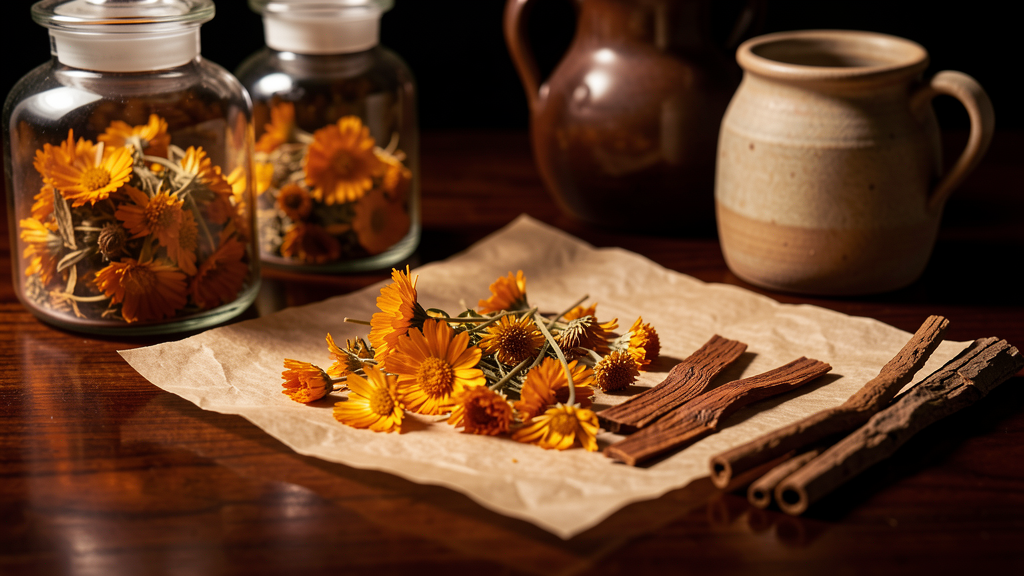
不通則痛。 Where there is obstruction, there is pain.
This is the foundational classical law of pain in Chinese medicine. It is not a metaphor. It is a clinical observation: pain, in the classical framework, indicates that something is not moving that should be moving. At menstruation, the Blood and Qi that should flow freely and completely through the uterus are meeting obstruction — some form of resistance or constriction that prevents free flow and produces the cramping, aching, or stabbing characteristic of the clinical presentation. The classical practitioner's first question is always: what is obstructing? The answer determines the formula.
血寒則凝。 Cold causes Blood to congeal.
The second classical law of menstrual pain is the cold-congealing mechanism. Cold, in the classical framework, produces vascular constriction and impairs the free movement of Blood through the vessels. When cold settles in the lower jiao — the pelvic and lower abdominal region — it acts on the uterine vessels the way cold acts on any fluid system: it constricts, congeals, and obstructs. The Blood cannot move freely. The Qi driving the Blood becomes constrained against the cold-contracted vessel wall. Cramping follows — the physiological equivalent of spasm against constriction. This classical law maps directly to the Western observation that uterine blood flow restriction and ischemia (from myometrial contraction against obstructed circulation) is the proximate mechanism of dysmenorrheal pain.
肝氣鬱結。 Liver Qi stagnates and binds.
The third major driver: when Liver Qi fails to move freely — from chronic stress, emotional suppression, or constitutional predisposition — the smooth flow of Qi through the pelvic region is obstructed. Qi drives Blood. Obstructed Qi leads to obstructed Blood. At menstruation, when the uterus is already in a state of increased vascular activity and the demand for smooth Qi and Blood movement is highest, Liver Qi stagnation converts most readily into pain. This is the emotionally-correlated dysmenorrhea pattern: pain that worsens with stress before and during the period, tension that builds premenstrually and discharges somewhat when the flow starts, the sense that emotional state and menstrual pain are clearly linked.
脾統血。 The Spleen holds blood within the vessels.
The fourth mechanism is deficiency: when Spleen Qi is insufficient and Blood itself is deficient, the flow at menstruation lacks the force and volume to move freely. This is not obstruction — it is insufficiency. The Blood is thin and pale. The flow is scanty rather than heavy. The pain is dull and aching rather than sharp and cramping — a dragging sensation rather than a stabbing one. It may be relieved by pressure and warmth and worsen with fatigue. It occurs at the end or tail of the period rather than at its onset. This is the deficiency type of dysmenorrhea — the under-treated pattern in Western medicine, which is oriented primarily toward the excess-type cramping and prostaglandin excess model.
What Western medicine has measured — and what the prostaglandin model does not fully explain.
Primary dysmenorrhea — painful periods without structural cause — accounts for the majority of dysmenorrheal presentations. The Western mechanism is well-characterized: elevated prostaglandin E2 (PGE2) and prostaglandin F2α (PGF2α) in the menstrual fluid drive myometrial contractions of abnormal strength and frequency. These contractions restrict uterine blood flow, producing ischemia in the myometrium. The ischemic myometrium releases additional inflammatory mediators — leukotrienes, bradykinin, histamine — that sensitize pelvic nociceptors and amplify the pain signal. The result is cramping that begins with or slightly before the onset of flow and may be accompanied by nausea, diarrhea, headache, and systemic prostaglandin-mediated effects.
NSAIDs work in this framework by inhibiting cyclooxygenase (COX-1 and COX-2) and reducing prostaglandin synthesis. They are effective and they are appropriate for acute pain management. What they do not address is the upstream pattern producing elevated prostaglandin levels: the inflammatory substrate, the Liver Qi stagnation, the cold constriction, or the deficiency that is making each cycle's prostaglandin response more symptomatic than the prior one. Oral contraceptives suppress the cycle itself — suppressing endometrial prostaglandin production by preventing a natural endometrium from forming. Again, effective symptomatically; again, not addressing the upstream constitutional pattern.
Secondary dysmenorrhea carries a structural cause. The most common causes are:
- Endometriosis — ectopic endometrial tissue implanted throughout the pelvic cavity; the most clinically significant cause of secondary dysmenorrhea; the implants bleed with each cycle, producing adhesion formation, pelvic inflammatory load, and the deep, penetrating, often non-cycle-correlated pain that distinguishes endometriosis-driven dysmenorrhea from primary dysmenorrhea
- Uterine fibroids — intramural and submucosal fibroids distort the myometrial architecture, impair myometrial contraction coordination, and produce the cramping-alongside-flooding picture; covered separately on the fibroids page
- Adenomyosis — endometrial glands invading the myometrial wall; produces a diffusely enlarged, boggy uterus, heavy menstrual flow, and the characteristic deep, constant, building pain in the week before menstruation through the duration of flow
- IUD placement — the non-hormonal copper IUD increases prostaglandin production and can significantly worsen dysmenorrhea in women who were already prostaglandin-sensitive
In the classical framework, secondary dysmenorrhea adds a structural layer — the 癥瘕 accumulation of endometriosis or fibroids, the Damp-Heat invasion of adenomyosis — on top of the constitutional pattern that was already producing the pain. The structural layer is addressed, but the constitutional pattern underneath it must be read separately. Two women with adenomyosis may have entirely different underlying constitutional patterns producing similar structural findings — different combination locks that open with different formulas.
Classical patterns and their formula architectures.
Dysmenorrhea is a multi-pattern condition. The same symptom — painful periods — arises from constitutionally distinct upstream mechanisms. The classical practitioner reads the character of the pain (sharp or dull; constant or spasmodic; fixed or moving), its timing within the cycle (before, during, or after flow onset), its modifiers (heat relieves or worsens; pressure relieves or worsens; rest improves or worsens), the quality and character of the menstrual blood, and the full constitutional picture. These distinctions determine the formula.
Classical pattern table for dysmenorrhea — for practitioners →
This section is provided as clinical reference. Classical pattern mechanisms are described below, not disease treatment claims. All formula recommendations represent pattern-based herbal support under DSHEA, not claims to diagnose, treat, cure, or prevent any disease.
| Pattern | Classical mechanism | Pain character and modifiers | Blood character | Primary formula |
|---|---|---|---|---|
| Cold-congealing Blood stasis | 血寒則凝 — cold settles in the lower jiao, congeals Blood in uterine vessels, drives myometrial spasm and ischemia | Severe cramping beginning before or with onset of flow; strongly relieved by heat (hot water bottle, warm bath); worsens with cold exposure; cold extremities; aversion to cold | Dark, clotted, may be scanty initially then heavier once clots pass; cold color to the blood | Wen Jing Tang 温经汤 (warm the menses, move stasis); Shao Fu Zhu Yu Tang 少腹逐瘀汤 (warm the lower jiao, drive stasis from uterine vessels) |
| Qi stagnation + Blood stasis | 肝氣鬱結 — Liver Qi obstruction converts to Blood stasis at menstruation; tension-driven cramping as Qi fails to drive Blood through the cycle | Distending pain before flow onset converting to cramping with flow; emotional triggers (stress worsens in week before period); relief when flow starts and clots pass; wiry pulse | Dark, clotted; may have delayed onset; cramping eases noticeably when large clots are passed | Xue Fu Zhu Yu Tang 血府逐瘀汤; Tao Hong Si Wu Tang 桃红四物汤; Ge Xia Zhu Yu Tang 膈下逐瘀汤 (lower-abdominal stasis variant) |
| Blood deficiency | 脾統血 failing + Blood xu — insufficient Blood volume and force to move smoothly through the uterus; deficiency-type pain from undernourished vessels | Dull aching during or after flow, not severe cramping; relieved by rest and pressure; worsened by fatigue and exertion; may occur post-flow rather than pre-flow; pale complexion | Pale, thin, scanty; no large clots; mild discomfort rather than acute cramping | Si Wu Tang 四物汤 (generate Blood, move Blood); Ba Zhen Tang 八珍汤 (Qi + Blood deficiency); modified with Dang Gui and Bai Shao emphasis |
| Kidney-Yang deficiency | Yang xu fails to warm pelvic vessels; insufficient warming drive weakens uterine contraction coordination; cold-type deficiency rather than cold-invasion | Dull dragging pain, cold lower back and sacrum, fatigue, improves with warmth and rest; long-standing; may worsen in winter; constitutional cold throughout | Pale, thin or watery; possibly scanty; delayed onset | Wen Jing Tang base modified for Yang-deficiency pattern; You Gui Wan 右归丸 elements to warm the constitutional root |
| Damp-Heat Blood stasis (secondary/endometriosis) |
Damp-Heat invades the lower jiao, mixes with Blood stasis; produces the burning, constant, non-cycle-correlated pelvic pain pattern; secondary dysmenorrhea substrate | Constant pelvic heaviness with cycle-correlated worsening; burning rather than purely cramping quality; worse with heat locally; possible fever at menstruation; deep dyspareunia | Dark, purplish, possibly foul-smelling; may have mucus admixture | Da Huang Mu Dan Tang 大黄牡丹汤 elements; modified Gui Zhi Fu Ling Wan with heat-clearing additions (Huang Bai, Yi Yi Ren); concurrent Damp-Heat clearance |
Real patients almost always present with overlapping patterns. The cold-congealing patient frequently also has some Blood deficiency — the cold has impaired Blood generation over time. The Qi stagnation patient may also have a Blood-deficiency substrate that predisposes her to incomplete Blood movement. The Damp-Heat-endometriosis patient almost certainly has a constitutional Kidney deficiency underlying the Heat pattern. The intake reads the full stack. The formula addresses the primary pattern and acknowledges the secondary pattern's role in the sequence.
Herbs are chemistry — the four blood actions for dysmenorrhea.
Every herb in a dysmenorrhea formula is doing chemical work. The classical four-action framework — move, warm, generate, cool — maps onto measurable pharmacological functions: antispasmodic, prostaglandin-modulating, iron-and-hemopoietic-supporting, anti-inflammatory. The formula's configuration for each patient reflects which of these actions the pattern requires, in what proportion, at what phase of the cycle.
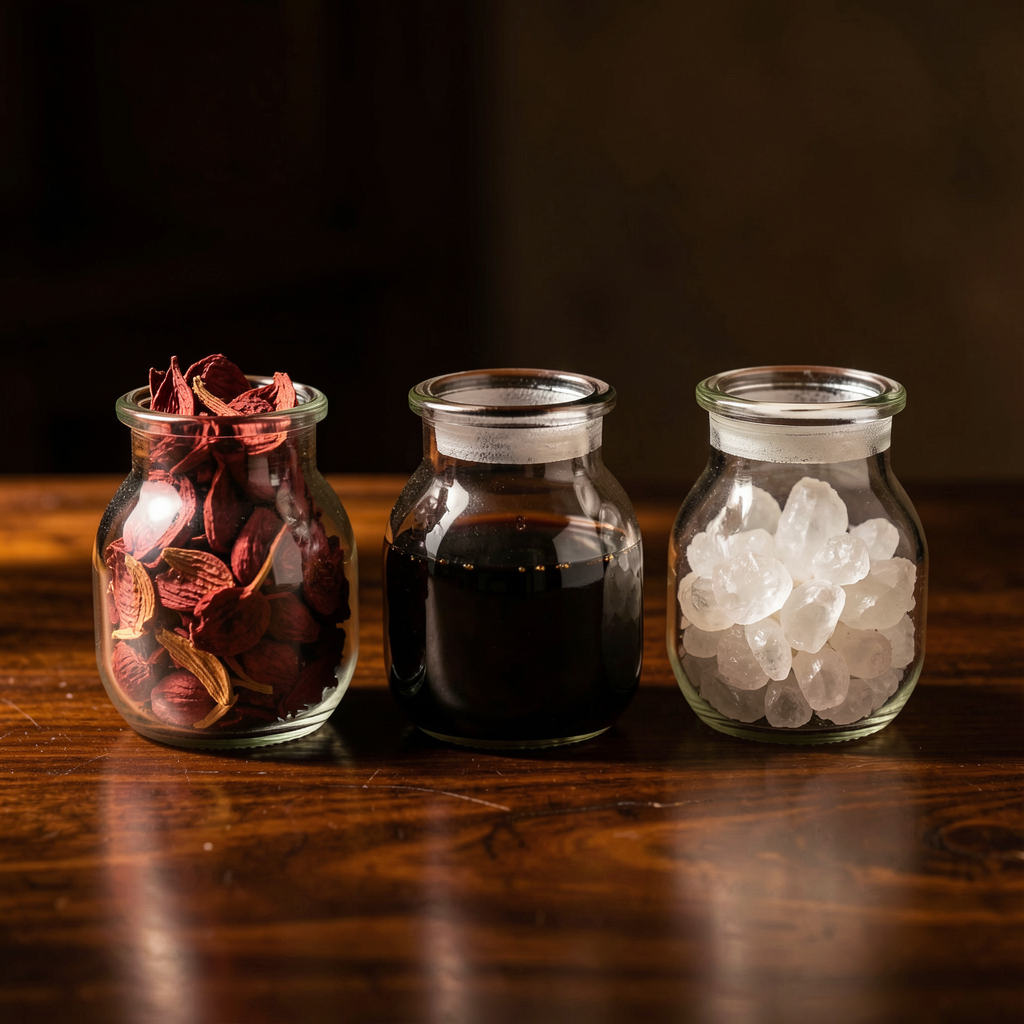
MOVE the Blood — clear the stasis, relieve the obstruction. This is the primary action for the two commonest dysmenorrheal patterns: Qi stagnation converting to Blood stasis, and cold congealing Blood into obstruction. Moving the Blood restores free circulation through the uterine vessels and reduces the ischemic cramping the obstruction produces:
- Yan Hu Suo (Yán Hú Suǒ, 延胡索 / Corydalis) — the primary analgesic herb of the classical materia medica; the most clinically direct pain-relief herb for dysmenorrhea; it moves both Qi and Blood simultaneously, addressing the Qi-Blood stasis double layer; active alkaloids (l-tetrahydropalmatine) have documented analgesic and antispasmodic activity; available as a single herb and in most dysmenorrhea formula bases
- Chuan Xiong (Chuān Xiōng, 川芎) — the pelvic Blood-mover par excellence; the classical herb assigned to move Blood specifically in the lower jiao and pelvic vessels; enters the Liver and Gallbladder channels; drives Blood downward and through the uterine vessels at menstruation; the principal moving herb in Tao Hong Si Wu Tang
- Tao Ren (Táo Rén, 桃仁 / Peach kernel) and Hong Hua (Hóng Huā, 红花 / Carthamus) — the classical stasis-dissolving pair; together they form the Blood-breaking core that is added to Si Wu Tang to create Tao Hong Si Wu Tang; for the moderate-to-severe Blood stasis pattern with dark clotted flow
- Dan Shen (Dān Shēn, 丹参) — moves Blood in the pelvic vessels; a secondary Blood-mover that supports microcirculation; sometimes said to substitute for "four herbs" (si wu) in its combined generating and moving properties
- Chi Shao (Chì Sháo, 赤芍 / Red Peony) — moves and cools simultaneously; for the stasis-with-heat pattern; in the Xue Fu Zhu Yu Tang framework, Chi Shao provides the cooling-moving balance alongside the warming-moving herbs
WARM — dissolve cold constriction, relax uterine spasm. This is the essential action for the cold-congealing pattern — the most common presentation in clinical practice and the one most directly associated with the "cramps relieved by heat" that patients universally recognize:
- Ai Ye (Ài Yè, 艾叶 / Mugwort leaf) — warms the uterus directly; the classical herb for cold in the lower jiao affecting the uterus; the specific warming herb for the cold-congealing dysmenorrhea pattern; present in Wen Jing Tang and Shao Fu Zhu Yu Tang; documented uterine antispasmodic activity
- Rou Gui (Ròu Guì, 肉桂 / Cinnamon bark) — warms the Kidney Yang root and the Blood; drives warming Yang into the lower jiao vessels; the classical herb for deep cold obstructing the pelvic Blood; the constitutional warming herb alongside Ai Ye's direct uterine warming action
- Gui Zhi (Guì Zhī, 桂枝 / Cinnamon twig) — gentler than Rou Gui; warms and opens the Blood vessels, moving circulation by warming; appropriate for the mild cold-congealing pattern or as the warming component in a formula where the Blood deficiency component is also significant
- Bai Shao (Bái Sháo, 白芍 / White Peony) + Gan Cao (Gān Cǎo, 甘草 / Licorice) — the Shao Yao Gan Cao Tang pair; the classical smooth-muscle antispasmodic combination; reduces myometrial spasm directly; effective as a focused anti-cramping addition to any dysmenorrhea base formula regardless of the underlying pattern; Bai Shao's documented antispasmodic alkaloids (paeoniflorin) are among the most-studied in botanical medicine
GENERATE Blood — replenish the deficiency substrate. The deficiency-type dysmenorrhea patient and any patient with significant menstrual blood loss both require the generating action. Without adequate Blood substrate, neither the warming nor the moving herbs have material to work with:
- Dang Gui (Dāng Guī, 当归 / Angelica sinensis) — the foundational Blood-generating herb in the classical materia medica; generates and moves Blood simultaneously; the essential herb for any Blood-deficiency dysmenorrhea; the core of Si Wu Tang alongside Bai Shao, Shu Di, and Chuan Xiong
- Bai Shao (Bái Sháo, 白芍) — nourishes Liver Blood and holds it; the nourishing-holding counterpart to Dang Gui's generating-moving function; for Blood deficiency with some Liver-stasis overlay, Bai Shao moderates while Dang Gui generates
- Shu Di Huang (Shú Dì Huáng, 熟地黄 / Prepared Rehmannia) — the primary Yin-and-Blood tonifying herb; for the deeper Kidney-Yin deficiency that underlies Blood deficiency dysmenorrhea in its chronic form; the constitutional replenishment herb for the long-standing deficiency pattern
- E Jiao (Ē Jiāo, 阿胶 / Donkey-hide gelatin) — stops bleeding from deficiency and generates Blood simultaneously; for the deficiency patient with heavy flow despite the deficiency picture (possible fibroid co-presentation); nourishes Yin and Blood from the deepest level
COOL the Blood — address the heat pattern. The Damp-Heat Blood stasis of secondary dysmenorrhea, or the heat generated by long-standing stasis, requires cooling herbs to be added to the moving base:
- Mu Dan Pi (Mǔ Dān Pí, 牡丹皮 / Moutan Bark) — cools Blood and moves stasis; for the stasis-with-heat pattern; present in Gui Zhi Fu Ling Wan as the cooling counterbalance to the warming Gui Zhi
- Sheng Di Huang (Shēng Dì Huáng, 生地黄 / Raw Rehmannia) — cools Blood; prevents the Blood-moving herbs from heating the Blood as they activate it; in Xue Fu Zhu Yu Tang, Sheng Di balances the moving herbs and prevents Blood depletion during stasis clearance
- Huang Bai (Huáng Bǎi, 黄柏 / Phellodendron) — clears Damp-Heat from the lower jiao; the essential cooling herb for the endometriosis/adenomyosis pattern with Damp-Heat overlay
San Qi (Sān Qī, 三七 / Notoginseng) deserves special mention here as it does in every pelvic Blood stasis condition: it simultaneously moves stasis and stops hemorrhage. For the dysmenorrhea patient with significant clotting alongside heavy flow — where the clinical picture requires both actions at once — San Qi is the indispensable single herb. It reduces clot formation while stopping excess bleeding; it moves what is stagnant without amplifying what is flooding.
Representative formulas by pattern:
- Wen Jing Tang (Wēn Jīng Tāng, 温经汤) — the classical cold-congealing dysmenorrhea formula; warms the uterine channels, moves Blood stasis, and simultaneously nourishes Blood deficiency; contains Ai Ye, Rou Gui, and the Blood-generating herbs in one balanced prescription; appropriate for the cold type with deficiency component
- Shao Fu Zhu Yu Tang (Shào Fù Zhú Yū Tāng, 少腹逐瘀汤) — the primary cold-stasis formula for the lower jiao; emphasizes cold-dissolving and stasis-breaking in the pelvic vessels; for severe cold cramping with dark, clotted, scanty flow that eases when clots pass
- Tao Hong Si Wu Tang (Táo Hóng Sì Wù Tāng, 桃红四物汤) — Si Wu Tang base (Blood generating: Dang Gui, Bai Shao, Shu Di, Chuan Xiong) with Tao Ren and Hong Hua added to move the stasis; the universal Blood-deficiency plus mild stasis formula; appropriate for the mixed deficiency-stasis picture
- Xue Fu Zhu Yu Tang (Xuè Fǔ Zhú Yū Tāng, 血府逐瘀汤) — Blood stasis in the chest and upper vessels; for Qi stagnation converting to Blood stasis with the emotional-correlation pattern; contains Chai Hu to move the Liver Qi alongside the Blood-moving herbs
- Si Wu Tang (Sì Wù Tāng, 四物汤) — the foundational Blood-generating formula; for the pure deficiency pattern; modified extensively as the base for more complex presentations
- Ba Zhen Tang (Bā Zhēn Tāng, 八珍汤) — Si Wu Tang plus Si Jun Zi Tang; Qi and Blood dual deficiency; for the patient whose Blood deficiency is rooted in insufficient Qi to generate Blood
The functional medicine complement.
The prostaglandin-driven cramping of primary dysmenorrhea is a chemistry event. The classical herbs address the constitutional pattern producing the elevated prostaglandin milieu. The functional medicine complement addresses the chemistry directly, in parallel:
- Natto-Serrazimes (nattokinase + serrapeptase) — systemic enzyme complex; reduces pelvic inflammatory load in the days before menstruation; clears fibrin from pelvic adhesions in endometriosis-secondary presentations; reduces the viscous, clot-heavy flow characteristic of Blood stasis patterns; taken between cycles and in the week before expected pain onset for maximal effect
- Omega-3 fatty acids (EPA + DHA) — the dietary foundation for prostaglandin balance; high-dose EPA and DHA shift prostaglandin production from the inflammatory PGE2 and PGF2α toward the less inflammatory series-3 prostaglandins; directly reduces the prostaglandin-mediated myometrial cramping that is the Western mechanism of primary dysmenorrhea; requires consistent daily use, not acute dosing
- Magnesium glycinate — smooth muscle relaxant; documented in clinical trials for reducing dysmenorrheal pain severity when taken continuously; addresses the smooth-muscle spasm component that the Bai Shao + Gan Cao combination addresses classically; magnesium deficiency is endemic and worsens menstrual cramping; glycinate form for tolerability
- Vitamin B6 + Vitamin E — documented prostaglandin-modulating effects in dysmenorrhea research; reduce the inflammatory cascade amplifying uterine cramping
The combination that works clinically: classical herbs addressing the constitutional pattern (cold-dissolving herbs for cold congealing, Blood-movers for stasis, generating herbs for deficiency) alongside systemic enzyme support to reduce pelvic inflammatory load, omega-3 to shift the prostaglandin balance, and magnesium to reduce smooth-muscle spasm. The chemistry and the pattern work from different angles toward the same clinical outcome: a cycle where the Blood flows freely, the vessels are not constricted by cold or stasis, and the prostaglandin milieu is not producing the ischemic cramping that defines the condition.
The combination lock — why two dysmenorrhea patients need different formulas.
Two patients walk into the same OB/GYN office with the same chief complaint: severe menstrual cramps. Both leave with a prescription for naproxen. They do not have the same combination lock.
The first patient is twenty-six. She has had painful periods since her first cycle at thirteen. She describes them as severe cramping that begins two days before her period, peaks on day one, and eases on day two. A heating pad is not optional — it is the only thing that reliably helps. In winter her periods are worse. She is constitutionally cold: cold hands and feet, prefers warm foods and drinks, avoids air-conditioned rooms. Her blood is dark at onset and heavy with clots for the first two days, then transitions to a brighter, lighter flow as the clots clear. Her tongue is pale with a slight bluish tinge at the sides. Her pulse is wiry and slightly tight. Classically, this is the cold-congealing Blood stasis pattern — the most common cause of primary dysmenorrhea in young women who have always had painful periods and who are constitutionally cold. Her combination lock opens with warming first: Shao Fu Zhu Yu Tang to warm the lower jiao and drive the cold-stasis from the uterine vessels; Ai Ye as the targeted uterine-warming herb; Bai Shao and Gan Cao for the smooth-muscle spasm component; omega-3 and magnesium concurrently for the prostaglandin and spasm chemistry. The heat-application that relieves her symptoms is not a placebo — it is the same action as the warming herbs, delivered topically. The formula delivers it constitutionally.
The second patient is thirty-three. She began having painful periods in her late twenties — they were not severe earlier in her cycle history. The pain is different from the first patient: it is not severe cramping but rather a heavy, dull aching that is worst in the two days before her period and during the first day of flow. She describes it as a feeling of things being "stuck" — a dragging heaviness rather than acute spasm. The blood is dark and clotted, but the flow is moderate rather than heavy. She has noticed the pain correlates closely with her stress load at work. In high-stress weeks, the premenstrual pain starts earlier and is more severe. In calmer periods it is milder. Her tongue has slight purple at the edges. Her pulse is wiry. Classically, this is Liver Qi stagnation converting to Blood stasis at menstruation — the stress-driven dysmenorrhea pattern. Her combination lock opens differently: Chai Hu and Xiang Fu (Cyperus) to move the Liver Qi first; Yan Hu Suo as the direct analgesic-Blood-mover; Tao Hong Si Wu Tang as the Blood-moving base; Natto-Serrazimes to reduce pelvic inflammatory load before each cycle. The first patient would not respond to this formula — the Liver Qi-moving herbs are not warming the cold that is driving her cramps. The second patient would not respond to the first patient's formula — warming a Liver that is already stagnating can amplify rather than relieve Qi constraint.
Same symptom. Different mechanism. Different combination lock. Different formula. The NSAID addressed both presentations at the same point in the pathway — the prostaglandin synthesis step — which is why it provides some relief for both patients. But it doesn't address why the first patient is cold, or why the second patient's cramps worsen with stress. The formula does.
Breaking free from the two-option model — the NSAID cycle and the pill cycle.
The clinical conversation about dysmenorrhea in conventional medicine typically arrives at two options quickly: NSAIDs for acute pain management, oral contraceptives for ongoing cycle suppression. Both are effective within their mechanism of action. Both are appropriate for many patients in many situations. And both leave the constitutional pattern that is producing the dysmenorrhea entirely unaddressed.
The NSAID cycle is exactly that — a cycle. Every month, the same constitutional pattern produces the same prostaglandin elevation in the same obstructed pelvic environment. Every month, the NSAID interrupts the prostaglandin synthesis downstream. The constitutional pattern does not change. The pattern that is generating the excess prostaglandins — the cold constricting the uterine vessels, the stagnant Liver Qi failing to circulate Blood freely, the deficiency that leaves the flow without adequate force to move cleanly — continues to generate it. The pharmaceutical terminates the end-signal. The upstream driver runs untouched.
The oral contraceptive cycle is similar: it suppresses the endometrial prostaglandin production by preventing the natural endometrium from forming. Highly effective for symptomatic management. When it stops — because the patient is trying to conceive, or because she chooses to discontinue — the cycle returns, often with full force, because the constitutional pattern was suppressed alongside the prostaglandins, not addressed. Patients who go off the pill after years of cycle suppression often describe dysmenorrhea returning immediately and sometimes more severely than before, because the constitutional pattern has been unchanged and now the chemical suppression is removed.
The classical herbal approach is not a faster NSAID. It addresses the constitutional pattern at the mechanism level — warming the cold that is congealing the Blood, moving the Qi that is stagnating at the level of the Liver, generating the Blood that the deficiency type lacks, or cooling the heat that the Damp-Heat secondary pattern has accumulated. The formula works on the three to four months window of menstrual cycles — the minimum meaningful period over which a constitutional pattern responds to sustained herbal influence. It is slower than naproxen. It is also doing something naproxen cannot do: changing the terrain in which the prostaglandin signal is being generated, rather than interrupting the signal itself at the terminal chemistry step.
Most dysmenorrhea patients continue using naproxen for acute pain management while the herbal formula addresses the constitutional pattern. The two are not in conflict — one addresses the acute signal, one addresses the constitutional driver. Over months of treatment, if the pattern is responding, the acute signal diminishes because the constitutional driver has diminished. The combination lock turns. The pain decreases not because a drug blocked the prostaglandin cascade, but because the Blood is now moving more freely through vessels that are no longer obstructed by cold, stasis, or Qi constraint.
How the intake works for dysmenorrhea.
The online intake asks for the full clinical picture: your pain history — when it started, whether it has always been this way or developed later, what the pattern looks like in a typical cycle; your pain character — cramping or aching, sharp or dull, fixed or moving, pre-flow or during flow or post-flow; your modifiers — what relieves it, what worsens it, whether heat helps, whether rest helps, whether emotional stress correlates; your flow character — color, volume, clotting, duration; and any structural diagnoses (endometriosis, adenomyosis, fibroids, IUD) that place your dysmenorrhea in the secondary category.
The intake also gathers the full constitutional picture, because dysmenorrhea is never only a pelvic event. The same Liver Qi that is stagnating at menstruation is also producing the premenstrual irritability and digestive tension in the week before the period. The same cold constitution that is congealing Blood in the uterine vessels is also producing the cold extremities and digestive sensitivity to cold foods. The formula addresses the menstrual pattern inside the full constitutional picture, not as an isolated symptom.
Michael reads every intake personally. He identifies the primary pattern — cold, stasis, deficiency, or Damp-Heat — and the secondary patterns sitting underneath or alongside it. He designs the formula for the specific configuration of your combination lock, and accompanies it with a map of what is intended to happen over the coming cycles — what shifts in flow character, pain timing, and severity indicate the pattern is responding, and what the next phase of formula modification looks like.
Always continue monitoring with your gynecologist for secondary dysmenorrhea. Endometriosis, adenomyosis, and fibroids require structural monitoring alongside constitutional herbal support. The herbal work addresses the pattern. The gynecologist monitors the structure. These are parallel, not competing.
Understand the framework before you begin.
The Chambers are a free patient education library — the methodology behind every Rootworth formula. Reading them before or alongside your intake helps you understand what the classical assessment is seeing, why individualized formulas outperform generic protocols, and how each layer of treatment connects to the next.
A note on these statements.
Rootworth herbal preparations are dietary supplements. These statements have not been evaluated by the Food and Drug Administration. These products are not intended to diagnose, treat, cure, or prevent any disease. Classical Chinese medicine pattern assessment — including cold-congealing Blood stasis, Liver Qi stagnation, Blood deficiency, Kidney Yang deficiency, and Damp-Heat patterns — is distinct from the diagnosis and treatment of disease as defined under United States federal law. Individual results vary. All formula recommendations on this page represent classical pattern-based herbal support and are not claims to treat, manage, or cure dysmenorrhea or any associated structural condition. Always continue your gynecologist's monitoring and follow their guidance regarding secondary dysmenorrhea diagnoses. Do not discontinue prescribed medications without guidance from your prescribing physician.
- Begin intake — read the process and start your formula
- Fertility overview — the classical framework for fertility and reproductive health
- Uterine fibroids — classical patterns and formula architecture
- Fertility case histories — de-identified clinical illustrations
- Chambers — the methodology underneath the formula
- About — the practitioner's credentials and clinical scope