Endometriosis — Fertility & OBGYN
Endometriosis is Blood stasis made anatomically visible — ectopic endometrial tissue as the Western image of what classical medicine has been naming, tracking, and addressing formulaically for two thousand years. The lesions are not the disease. They are the record of a constitutional pattern that was building long before any laparoscope confirmed it.
Endometriosis affects an estimated six to ten percent of all reproductive-age women. Among women with infertility, the figure is thirty to fifty percent. It is one of the most underdiagnosed conditions in Western medicine — the average lag between symptom onset and diagnosis is eight to twelve years. Women are told their pain is normal menstruation, their fatigue is stress, their bowel symptoms are IBS, their mood changes are psychiatric. By the time the diagnosis arrives — by laparoscopy, because there is no reliable non-invasive test — the lesions have often had years to establish themselves, create adhesions, distort pelvic anatomy, and begin affecting the oocyte environment.
Classical Chinese medicine did not have a word for endometriosis. What it had was a clinical vocabulary precise enough to have described the disease and its constitutional substrate centuries before the laparoscope existed. The central organizing statement:
血瘀
Xuè yū
Blood stasis.
Endometriosis is Blood stasis in the lower jiao — in the pelvic basin that classical anatomy designated the deepest interior of the body, the residence of the uterus, the origin of the Chong and Ren channels, the meeting ground of Liver, Kidney, and Spleen. The ectopic endometrial implants — the tissue growing outside the uterus on the peritoneum, the ovaries, the pouch of Douglas, the bowel, the bladder wall — are, in the classical reading, stagnant Blood that has left its proper channel and settled in forbidden territory. This is not metaphor. It is the most precise statement available in any medical language about what has occurred.
The Western imaging confirms what the classical framework predicted: the lesions are composed of functioning endometrial glands and stroma — tissue that responds cyclically to estrogen and progesterone, bleeds with each menstrual cycle, and cannot drain. Blood that cannot drain accumulates. It organizes into adhesions, fibrous deposits, and, on the ovaries, into endometriomas — the "chocolate cysts" that take their name from the color of the old blood they contain. Blood stasis, anatomically documented.
The Western mechanism — retrograde flow, peritoneal immune failure, and estrogen that makes its own supply.
The most widely accepted model of endometriosis pathogenesis begins with retrograde menstruation. During menstruation, endometrial cells travel backward through the fallopian tubes into the peritoneal cavity rather than exiting through the cervix. In most women, the peritoneal immune system — specifically natural killer cells and macrophages — recognizes and eliminates these ectopic cells before they implant. Endometriosis develops when this immune surveillance fails: the NK cells are dysfunctional, the macrophages become pro-inflammatory rather than cytotoxic, and the ectopic endometrial cells survive, implant, establish a blood supply, and begin to proliferate.
Once established, the lesions are not passive. They drive their own growth through two interconnected mechanisms that create a self-reinforcing cycle.
The first is inflammation. Each menstrual cycle triggers bleeding from the ectopic lesions — blood that cannot drain, that accumulates in the peritoneal space, and that generates a local inflammatory reaction. Prostaglandin E2 (PGE2) is produced in quantity, driving pain and inflammation. Cyclooxygenase-2 (COX-2) is upregulated within the lesions. Interleukins, tumor necrosis factor-alpha, and RANTES recruit additional immune cells that amplify the inflammatory environment. The inflammatory cascade from each cycle adds to and extends the adhesion formation and the structural distortion of pelvic anatomy — impaired tubal function, compromised oocyte pickup, altered follicular fluid chemistry that affects oocyte quality, and, in advanced disease, direct mechanical obstruction of the reproductive tract.
The second mechanism is the lesions' autonomous estrogen production. Aromatase enzyme — normally present primarily in ovarian granulosa cells and fat tissue — is upregulated within the endometriotic lesions themselves. The lesions manufacture their own estrogen from androgenic precursors. That locally produced estrogen feeds back to stimulate further lesion proliferation and further COX-2 upregulation, producing more PGE2, which stimulates more aromatase, which produces more estrogen. The lesions are not dependent on ovarian estrogen alone; they have become a self-sustaining estrogen-producing factory embedded in pelvic tissue. Systemic estrogen dominance — the downstream consequence of both impaired hepatic estrogen clearance and this local aromatase amplification — drives the lesion growth forward regardless of what is happening in the ovary.
This is the disease that the classical framework named 血瘀 two thousand years ago. The peritoneal inflammatory cascade is the local chemistry of Blood stasis generating heat. The ectopic implants are Blood that settled in forbidden territory. The fibrin deposits and adhesions are the tissue consequence of chronic stagnation. And the estrogen-dominance cycle is the classical Liver Qi stagnation converting to heat — 肝氣鬱結化火 — driving the proliferative chemistry of lesion growth.
The classical statements that named this disease — the bridge between frameworks.
Three classical aphorisms govern the endometriosis picture. Each is a compressed clinical rule. Each has a direct Western counterpart in the pathophysiology above.
The pathophysiology, in clinical depth — for practitioners →
This section is provided as clinical reference for practitioners. The statements below are classical Chinese medical aphorisms and their corresponding pattern mechanisms — not disease claims. All formula recommendations represent classical pattern-based herbal support and are not intended to diagnose, treat, cure, or prevent any disease.
| Classical statement | Mechanism when the statement fails | Western counterpart in endometriosis | Pattern → Formula direction |
|---|---|---|---|
| 血瘀 Xuè yū Blood stasis |
Blood leaves its proper channel and accumulates in the lower jiao where it cannot drain. It organizes into fixed deposits — the classical "concretions and accumulations" (zhēng jiǎ, 癥瘕) that the materia medica was built to address. Pain is fixed and stabbing (the character of stasis pain, as opposed to the colicky, moving pain of Qi stagnation). Flow is dark and clotted. Masses form where stagnation is most concentrated. | Ectopic endometrial implants on peritoneum, ovaries, pouch of Douglas, bowel, and bladder wall. Endometriomas ("chocolate cysts") on the ovaries as encapsulated collections of old blood. Adhesions as the fibrous organization of chronic stasis. Pelvic adhesions distorting tubal anatomy and impaired oocyte quality as the fertility consequence of long-standing Blood stasis in the lower jiao. | Blood stasis is primary throughout. Gui Zhi Fu Ling Wan (桂枝茯苓丸) is the canonical formula for Blood stasis masses and concretions in the lower abdomen — the most clinically precise classical formula for this exact pathology. Tao Ren + Hong Hua (桃仁+红花) pair for stasis in vessels. Dan Shen (丹参) for sustained Blood-moving without depletion. Yan Hu Suo (延胡索) for dysmenorrhea pain from stasis. |
| 久病入絡 Jiǔ bìng rù luò Chronic disease enters the collaterals |
Years of Blood stasis in the lower jiao drive pathological change from the primary vessels into the finest pelvic collaterals — the micro-circulation supplying the peritoneum, the tubal serosa, the ovarian cortex, the uterine wall. At the collateral level, stasis becomes fixed. The classical vocabulary for this progression: what was stagnant in the channels becomes embedded in the network vessels. The clinical marker of this transition is when pain changes from cyclical dysmenorrhea to constant or near-constant pelvic pain — the signature of stasis at the collateral level rather than the channel level. | Deep infiltrating endometriosis — lesions that penetrate beyond the peritoneal surface into underlying tissue. Uterosacral ligament involvement. Bladder and bowel wall infiltration. Rectovaginal endometriosis. Perineural invasion producing the characteristic sciatic or leg pain in posterior lesions. Adhesions binding the ovaries to the posterior uterus, obliterating the pouch of Douglas. The structural fixation of these findings — the "frozen pelvis" in severe cases — is the Western image of 久病入絡: stasis so deeply embedded in the pelvic collaterals that the tissue architecture has been remodeled around it. | Long-standing 久病入絡 presentations require longer treatment arcs and formulas built with herbs that penetrate to the collateral level. Clinical sequencing: the longer the disease has been established and the more fixed the lesions, the longer the window before significant pattern shift is observable. Dan Shen (丹参) and Ze Lan (泽兰) penetrate to the collateral level. Gui Zhi Fu Ling Wan remains foundational. Adding Bie Jia (鳖甲) — the classical herb for softening and dispersing fixed masses — for endometriomas and deep infiltrating disease. |
| 肝氣鬱結化火 Gān qì yù jié huà huǒ Liver Qi stagnation converts to heat |
The Liver governs the free flow of Qi throughout the body and regulates the smooth movement of Blood through the vessels of the lower jiao. When Liver Qi is chronically constrained — from emotional suppression, chronic stress, perfectionist temperament, the Type-A constitutional picture — the constraint generates heat. That heat drives the inflammatory cascade, accelerates the conversion of Qi stagnation to Blood stasis, and amplifies estrogen's proliferative signaling. The classical framework predicted the estrogen-dominance pattern from constitutional Liver pathology alone, without the assay. | Estrogen dominance driven by impaired hepatic GSH synthesis and methylation — the liver's Phase I and Phase II estrogen metabolism pathways require glutathione, methionine, and adequate methylation cofactors. When these are insufficient — as they are in constitutionally Liver-stressed patients with MTHFR variants — 2-OHE1 (protective, anti-proliferative estrogen metabolite) is underproduced and 16-OHE1 (proliferative, genotoxic) dominates. The DUTCH urine metabolomics test measures this ratio directly. Locally, aromatase upregulation within the lesions amplifies this systemic estrogen-dominance picture. PGE2 inflammation drives COX-2 → aromatase → estrogen → PGE2 in a self-reinforcing cycle. This is 肝氣鬱結化火 rendered in prostaglandin chemistry. | Wood-type endo pattern: clear Liver Qi constraint, descend Liver heat, support Phase II hepatic estrogen clearance. Jia Wei Xiao Yao San (加味逍遥散) — the classical Liver Qi + heat formula — as constitutional foundation during follicular and luteal phases. During menstrual phase, when Blood must move: shift to Xue Fu Zhu Yu Tang (血府逐瘀汤) to move Blood vigorously and ensure complete discharge. NAC (N-acetylcysteine) as FM complement for GSH/methylation support; folate (methylated, not folic acid in MTHFR patients) for methionine cycle support. |
On phase prescribing for endometriosis. Phase prescribing — adjusting the formula by menstrual cycle phase — is particularly important in endometriosis and distinguishes classical management from static supplementation. During the menstrual phase, when ectopic lesions are bleeding and debris is most actively depositing, the strongest Blood-moving herbs are most appropriate: vigorous Blood-moving at menstruation aims to ensure the most complete discharge possible and reduce further ectopic deposition. During the follicular phase, after menstruation concludes, the priority shifts to rebuilding Blood and Yin from the losses — this is when Dang Gui (当归), Shu Di Huang (熟地黄), and Bai Shao (白芍) are proportionally heavier. During the luteal phase, gentle Kidney Qi and Yang support maintains the endometrial environment; aggressive Blood-movers are reduced, particularly if conception is possible, as these herbs have uterine-stimulating properties. The formula that leaves this practice for an endometriosis patient is typically two formulas — one for the menstrual phase, one for the follicular-to-luteal arc — not one static prescription.
On herbs as chemistry. Blood stasis is literally the biochemistry of altered prostaglandins, oxidized lipids, fibrin deposits, and platelet aggregation in the pelvic microenvironment. Dan Shen's tanshinones and salvianolic acids address PGE2-driven inflammation and improve pelvic microcirculation through documented molecular mechanisms. Gui Zhi Fu Ling Wan's constituent herbs have demonstrated anti-proliferative and pro-apoptotic effects on endometriotic stromal cells in cell culture and animal models. Yan Hu Suo's tetrahydropalmatine and dehydrocorydaline act on opioid and dopamine receptors producing documented analgesic effects — the classical dysmenorrhea herb is literally addressing the nociceptive chemistry of menstrual pain. The classical framework organized these chemical actions into a coherent prescribing architecture two thousand years before the assays that confirm them were developed. [CITATION PENDING — deep-research workflow: Gui Zhi Fu Ling Wan in endometriosis — cell culture, animal model, and clinical trial data; Dan Shen tanshinone anti-inflammatory effects in peritoneal environment; Yan Hu Suo pharmacology for dysmenorrhea]
These are not retrospective mappings of modern disease onto an antique vocabulary. They are precise clinical predictions embedded in the aphorisms: that Blood stasis produces fixed, stabbing pain; that chronic stasis generates masses (endometriomas); that stasis embedded in the collaterals produces constant rather than cyclical pain; that Liver Qi stagnation converting to heat drives inflammatory and proliferative chemistry. The Western pathophysiology of endometriosis — retrograde implantation, failed NK cell surveillance, PGE2 inflammation, aromatase upregulation, lesion growth — fills in the mechanism behind predictions the classical practitioners had already recorded as clinical fact.
Herbs are chemistry — four actions on blood, applied to the lower jiao.
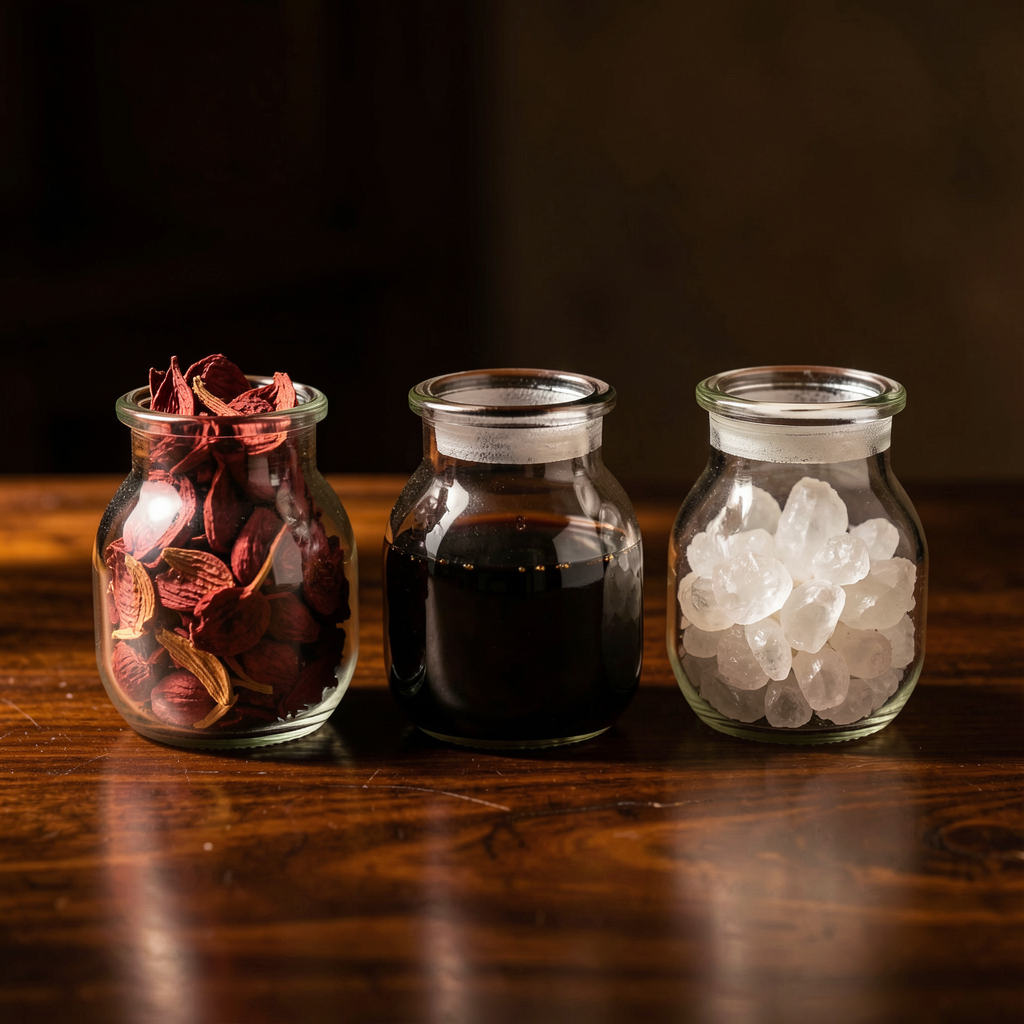
Every endometriosis formula is built from some combination of four fundamental actions on blood. These are not philosophical categories. They are chemical operations with measurable physiological effects — on prostaglandin profiles, on platelet aggregation, on the viscosity and flow of blood through the pelvic vasculature, on the fibrin deposits and adhesion chemistry of long-standing stasis. The formula is chemistry acting on the lower jiao. This must be stated plainly.
MOVE blood (primary action for endometriosis) — dissolve the stasis, clear the ectopic deposits, reduce the fibrin architecture of adhesions, address the mass pathology of endometriomas. This is the central action because Blood stasis is the central pathology.
- Gui Zhi Fu Ling Wan (Guì Zhī Fú Líng Wán, 桂枝茯苓丸 / Cinnamon Twig and Poria Pill) — the canonical classical formula for Blood stasis masses and concretions in the lower abdomen. Its five ingredients — Gui Zhi (桂枝), Fu Ling (茯苓), Mu Dan Pi (牡丹皮), Tao Ren (桃仁), Chi Shao (赤芍) — were assembled specifically for the "zheng jia" pattern: fixed masses from blood accumulation in the lower jiao. The endometrioma is a classical zheng jia lesion. Gui Zhi Fu Ling Wan is the first formula in its lineage.
- Tao Ren + Hong Hua (Táo Rén + Hóng Huā, 桃仁+红花 / Peach Kernel + Carthamus) — the classical stasis-resolving pair; antiplatelet, hemorheological, and anti-inflammatory effects via amygdalin and hydroxysafflor yellow A. The core of Xue Fu Zhu Yu Tang (血府逐瘀汤), the formula deployed during the menstrual phase for vigorous Blood-moving.
- Dan Shen (Dān Shēn, 丹参 / Salvia miltiorrhiza) — moves Blood without depleting it; tanshinones and salvianolic acids with anti-inflammatory, antiplatelet, and PGE2-modulating effects directly relevant to the peritoneal inflammatory environment of endometriosis. Appropriate for sustained inter-phase use when aggressive movers like Tao Ren + Hong Hua are scaled back.
- Yan Hu Suo (Yán Hú Suǒ, 延胡索 / Corydalis) — the classical dysmenorrhea herb; moves Blood and Qi simultaneously; tetrahydropalmatine (THP) with documented analgesic activity comparable to moderate opioid analgesics in animal models; specific for the fixed, stabbing lower abdominal pain of Blood stasis dysmenorrhea.
- Ze Lan (Zé Lán, 泽兰 / Lycopus) — moves Blood specifically in the collaterals of the lower jiao; appropriate for 久病入絡 presentations with deep infiltrating disease or long-standing lesion history.
COOL + MOVE blood — clear the inflammatory heat that 肝氣鬱結化火 generates while simultaneously resolving stasis. This combination is central to Wood-type endo, where the estrogen-dominance-driven inflammatory cascade requires cooling alongside Blood-moving.
- Mu Dan Pi (Mǔ Dān Pí, 牡丹皮 / Moutan Bark) — cools Blood and moves stasis simultaneously; paeonol with documented COX-2 inhibitory and anti-inflammatory effects; present in both Gui Zhi Fu Ling Wan and the Xiao Yao San family formulas.
- Chi Shao (Chì Sháo, 赤芍 / Red Peony) — cools Blood and disperses stasis; paeoniflorin with anti-inflammatory and antiplatelet effects; differentiates from Bai Shao (White Peony) which nourishes and constrains rather than moving.
GENERATE blood — restore what menstrual blood loss and the chronic inflammatory drain of endometriosis have depleted. The woman with endometriosis loses Blood not only through normal menstruation but through cyclical bleeding from ectopic lesions. Blood deficiency develops on top of Blood stasis, and the two must be addressed together — generating Blood underneath while moving stasis above.
- Dang Gui (Dāng Guī, 当归 / Angelica sinensis) — generates and warms Blood; the foundational herb for gynecological Blood deficiency in every classical tradition; ferulic acid and Z-ligustilide with erythropoietic and uterine-regulatory effects; proportionally heavier in the follicular phase formula when Blood is being rebuilt.
- E Jiao (É Jiāo, 阿胶 / Donkey-hide Gelatin) — generates Blood and holds it within vessels; for Blood deficiency with ongoing bleeding loss from active ectopic lesions; nourishes the depleted substrate without obstructing stasis-clearing herbs when properly formulated.
WARM — in Cold-congealing Blood stasis patterns (the patient whose pain is completely relieved by a heating pad, whose flow is dark and clotted, who runs constitutionally cold), warming the lower jiao allows the Blood-moving herbs to penetrate where cold has congealed the circulation.
- Ai Ye (Ài Yè, 艾叶 / Mugwort leaf) — warms the uterus and lower jiao; specific for Cold-congealing dysmenorrhea; the foundational warming herb in Wen Jing Tang (温经汤), the classical formula for Cold + deficiency coexisting patterns.
- Gui Zhi (Guì Zhī, 桂枝 / Cinnamon Twig) — warms the channels and drives Blood-moving herbs into the peripheral circulation of the lower jiao; present in Gui Zhi Fu Ling Wan as the warm-penetrating vehicle for the stasis-resolving herbs it carries.
- Shao Fu Zhu Yu Tang (Shào Fù Zhú Yū Tāng, 少腹逐瘀汤 / Drive Out Stasis from the Lower Abdomen) — the formula designed specifically for Cold-congealing Blood stasis in the lower abdomen; combines vigorous warming with direct Blood-moving; for the patient whose endometriosis pain presentation is dominated by cold quality, clots, and relief from warmth.
The combination lock — Wood-type and Metal-type endometriosis.
Two women sit across from the same reproductive endocrinologist on the same afternoon. Both have been diagnosed with Stage III endometriosis by laparoscopy. Both leave with the same surgical referral and the same hormonal suppression conversation.
Behind those two diagnoses are two entirely different constitutional pictures — two combination locks, each requiring a different key. This is not a minor variation. It determines which herbs are primary, which formulas anchor the prescription, and what functional medicine investigations are prioritized. Administering the same formula to both patients would be as clinically imprecise as prescribing the same antibiotic regardless of the organism.
Wood-type endometriosis. The first patient is hot-tempered and Type-A. She is not fatigued — she drives hard, sleeps less than she should, and manages enormous amounts across her professional and personal life. Her dysmenorrhea is severe and primarily stress-sensitive — pain worsens when she is overextended, better in periods of true rest. Her periods are heavy, dark, and clotted. PMS and PMDD are features: the week before her period she recognizes a version of herself she does not like — irritable, anxious, prone to outbursts that resolve with the onset of flow. She may have migraines, particularly premenstrual or menstrual-onset. Cystic acne that tracks the cycle. Her pulse will be wiry. Her tongue will be red at the edges and tip.
The classical reading: 肝氣鬱結化火. Liver Qi is constrained by constitutional temperament and lifestyle demand. The constraint generates heat that converts to Blood stasis during the menstrual movement phase, when the Liver must coordinate the downward movement of Blood — and fails to do so cleanly when Qi is obstructed. The result is incomplete, painful, dark-clotted discharge with ectopic deposition amplified by each cycle.
The Western translation: estrogen dominance from impaired hepatic glutathione synthesis and methylation pathway function. The liver's Phase I estrogen metabolism converts estradiol to estrone metabolites — 2-OHE1 (anti-proliferative) or 16-OHE1 (proliferative). Phase II methylation, sulfation, and glucuronidation clear these metabolites for excretion. When GSH is insufficient and the methylation cycle is compromised — as in MTHFR C677T variants, common in this constitutional picture — 16-OHE1 dominates, estrogen clearance is impaired, and the enterohepatic recirculation of estrogen via beta-glucuronidase-expressing gut flora amplifies the systemic estrogen load. The DUTCH test maps this directly.
The formula combination lock for Wood-type: Jia Wei Xiao Yao San (加味逍遥散) — Xiao Yao San base with Mu Dan Pi and Zhi Zi added for the heat layer — as the constitutional foundation during follicular and luteal phases. Shift to Xue Fu Zhu Yu Tang (血府逐瘀汤) during the menstrual phase for vigorous Blood-moving. FM anchors: NAC for GSH replenishment and methylation support; methylated folate + B12 (not folic acid in MTHFR patients) for methionine cycle support; DIM or sulforaphane-based crucifer concentrates for Phase II estrogen clearance; magnesium glycinate for PMS-PMDD and prostaglandin modulation.

Metal-type endometriosis. The second patient is significantly fatigued — not the tiredness of overwork, but a constitutional depletion that rest does not adequately restore. She may have a formal Hashimoto's thyroiditis diagnosis, or her thyroid antibodies are elevated without yet meeting the clinical threshold. Her pelvic pain is continuous rather than purely menstrual — it does not resolve between cycles. Her bowel is involved: constipation, IBS-pattern alternating symptoms, or a sense that her digestive function has never been robust. Food sensitivities that developed or worsened around the same time her pelvic symptoms intensified. Her pulse will be deficient rather than wiry. Her tongue may be pale or slightly swollen with a thicker coat.
The classical reading: the gut-immune boundary has failed. The Spleen (which governs the boundary between the interior and what is transported through the gut into the body's interior) is deficient, and that deficiency has allowed pathological Damp and inflammatory material to cross a boundary it should have held. This generates inflammatory cytokines that circulate systemically, amplify the peritoneal inflammatory environment, and feed back into the enterohepatic estrogen recycling loop — beta-glucuronidase from dysbiotic flora deconjugates the methylated estrogen metabolites the liver has cleared, returning them to active circulation. The Wood-sphere estrogen dominance is thus amplified from the Metal-sphere root. Two constitutional spheres contributing to one disease picture.
The Western translation: intestinal permeability and gut microbiome dysbiosis driving systemic inflammatory cytokine production (IL-6, TNF-alpha, IL-1beta) that amplify peritoneal inflammation, impair NK cell surveillance of ectopic implants, and recirculate cleared estrogen metabolites through beta-glucuronidase activity. The Hashimoto's co-morbidity is not coincidental: endometriosis and Hashimoto's share the HLA haplotypes associated with autoimmune dysregulation, and the same immune surveillance failure that allows ectopic implants to establish themselves in the peritoneum allows thyroid antibodies to develop unchallenged.
The formula combination lock for Metal-type: Gui Zhi Fu Ling Wan (桂枝茯苓丸) remains foundational for the Blood stasis layer — it is always present in endometriosis because Blood stasis is always primary. The constitutional anchor shifts to Yu Ping Feng San (玉屏风散 / Jade Windscreen) to rebuild the Spleen-Lung defensive boundary, with additional Spleen-supporting herbs (Bai Zhu, Fu Ling, Yi Yi Ren) to address the gut-boundary root. Kidney support is added for the fatigue picture and the constitutional depletion that underlies the autoimmune tendency. FM anchors: L-Glutamine for intestinal barrier repair; Vitamin D (nearly universally deficient in autoimmune-co-morbid endo patients, and directly relevant to NK cell cytotoxicity and immune surveillance of peritoneal implants); high-quality broad-spectrum probiotic with clinical evidence for beta-glucuronidase reduction; Natto-Serrazimes (nattokinase + serrapeptase) for systemic fibrinolytic support and pelvic adhesion management (note: stop 48-72 hours before any surgical procedure).
一人一方。 One person, one formula. The combination lock does not open with the same key for every patient who shares a diagnosis. The diagnostic label names the anatomy. The pattern reads the person.
Digestion first — why the gut-immune axis is the Metal-sphere root, and why it matters for every patient.
The classical principle from Li Dong-yuan's Pi Wei Lun — the twelfth-century foundational text on Spleen and Stomach medicine:
脾胃者,後天之本也。
The Spleen and Stomach are the root of post-natal life.
The practical clinical implication for endometriosis extends beyond Metal-type patients. The gut-immune axis is not a secondary consideration for any endometriosis patient. The peritoneal macrophages and NK cells whose failure to clear ectopic implants defines the disease pathogenesis are educated by and dependent on the gut immune system. The enterohepatic estrogen recycling that amplifies estrogen dominance in Wood-type patients runs through the gut. The absorption of anti-inflammatory herbs, the bioavailability of the Blood-moving formulas, the liver's capacity to synthesize the GSH and methylation cofactors that clear estrogen metabolites — all of these depend on adequate digestive function.
If a patient's digestive history includes IBS, food sensitivities, a tendency toward bloating or loose stools, a history of antibiotic courses without probiotic rehabilitation, or the constipation-dominant bowel pattern common in Metal-type endo — the formula architecture must include Spleen support from the beginning. Not as an afterthought. As a structural priority.
The practical consequence: a patient with compromised digestive function given a full-weight Blood-moving and Liver-clearing formula will absorb a fraction of the intended dose. The herbs that are most needed — the ones doing the work on pelvic Blood stasis and estrogen metabolism — cannot reach their tissue targets through an inadequately functional digestive-absorptive system. This is not a philosophical concern. It is a bioavailability calculation. The Pi Wei Lun was documenting exactly this clinical observation in the twelfth century.
Herbs for the digestive layer:
- Bai Zhu (Bái Zhú, 白术) + Fu Ling (Fú Líng, 茯苓) — the classical Spleen Qi pair; strengthens the middle burner's transformative function; reduces the accumulation of Damp that a failing Spleen generates.
- Yi Yi Ren (Yì Yǐ Rén, 薏苡仁 / Job's tears) — drains Damp and strengthens Spleen simultaneously; specific for Damp-accumulation patterns with bowel involvement.
- Mu Xiang (Mù Xiāng, 木香) — moves Qi in the digestive tract; reduces bloating and cramping from Qi stagnation in the middle burner; improves the motility environment for the Blood-moving herbs above it.
- L-Glutamine (FM) — intestinal enterocyte substrate for gut barrier repair; the most direct nutritional intervention for intestinal permeability in the Metal-type picture.
Functional medicine complement — the labs that map the estrogen terrain.
Classical pattern assessment reads the constitutional picture. Functional medicine laboratory assessment maps the biochemical mechanisms underlying that picture in measurable terms. For endometriosis specifically, five laboratory investigations provide the most direct insight into the metabolic drivers of lesion growth and the functional medicine targets for co-intervention.
- DUTCH Complete or 24-hour urine estrogen metabolomics — the 2-OHE1:16-OHE1 ratio is the single most important functional medicine measurement in endometriosis. 2-OHE1 is anti-proliferative and competes with estradiol at the estrogen receptor; 16-OHE1 is proliferative, genotoxic, and drives lesion growth. The ratio is directly modifiable through Phase II methylation support, DIM/sulforaphane (crucifer-derived Phase II inducers), and calcium D-glucarate (enterohepatic recirculation inhibitor). DUTCH also measures cortisol patterns — adrenal axis dysregulation is common in both Wood-type (high cortisol driving Liver Qi stagnation) and Metal-type (cortisol depletion contributing to the fatigue picture and immune dysregulation).
- hs-CRP — the PGE2-driven peritoneal inflammatory cascade produces systemic low-grade inflammation measurable as elevated high-sensitivity C-reactive protein. hs-CRP tracks treatment response: as Blood-stasis-resolving herbs reduce the inflammatory load of ectopic lesion activity, hs-CRP should trend downward. A persistently elevated hs-CRP in a patient on formula treatment is a signal to investigate additional inflammatory drivers — gut permeability, dietary sources of arachidonic acid (the PGE2 precursor), subclinical infection.
- Homocysteine + MTHFR genotype — elevated homocysteine indicates methionine cycle insufficiency: the same metabolic bottleneck that impairs estrogen clearance. MTHFR C677T and A1298C variants are common in Wood-type endo patients and directly implicate methylated B-vitamin supplementation (methylfolate, methylcobalamin, P5P) as a primary intervention. SF1 promoter methylation — the epigenetic switch that amplifies aromatase expression within endometriotic lesions — is influenced by methyl group availability. Adequate methylation is a direct epigenetic intervention on aromatase upregulation within the lesions themselves.
- Vitamin D (25-OH) — endometriosis patients are nearly universally Vitamin D insufficient or deficient. Vitamin D is not primarily a bone mineral in this context: it is an immune-modulatory signaling molecule that governs NK cell cytotoxicity and the macrophage polarization from pro-inflammatory to anti-inflammatory phenotypes. NK cell dysfunction is the central immune mechanism allowing ectopic endometrial cells to escape peritoneal immune surveillance. Vitamin D insufficiency directly impairs the NK cell function that should be clearing ectopic implants. Target 25-OH-D levels of 60-80 ng/mL for immune-active benefit, not merely the deficiency-avoidance threshold of 30 ng/mL.
- CA-125 — not diagnostic for endometriosis in isolation (sensitivity and specificity are insufficient), but useful as a longitudinal treatment response marker when baseline is established before treatment begins. A falling CA-125 over sequential measurement points alongside symptom improvement is a useful corroborative signal; an unexpectedly rising CA-125 should prompt re-consultation with OB/GYN for staging assessment.
Breaking free from a treatment model that addresses the lesion and ignores the terrain.
Laparoscopic excision surgery for endometriosis — performed by a skilled excision surgeon — costs between $20,000 and $60,000, and many insurance plans do not cover it at the specialist level required for thorough excision of deep infiltrating disease. It is the best Western intervention available for symptomatic relief and fertility optimization in women with endometriosis. It is not a cure. Endometriosis recurs after surgery in approximately fifty percent of patients within five years. The recurrence rate after conservative surgery is higher in women who do not pursue hormonal suppression afterward — which means the estrogen-dominance terrain that grew the lesions the first time has not changed.
GnRH agonists — Lupron, Synarel, Zoladex — suppress ovarian estrogen production and create a medically induced menopause. Lesions become quiescent during suppression. When the medication is stopped, estrogen returns, and in many patients, so do the lesions — because the hepatic estrogen clearance defect that amplified estrogen in the first place has not been addressed, the enterohepatic recirculation has not been modified, and the inflammatory constitution that seeded the ectopic implants has not shifted. GnRH agonist therapy also produces significant side effects: bone density loss (up to six percent in a six-month course), hot flashes, mood disruption, cognitive fog, vaginal atrophy, and joint pain. These are not rare adverse effects. They are the expected physiological consequence of acute estrogen suppression.
Combined hormonal contraceptives suppress ovulation and reduce the estrogen-driven cyclical activation of lesions; they are widely used for pain management in endometriosis. They do not eliminate existing lesions. They do not address the peritoneal inflammatory terrain or the NK cell dysfunction. They create a hormonal environment in which lesion activity is reduced — but the terrain that established those lesions in the first place is unchanged beneath the suppression.
None of these interventions ask the question the classical framework begins with: what is the constitutional substrate in which this disease developed? What is the estrogen-dominance mechanism driving lesion growth? What is the gut-immune axis doing to peritoneal NK cell function? What is the phase of the disease's entry into the collaterals — and how long has it been there? These are not alternative questions to the surgical and pharmaceutical ones. They are the questions that determine whether a patient who has excellent surgery, recovers well, and stops hormonal suppression eighteen months later will be back in the same position in three years.
The classical and functional medicine approach does not replace surgery for patients who need it — particularly for fertility optimization in women with severe endometriosis distorting tubal anatomy or producing endometriomas that compromise oocyte quality. It addresses the terrain that surgical excision leaves untouched. The combination — excision of established disease plus systematic modification of the constitutional and metabolic substrate that created it — is where the best long-term outcomes live.
Intake — what is needed, and how to coordinate with your OB/GYN.
Endometriosis is not a presentation that benefits from a generic intake. The pattern assessment for this condition requires a detailed constitutional picture alongside the specific clinical facts of the endometriosis diagnosis and presentation. For the formula to be designed at the clinical depth that endometriosis requires, the intake should include:
- Surgical history. Whether you have had a diagnostic or excision laparoscopy, when it occurred, what was found (staging, anatomical locations of lesions, presence of endometriomas, pouch of Douglas involvement, adhesion extent), and what interventions were performed. If you have operative notes or a procedure report, upload them — the anatomical detail matters for formula design and for staging the 久病入絡 layer.
- Pain characterization in full. Where exactly the pain is located; whether it is only menstrual or continuous; its quality (stabbing, cramping, aching, pressure, burning); what makes it better or worse; how it has changed over time; whether it radiates to the legs, back, or rectum; what your most painful days in the cycle are and what the least painful days look like.
- Menstrual pattern. Cycle length, flow volume, color, presence of clots and their size, duration of flow, spotting outside the menstrual window, and the trajectory of the period across days — whether the heaviest, most painful day is the first, second, or later in the flow.
- Constitutional picture. Whether you run warm or cold. Your energy — whether you are fatigued across the day, and whether that fatigue is a relatively new development or has been present for years. Sleep pattern and quality. Emotional regulation around the cycle. Your stress context and temperament. PMS/PMDD features and when in the luteal phase they appear.
- Bowel and digestive history. IBS, constipation, bloating, food sensitivities, the relationship of bowel symptoms to the menstrual cycle, any history of gut permeability or microbiome investigation. The Metal-type picture frequently presents with bowel involvement that predates endometriosis diagnosis by years.
- Fertility context. Whether you are currently attempting conception, your cycle history over the period of trying, any ART (IVF, IUI) attempted and outcomes, your OB/GYN's current assessment of your fertility prognosis. Phase prescribing must be calibrated to the fertility context — the Blood-moving herbs that are appropriate during menstruation require specific management during the luteal phase when conception is possible.
- Current medications and supplements. All hormonal medications (combined OCP, IUD, GnRH agonist or antagonist, progesterone), any analgesics including NSAIDs (their COX inhibition intersects with the prostaglandin chemistry the formula is also addressing), and all current supplements with dosages.
- Available laboratory work. DUTCH or estrogen metabolomics results if available; hs-CRP; MTHFR genotype; 25-OH Vitamin D; CA-125 baseline if measured; thyroid panel including TPO antibodies (for the Hashimoto's co-morbidity screening relevant to Metal-type).
The formula designed from this intake is the starting architecture, not a fixed prescription. Endometriosis is a long-horizon condition. The treatment arc is measured in months to years, not weeks — because the constitutional substrate the formula is modifying developed over years, and the 久病入絡 layer that represents years of stasis embedded in the pelvic collaterals does not respond in the same timeframe as a recent acute presentation. The expectation is not relief from the first formula cycle, though some patients notice dysmenorrhea improvement early. The expectation is a progressively shifting constitutional picture across the treatment arc — with formula adjustments at each re-exam as the layers clear.
Coordinate with your OB/GYN throughout. The formula does not require your OB/GYN's approval to proceed — but your OB/GYN should know you are working with herbs, particularly if you are in an active fertility treatment cycle, if surgical intervention is planned (Natto-Serrazimes must be stopped 48-72 hours before surgery), or if hormonal medications are being adjusted. This is a collaborative clinical relationship, not a replacement of the specialist managing your endometriosis surgically.
Understand the framework before you begin.
The Chambers are a free patient education library — the methodology behind every Rootworth formula. Reading them before or alongside your intake helps you understand what the classical assessment is seeing, why individualized formulas outperform generic protocols, and how each layer of treatment connects to the next.
A note on these statements.
Rootworth herbal preparations are dietary supplements. These statements have not been evaluated by the Food and Drug Administration. These products are not intended to diagnose, treat, cure, or prevent any disease. Classical Chinese medicine pattern assessment — the identification of constitutional patterns such as Blood stasis in the lower jiao (Xià Jiāo Xuè Yū, 下焦血瘀), Liver Qi stagnation converting to heat (Gān Qì Yù Jié Huà Huǒ, 肝氣鬱結化火), chronic disease entering the collaterals (Jiǔ Bìng Rù Luò, 久病入絡), or Spleen Qi deficiency with Damp accumulation (Pí Qì Xū Shī Zǔ, 脾氣虛濕阻) — is distinct from the diagnosis and treatment of disease as defined under United States federal law. Individual results vary. The clinical descriptions on this page reflect the classical pattern-based framework within which herbal formula construction is performed; they do not constitute claims that any herbal formula will alter the course, progression, staging, or clinical outcome of endometriosis or any related gynecological condition. All published scientific references on this page are cited from independent peer-reviewed research; they do not imply that any Rootworth formula will produce the effects described in the cited studies. Continue all gynecological care, monitoring, surgical follow-up, and any pharmaceutical or hormonal treatments prescribed by your OB/GYN or reproductive endocrinologist alongside any herbal support program. Never discontinue prescribed pharmaceutical therapy without your physician's guidance. Women who are pregnant or planning to become pregnant should inform Michael of their status at intake, as phase prescribing for endometriosis includes herbs with uterine-stimulating properties that require dose adjustment in the context of attempted or confirmed conception.
- Begin intake — read the process and start your formula
- Fertility conditions overview — the full classical framework for reproductive health
- PCOS — the overlapping pattern: Liver Qi + Phlegm-Damp in the lower jiao
- About — the practitioner's credentials and clinical scope
- Chambers — the methodology underneath the formula
- Classical training — why this practice holds the conditions it does