
Retinal vein occlusion is an acute vascular event — but it is rarely an event without a history. Classical Chinese medicine reads that history in the constitutional terrain: the Qi deficiency, the Blood stasis tendency, the collateral network already under strain long before the obstruction occurred.
The Acute Event and Its Constitutional History
Retinal vein occlusion (RVO) announces itself suddenly: vision in one eye blurs, or a dark curtain or cluster of floaters appears without warning. It is a vascular obstruction — the venous drainage of the retina has been partially or fully blocked, causing blood to back up, leak, and deprive downstream retinal tissue of oxygen. Modern ophthalmology recognizes two main forms: branch retinal vein occlusion (BRVO), affecting a segment of the retinal venous network, and central retinal vein occlusion (CRVO), which blocks the main trunk.
What the acute presentation conceals is its own history. RVO does not typically occur in a healthy vascular system. The arteriovenous crossing compression that precipitates most cases, the elevated viscosity and sluggish blood flow that allow thrombosis to form, the vascular tension that narrows the venous lumen — these conditions develop over time. The acute event is the end-point of a process that classical Chinese medicine can read at the constitutional level, and address in the recovery phase that follows.
Retinal vein occlusion is a vascular emergency. Get immediate ophthalmologic evaluation. Herbal medicine is a supporting layer in the recovery arc — not a first-response intervention.
The Classical Lens: Chronic Disease Enters the Collaterals
久病入絡 — Jiǔ Bìng Rù Luò — “Chronic disease enters the collaterals.”
This principle, from the Qing dynasty physician Ye Tianshi, is one of the most useful in classical Chinese medicine for understanding vascular disease. The collaterals — the finest, most peripheral branches of the channel network — are where chronic Qi-Blood insufficiency eventually manifests as obstruction. The large vessels are robust; the collaterals are where deficiency and stagnation accumulate into something structural.
Retinal vein occlusion, in this framework, is the acute end-point of a chronic collateral process. The constitutional picture typically involves one or more of the following:
Blood stasis on Qi deficiency (Qì Xū Xuè Yū, 气虚血瘀) — the most common classical RVO pattern. When Qi is insufficient to drive Blood movement through the peripheral vasculature — a picture that develops gradually through overwork, constitutional depletion, or chronic illness — Blood moves sluggishly. In the low-pressure, thin-walled venous network of the retina, even moderate Qi deficiency can tip the balance toward obstruction. The Blood stasis is the acute event; the Qi deficiency is the root.
Liver Yang rising (Gān Yáng Shàng Kàng, 肝阳上亢) — the hypertension-adjacent picture. When Liver Yang rises unchecked — driven by Yin deficiency, chronic stress, or emotional constraint — vascular tension increases throughout the system. In the eye’s venous circulation, this tension creates the compression and narrowing that sets the stage for occlusion. The high co-prevalence of elevated blood pressure and RVO in clinical populations reflects this classical connection.
Phlegm-Heat with Blood stasis (Tán Rè Xuè Yū, 痰热血瘀) — the metabolic picture. In patients with elevated lipids, central adiposity, or other features of metabolic syndrome, classical medicine identifies Phlegm-Heat as a co-pathology: turbid, sticky Phlegm accumulates in the blood vessels, generating heat from stagnation and thickening the blood’s quality. This is the classical parallel to the lipid-laden, high-viscosity vascular environment that characterizes the metabolic-syndrome RVO patient.
Two Herbal Layers for the Recovery Arc
The herbal approach for RVO rests on an honest recognition of where classical medicine belongs in the clinical picture: in the recovery arc, not the acute event. Anti-VEGF injections and urgent ophthalmologic evaluation are the acute intervention. Herbal medicine addresses the constitutional root that created the vulnerability, and the ongoing Blood stasis and Qi deficiency that impede natural tissue recovery after the obstruction has been managed.
Layer one: Blood-moving and collateral-opening herbs clear the local stasis environment — the stagnant Blood, inflammatory debris, and collateral congestion that persist after the acute event has been treated. This is the primary herbal action for the post-acute recovery window.
Layer two: Qi-tonifying herbs address the root deficiency that enabled the event in the first place. Without this layer, the same Qi-deficient terrain remains — increasing recurrence risk and slowing the body’s own healing response.
Illustrative herbs:
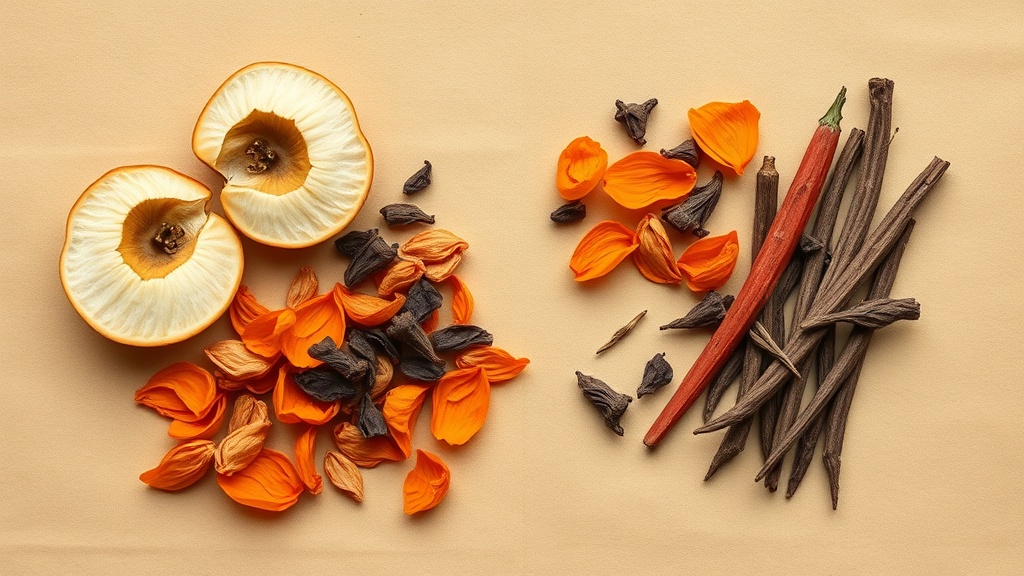
- Tao Ren (Táo Rén, 桃仁) — peach kernel — a major Blood-stasis mover with a classical focus on the collateral network; addresses fixed stasis settling into the peripheral circulation after an obstruction event.
- Hong Hua (Hóng Huā, 红花) — safflower — activates Blood and disperses stasis throughout the vascular network. Paired with Tao Ren, this combination is one of the most time-tested in the classical pharmacopoeia for vascular obstruction.
- Dan Shen (Dān Shēn, 丹参) — salvia miltiorrhiza — activates Blood, cools the Blood, and calms the Heart-governed vessel system; addresses both the stasis and the Heat that chronic stasis generates in the recovery environment.
The Recovery Terrain: What Herbal Medicine Can and Cannot Do
The recovery arc following RVO is long, and what determines visual outcome depends on macular edema resolution, the extent of retinal ischemia, and how efficiently collateral circulation reorganizes. Herbal medicine does not accelerate anti-VEGF response or reverse structural retinal damage already present.
What the herbal layer may support is the constitutional terrain in which recovery unfolds: the Blood-stasis environment in the surrounding collaterals, the Qi deficiency that slows tissue healing, and — where the Liver Yang pattern is prominent — the vascular tension and recurrence risk that remain after the acute event resolves. Functional medicine adds a parallel layer at the category level: microvascular perfusion support for capillary integrity and blood flow regulation in the recovering retinal territory.
The specific formula — classical base and modifications — is determined through the intake. The herbs above are illustrative examples; the formula that emerges will reflect the individual’s precise constitution, pattern prominence, and stage of recovery.
Begin your pattern assessment
A note on these statements
These statements have not been evaluated by the Food and Drug Administration. These products are not intended to diagnose, treat, cure, or prevent any disease. Classical Chinese herbal medicine and functional medicine supplements are offered as part of a pattern-based intake process, not as treatments for diagnosed medical conditions.