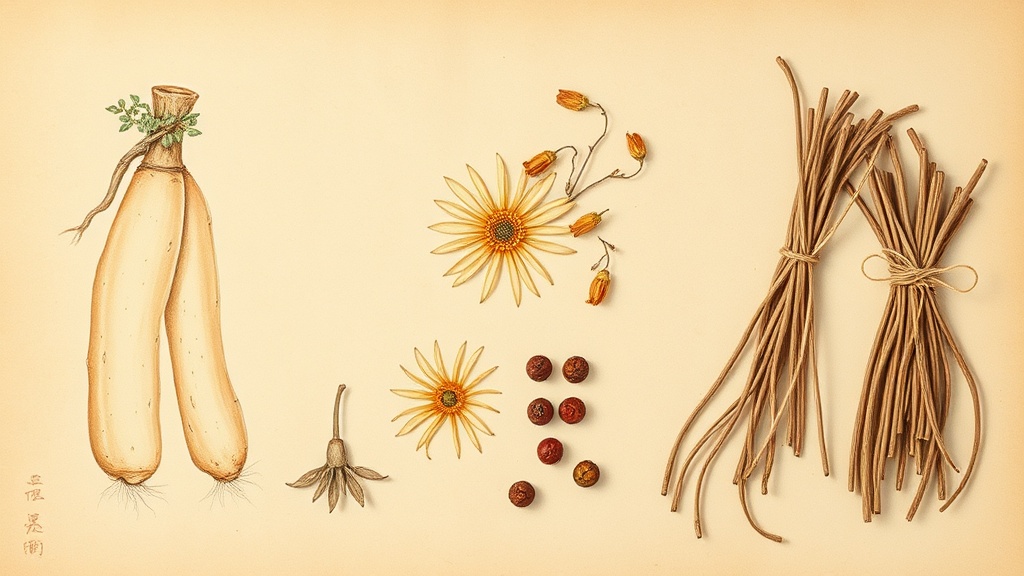

Classical medicine has a precise answer to why the eyes dry: the Liver governs tears, and when Liver Yin is insufficient, the fluid substrate from which the eye draws its moisture is inadequate at the source.
Dry eye disease is among the most common reasons people seek eye care — and among the most frustrating to manage. The name suggests simplicity. The reality is anything but. The burning, grittiness, and light sensitivity of chronic dry eye are often accompanied by paradoxical tearing — the eye’s emergency overflow response to a surface that has been chronically under-nourished. Artificial tears provide temporary relief. Prescription drops address the inflammatory component. And yet: millions of people cycle through these treatments without finding the sustained relief they’re looking for.
Classical Chinese herbal medicine offers a different framing. Rather than treating the eye surface as the site of the problem, it asks: where in the body is the fluid substrate that nourishes this surface being generated, and where is it failing? The classical answer involves the Liver, the Lung, and the Spleen — and the herbal approach addresses all three.
The Liver Governs Tears
肝主淚 — Gān Zhǔ Lèi — The Liver governs tears
This classical statement is the clinical anchor for dry eye in Chinese medicine. The Liver opens to the eyes (Gān Kāi Qiào Yú Mù, 肝開竅於目) and governs the fluid — the tears — that moisten them. When Liver Yin is sufficient, the eyes are bright, moist, and comfortable. When Liver Yin is depleted, the fluid substrate from which the tear apparatus draws is inadequate at the source. The lacrimal glands can do no more than the Liver’s Yin reserve allows them to do.
This is the meaning of Gān Zhǔ Lèi in clinical practice: dry eye is not primarily a gland problem, though the gland is the final common pathway. It is a constitutional fluid-generation problem — a terrain problem — that begins in the Liver’s capacity to produce and circulate its Yin essence toward the eyes. Address the Liver Yin terrain, and the glandular expression has a different substrate to work with.
Three Pattern Layers in Dry Eye
Classical Chinese medicine identifies three distinct patterns that produce dry eye symptoms, often layered in the same patient:
Liver Yin Deficiency (Gān Yīn Xū, 肝阴虚)
The foundational dry-eye pattern. When Liver Yin is insufficient — from age, overwork, chronic stress, insufficient sleep, or constitutional depletion accumulated over years — the fluid substance that moistens the eyes is inadequate at its source. The eyes are dry, tired, and burning, with symptoms that worsen in the evening after a full day of visual demand. Blurring with prolonged close work. A broader constitutional picture of Yin depletion: warmth in the palms and soles, difficulty sleeping, a constitution that runs thin and tends to run hot rather than cold and robust. This is the terrain of chronic insufficiency — not an acute event but a slow emptying of the reservoir.
Lung-Spleen Qi Deficiency (Fèi Pí Qì Xū, 肺脾气虚)
The Lung governs the body’s surfaces and the secretion of fluids onto them — including the conjunctival and corneal surface that constitutes the ocular surface. When Lung Qi is deficient, the body’s capacity to distribute moisture to its outer layers is impaired. The Spleen, which transforms fluids from food and distributes them upward, is the delivery system from which the Lung draws. When either organ is Qi-deficient, the fluid delivery fails — not because the Yin reservoir is empty, but because the transport mechanism cannot move what exists.
The classical teaching: “Lung governs the skin and fluids” (Fèi Zhǔ Pí Máo, 肺主皮毛). The skin and all secretory surfaces — including the tear film’s aqueous and lipid layers — depend on this Lung-governed distribution function. Clinically, these patients often present with more general fatigue, digestive weakness, a tendency toward pale complexion, and dry eye symptoms that respond less to Yin-nourishing approaches alone and more to formulas that support the Qi delivery layer.
Yin Deficiency with Empty Heat (Yīn Xū Huǒ Wàng, 阴虚火旺)
When Yin deficiency is prolonged and deep, the cooling and moistening counterbalance to Yang becomes insufficient. Yang — no longer anchored by adequate Yin — generates a low-grade, smoldering “empty Heat” that rises without the acute intensity of true Fire. In the eyes, this presents as a chronic burning, redness, and heat sensation that is persistent and low-grade rather than acute and intense. It is the inflammatory expression of dry eye rendered through the deficiency lens: not inflammation from external pathogenic invasion, but the friction of a system running dry. Patients describe a constant sensation of irritation, light sensitivity, and a burning quality that intensifies as the day progresses and the eyes fatigue.
Illustrative Herbs: Nourishing the Fluid Terrain
The following herbs are illustrative examples of the classical fluid-nourishing and Yin-replenishing categories used for the dry-eye pattern. They represent how classical herbal logic addresses this terrain — not a formula prescription, which is determined by individual pattern diagnosis through the intake process.
- Mai Men Dong (Mài Mén Dōng, 麦门冬) — ophiopogon tuber; the primary herb for nourishing Yin and generating fluids; its affinity for the Lung-Stomach axis makes it particularly suited to the surface-secretion and fluid-generation picture; used in classical texts for “dryness of the eyes and mouth” as a constitutional picture of Yin insufficiency
- Sha Shen (Shā Shēn, 沙参) — glehnia root; fluid-generating and Lung-moistening; nourishes the Lung Yin that governs secretory surface function; a gentle but sustained tonic for the delivery layer — addressing the failure of the Lung-Spleen transport mechanism that moves moisture to the ocular surface
- Gou Qi Zi (Gǒu Qǐ Zǐ, 枸杞子) — wolfberry; nourishes Liver and Kidney Yin and Blood; a classical tonic specifically associated with “brightening the eyes” and moistening the visual apparatus through the Liver-Kidney Yin axis; among the most directly eye-relevant herbs in the classical materia medica
For the empty-Heat burning component, the formula adds cooling and Heat-clearing herbs appropriate to the deficiency pattern. The Lung-Spleen delivery failure picture adds Qi-supporting herbs to strengthen the transport mechanism alongside the Yin-nourishing foundation. The formula configuration follows the pattern layers present in the individual patient.
The Functional Medicine Layer
Classical pattern diagnosis and functional medicine read the same terrain from different entry points. For dry eye, the most clinically relevant functional sphere is the tear-lipid-layer support category — the omega-3 class of fatty acids that directly influence meibomian gland secretory function and the lipid component of the tear film.
The lipid layer of the tear film is the outer boundary that prevents evaporative loss. When the meibomian glands — the oil-secreting glands embedded in the eyelid margins — are compromised, this lipid layer thins or becomes unstable, and tears evaporate from the ocular surface regardless of how much aqueous volume the lacrimal gland produces. This evaporative mechanism maps precisely onto the Lung-Spleen delivery pattern in classical medicine: not a shortage of fluid in the reservoir, but a failure of the secretory surface layer.
The omega-3 class of fatty acids, framed as a functional-medicine category rather than a specific supplement prescription, addresses this layer at the glandular level. Supporting meibomian gland secretion quality through this category aligns with the Lung-surface-secretion layer of the classical diagnosis. The intake identifies whether this sphere is the primary failure point and addresses it accordingly — alongside the classical formula and the constitutional root pattern.
Where the Two Frameworks Meet
This is what the Rootworth intake does: it reads both layers simultaneously. The classical pattern diagnosis identifies whether the primary failure is in Liver Yin generation (the constitutional reservoir), Lung-Spleen Qi distribution (the delivery mechanism), or Yin deficiency with empty Heat (the inflammatory signature of a system running dry). The functional medicine assessment identifies which of the four eye-terrain spheres are most compromised — and addresses them with the appropriate functional supplement category.
The result is not a supplement stack. It is a pattern-matched formula paired with targeted functional support — two layers of the same clinical picture addressed together. You do not need lab panels to receive this assessment. The classical intake reads the same terrain directly: constitutional history, symptom pattern across the day and year, and the full set of accompanying signs that reveal which layer is primary. If you have completed functional labs, that data integrates readily with the classical picture. But it is never a prerequisite for a complete pattern diagnosis.
Begin your pattern assessment
A note on these statements
These statements have not been evaluated by the Food and Drug Administration. These products are not intended to diagnose, treat, cure, or prevent any disease. Classical Chinese herbal medicine and functional medicine supplements are offered as part of a pattern-based intake process, not as treatments for diagnosed medical conditions.