
Fertility & Reproductive Health · Journal
Roughly forty percent of fertility challenges involve the male partner. The sperm produced today reflect the constitutional terrain of the past seventy-four days. Classical Chinese medicine has been reading that terrain — and building a clinical approach to it — for two thousand years.
When a couple is working toward conception and things are not moving as expected, the clinical conversation almost always begins with the woman: hormone panels, cycle tracking, ovarian reserve testing, follicular ultrasounds. The male partner often receives a semen analysis, a brief review, and a thumbs-up or a shrug — and that is typically the end of it. But roughly forty to fifty percent of couple infertility involves a male factor. In nearly half the couples navigating this, the sperm are part of the story. And the story, on this side of the equation, is chronically undertold.
Classical Chinese medicine does not overlook the male contribution to reproductive health. Male fertility has its own well-developed diagnostic framework within the TCM tradition — pattern differentiation, constitutional assessment, and a herbal approach that addresses the terrain from which sperm develop, not merely the parameters that appear on a semen analysis report. This post maps that framework: what the patterns are, what the biology of the treatment window requires, and why three months of constitutional terrain work is the minimum the spermatogenesis cycle allows.
What conventional medicine evaluates — and where the gaps are
The standard entry point for male fertility assessment is the semen analysis. WHO reference parameters provide the clinical floor: morphology at 4% normal forms (Kruger strict criteria), total motility at 40% with 32% progressive, concentration at 16 million sperm per milliliter. When numbers fall below these benchmarks — low count, poor motility, abnormal morphology, or combinations — reproductive medicine has real tools: varicocele repair, IUI, IVF with ICSI, hormonal protocols. These are appropriate interventions for what they treat.
Where conventional workup leaves men without a clear path forward is when the semen analysis is borderline, or when structural causes have been ruled out but the underlying driver is more diffuse: constitutional depletion, oxidative stress, chronic stress-driven hormonal suppression, or the sub-clinical inflammatory load that Damp-Heat represents in the classical framework. In these presentations, the numbers are impaired but there is no single correctable structural cause — and the reproductive medicine toolkit has limited language for what to do with that picture.
The critical biological reality that governs all of this: spermatogenesis takes approximately 72–74 days, plus 14–21 days of epididymal transit. Any intervention — herbal formula, lifestyle change, or constitutional terrain work — requires a minimum of one full spermatogenesis cycle before its effect can be measured in a re-test. Starting treatment and expecting to see it in the next month’s analysis misunderstands how the biology works. The three-month treatment window is not a protocol convention — it is a biological minimum.
The functional medicine lens: oxidative stress, hormones, and heat
Before moving into the TCM diagnostic framework, it is worth naming what the functional medicine view adds to the male fertility picture — because it largely echoes what classical Chinese medicine has long observed from a different clinical angle.
Oxidative stress is the most consequential biochemical thread in male factor infertility. Sperm are uniquely vulnerable to reactive oxygen species because their cell membranes are highly polyunsaturated and their DNA repair machinery is limited by design — mature sperm sacrifice most of their cellular repair capacity in exchange for the streamlined architecture that motility requires. The result is that oxidative stress during spermatogenesis damages sperm DNA, morphology, and membrane integrity in ways that the standard semen analysis may not fully capture. Sperm DNA fragmentation — which requires a separate assay — is increasingly recognized as a consequential fertility variable, particularly in cases of unexplained infertility and recurrent early pregnancy loss. The oxidative stress terrain is directly addressable through the antioxidant-category support tier, timed to the full spermatogenesis window.
Scrotal hyperthermia is one of the most immediately actionable variables in male factor infertility. Spermatogenesis is optimized at 2–4°C below core body temperature — this is the physiological reason the testes are external. Laptops on the lap, prolonged hot tub use, and tight-fitting clothing all raise intratesticular temperature and impair sperm production directly. Heat reduction is one of the fastest terrain interventions available.
The hormonal axis carries its own male-specific vulnerabilities. Alcohol and cannabis both suppress LH pulsatility, reducing testosterone and sperm production through the HPT axis. Peak LH secretion occurs during REM sleep; sleep restriction of even a few hours measurably reduces morning testosterone within days — this is endocrinology, not lifestyle suggestion. The cortisol-testosterone competition axis, which classical medicine maps as Liver overacting on Kidney, means that chronic stress is a direct suppressor of male reproductive function through a well-characterized neuroendocrine pathway.
How classical Chinese medicine understands male fertility: four root patterns
Chinese medicine places male reproductive function in the domain of the Kidney (Shèn, 肾). Sperm are understood as a direct expression of Kidney Essence — Jing (Jīng, 精) — the foundational constitutional substance that governs reproduction and vitality. Jing is finite, slowly replenished, and profoundly affected by lifestyle. Male fertility problems, in this framework, are rarely just “about the sperm” in isolation — they reflect deeper constitutional terrain that the classical pattern assessment reads systematically.
Pattern 1: Kidney Jing and Yang Deficiency — 肾精虚、肾阳虚
This is the central pattern in male factor infertility, and it maps most directly to low sperm count and poor forward motility. Kidney Jing (Shèn Jīng, 肾精) is the raw material from which sperm are produced. When Jing is depleted — by overwork, chronic stress, insufficient sleep, or constitutional insufficiency accumulated over years — the body does not have the substrate to generate abundant, high-quality sperm. Kidney Yang (Shèn Yáng, 肾阳) is the energetic warmth that animates sperm movement. Yang drives movement: when Yang is deficient, motility suffers. These two aspects are deeply intertwined — Jing without Yang is matter without function; Yang without sufficient Jing has nothing adequate to move.
Clinically: low libido, cold sensation especially in the lower back and knees, fatigue, a pale tongue with a white coat, and a deep, thin or weak pulse. On the semen analysis: low concentration, sluggish or non-progressive motility, often reduced morphology.
Pattern 2: Damp-Heat in the Lower Jiao — 下焦湿热
Damp-Heat (Shī Rè, 湿热) accumulating in the lower jiao — the pelvic-abdominal region — is commonly associated with infection history, chronic prostatitis, scrotal inflammation, or the physiological effects of metabolic excess. In semen analysis terms, this pattern often correlates with elevated white blood cells, reduced motility (heat degrades sperm motility), and a clinical experience of scrotal heaviness and warmth. Heat injures Yin and damages Jing at the local level; Damp obstructs the proper flow of fluids and Qi through the lower jiao, creating a hostile microenvironment for developing sperm. The tongue typically shows a greasy, yellow coat; the pulse is slippery and rapid. This is a pattern where the branch — heat and damp — must be cleared before deep tonification can take hold. Tonifying into an active Damp-Heat environment drives the pathogen deeper.
Pattern 3: Liver Qi Stagnation Converting to Heat — 肝气郁结、肝郁化热
Chronic stress, overwork, and emotional suppression injure Liver Qi (Gān Qì, 肝气) and generate Liver Heat. The connection to male fertility runs directly through the hormonal axis: elevated cortisol competes with testosterone for the same steroidogenic precursor; cortisol also increases aromatase activity, converting testosterone into estradiol, which suppresses the pituitary’s LH output. This is the stress-testosterone axis. In TCM terms, Liver overacting on Kidney — Wood destabilizing Water — impairs reproductive capacity at the hormonal root. Liver Heat adds an oxidative dimension that degrades sperm morphology and DNA structural integrity.
Pattern 4: Kidney Yin Deficiency with Empty Heat — 肾阴虚、虚热
When Kidney Yin (Shèn Yīn, 肾阴) — the cooling, nourishing aspect of Kidney function — is deficient, empty heat arises from the constitutional vacancy. Clinically: night sweats, low-grade heat in the chest or palms, a red tongue with little coat, and a thin, rapid pulse. On the semen analysis, morphology tends to be more affected than count, and DNA fragmentation is often elevated from the oxidative heat component. This is the constitutional depletion picture — the man who has been running hot and thin for years, and whose Jing is insufficient to cool and nourish what the system is being asked to produce.
How the patterns read against the semen analysis
These are not abstract diagnostic categories — they map onto the clinical parameters in ways that make them practically useful for understanding why a given semen analysis looks the way it does.
Low sperm count reflects insufficient Jing — the well is running low, and the constitutional substrate for sperm production is depleted. Poor forward motility reflects Yang deficiency — Yang animates movement, and when it is deficient, sperm lack the propulsive force that progressive motility requires. Abnormal morphology and elevated DNA fragmentation point toward Heat — either Damp-Heat in the lower jiao or empty heat from Yin deficiency — degrading structural integrity during spermatogenesis. Elevated leukocytes in semen and a history of prostatitis or genital tract infection signal Damp-Heat obstructing the lower jiao. Emotional reactivity, poor stress tolerance, or the physical signs of varicocele — scrotal aching, visible varicocities — suggest Liver Qi stagnation with Qi and Blood stasis (Qì Xuè Yū Zhì, 气血瘀滞) impairing testicular microcirculation. Every parameter on the analysis is a diagnostic clue about which pattern is driving it.
Classical herbal medicine: the pattern-matched approach for male fertility
The classical herbal approach to male factor infertility is never a single formula applied uniformly. Pattern differentiation drives formula selection — and in most male factor presentations, patterns overlap, which means the formula addresses multiple roots simultaneously while prioritizing the most clinically prominent layer.
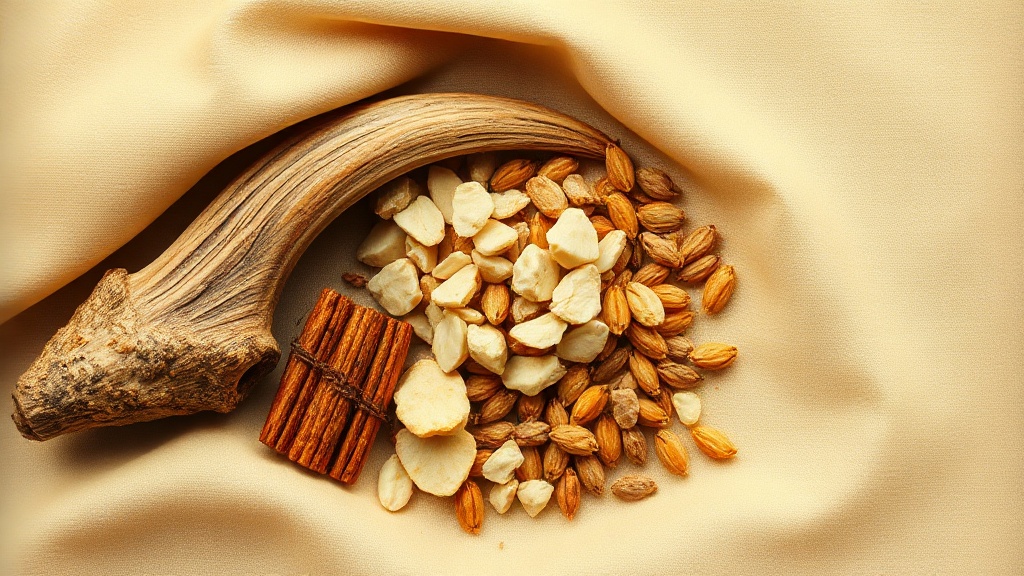
For Kidney Jing and Yang Deficiency, the foundational herbal approach builds constitutional essence and warms the reproductive terrain. The classical seed-herb category — botanicals that directly nourish and consolidate Kidney Jing — forms the backbone. Cuscuta (Tú Sī Zǐ, 菟丝子) is the most important single herb in this category: it tonifies both Kidney Yang and Yin, secures Jing, and has been the primary classical herb for spermatogenesis support for centuries. Wolfberry (Gǒu Qǐ Zǐ, 枸杞子) nourishes Kidney Yin, Liver Blood, and Jing — the Blood-building side of the reproductive essence. Schisandra (Wǔ Wèi Zǐ, 五味子) astringes and consolidates Jing, preventing the leakage of essence that depletion accelerates. Raspberry (Fù Pén Zǐ, 覆盆子) warms Kidney Yang and consolidates. Where Yang deficiency is more pronounced — the cold, sluggish picture with severely poor motility — warming Yang herbs that kindle the Life Gate fire are added to the Jing-building base. Morinda (Bā Jǐ Tiān, 巴戟天) and Epimedium (Yín Yáng Huò, 淫羊藿) strengthen Kidney Yang and support reproductive vitality. Deer Antler (Lù Róng, 鹿茸) is the highest-grade Jing tonic in the classical pharmacopoeia — used in significant constitutional depletion presentations where both Yin and Yang are severely reduced.
For Damp-Heat in the Lower Jiao, the treatment sequence is critical: the branch must be cleared before the root can be built. Heat-clearing, damp-draining herbs create the precondition for Jing tonification to be effective. Phellodendron (Huáng Bǎi, 黄柏) and Anemarrhena (Zhī Mǔ, 知母) clear heat from the lower jiao without injuring fluids excessively. Plantain seed (Chē Qián Zǐ, 车前子) drains damp and clears heat from the lower jiao — notably, it appears in the classical seed-herb Jing formula precisely to prevent the building herbs from generating stagnant accumulation. Alisma (Zé Xiè, 泽泻) moves fluid and clears heat. Once the Damp-Heat environment is resolved, the formula shifts toward constitutional Jing support — but this sequence cannot be reversed without reinforcing the pathogen.
For Liver Qi Stagnation, the herbal approach restores the free flow of Qi through the hormonal axis. Bupleurum (Chái Hú, 柴胡) courses Liver Qi and addresses the cortisol-testosterone stagnation pattern at the Qi level. Curcuma (Yù Jīn, 郁金) moves Qi and Blood and is particularly useful when emotional component — frustration, suppressed anger — is clinically prominent. White Peony (Bái Sháo, 白芍) softens Liver constraint. When stagnation has generated Heat — elevating the oxidative stress component that damages sperm morphology and DNA — heat-clearing herbs that address Liver Fire are integrated. When the stasis component involves testicular microcirculation impairment, Blood-moving herbs are added to support vascular function in the lower jiao.
For Kidney Yin Deficiency with Empty Heat, the approach nourishes the constitutional cooling and nourishing Yin while addressing the heat that arises from its deficiency. Rehmannia (Shú Dì Huáng, 熟地黄) is the primary Yin-nourishing, Jing-building herb in the classical pharmacopoeia — the constitutional anchor for this pattern. Wolfberry (Gǒu Qǐ Zǐ, 枸杞子) nourishes Liver and Kidney Yin together. When empty heat is prominent, Phellodendron (Huáng Bǎi, 黄柏) and Anemarrhena (Zhī Mǔ, 知母) reduce the heat without the aggressive draining that would worsen the underlying deficiency. The goal in this pattern is to nourish the root that the heat is consuming, not merely to suppress the heat symptom.
The functional medicine antioxidant complement addresses the oxidative stress terrain that most male factor presentations share, regardless of the primary classical pattern. Antioxidant-category support targeted to the sperm development environment addresses both morphological integrity and DNA fragmentation at the cellular level. The specific category composition — whether the priority is mitochondrial energy support, free-radical scavenging, or anti-inflammatory terrain work — is determined by the pattern and the clinical picture at intake, not by a standard male fertility supplement protocol. This complement runs concurrently with the classical formula over the full spermatogenesis window, and reassessment at three months guides whether the emphasis shifts.
Lifestyle as medicine: the three-month window
The three-month treatment course is biological, not arbitrary. One spermatogenesis cycle takes approximately 72–74 days, plus 14–21 days of epididymal transit. Any intervention — whether a classical herbal formula, a lifestyle change, or a supplement protocol — needs the full cycle to show up in a re-test. Lifestyle modifications begin changing the intratesticular environment immediately, even if the parameters in the analysis lag by a full cycle.
Key terrain variables beyond the herbal formula: heat avoidance (laptops off the lap, hot tubs limited, breathable underwear), adequate hydration (semen volume is fluid-dependent), sleep restoration (8 hours of sleep is the single most correctable testosterone driver in most clinical presentations), and eliminating alcohol and cannabis during active treatment. These are not peripheral lifestyle suggestions — they are direct terrain inputs that determine what the formula has to work with.
One clinical caution worth naming explicitly: testosterone replacement therapy — gels, injections, pellets — is contraindicated for men who want to conceive. Exogenous testosterone suppresses the hypothalamic-pituitary-testicular axis via negative feedback, leading to azoospermia within three to six months in most men. Men with low testosterone who also want to preserve fertility require a different approach, ideally co-managed with a reproductive endocrinologist. This is one of the most consequential clinical crossroads in male fertility, and it should be named clearly: TRT and fertility are not compatible.
The couple’s frame: treating both sides of the equation in parallel
Fertility is genuinely a shared endeavor. The spermatogenesis timeline syncs precisely with the oocyte development timeline — both require approximately three months of sustained constitutional terrain work before the full effect is measurable. There is no clinical rationale for treating one partner first and then the other. Both can begin simultaneously. The results from each side contribute to the cumulative outcome.
The male factor assessment at Rootworth is its own complete pattern intake — not a brief questionnaire appended to the female partner’s assessment. Pattern differentiation, constitutional history, lifestyle review, and a formula prescription tailored to the specific presentation all apply independently to the male partner. His pattern may be Kidney Yang deficiency while hers is Liver Qi stagnation; his formula and hers will look entirely different, because they address different constitutional pictures. What they share is the timeline: the same three-month window, running in parallel, each addressing the constitutional terrain that the gametes are developing within.
The most efficient use of the preconception window — three months before a first attempt, or three months into a current journey — is both partners building their terrain simultaneously. The intake is online. The formulas ship. Treating the full picture is what the three-month window is designed to make possible.
A note on these statements
Rootworth herbal preparations are dietary supplements. These statements have not been evaluated by the Food and Drug Administration. These products are not intended to diagnose, treat, cure, or prevent any disease. Classical Chinese medicine pattern assessment is distinct from the diagnosis and treatment of disease as defined under United States federal law. Individual results vary. Always continue care with your physician, OB/GYN, or reproductive endocrinologist alongside any herbal support program.